
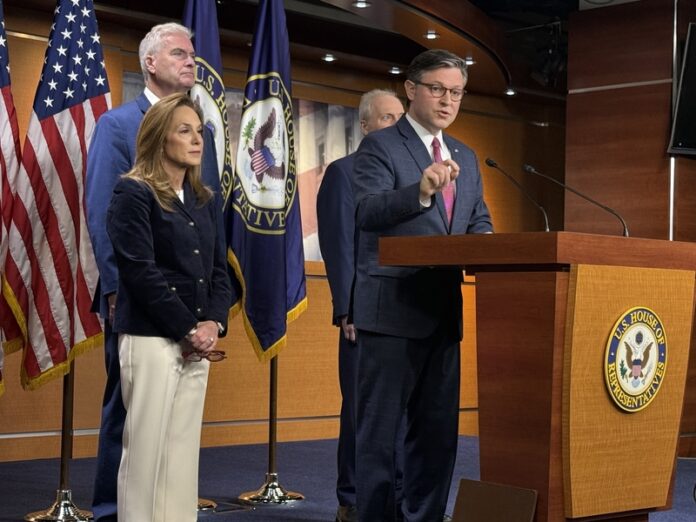
(States Newsroom) WASHINGTON — U.S. House Republicans released a health care bill Friday evening they hope will help curb rising costs, though the measure doesn’t have the level of Democratic support needed to get through the Senate.
The 111-page bill will likely move to the House floor next week, where Speaker Mike Johnson will need nearly every one of his members to vote to pass the legislation, an uphill battle given the vastly different views among centrists and far-right members of the party on health care issues.
The Louisiana Republican said in a statement the bill offers “clear, responsible alternatives that will lower premium costs and increase access and health care options for all Americans.”
Democrats have been pressing for a three-year extension of the enhanced tax credits for people who purchase their insurance through the Affordable Care Act marketplace.
So far, House and Senate Republican leadership hasn’t gotten on board with any extension of those subsidies, arguing they have led to a sharp rise in the cost of health insurance.
GOP lawmakers have instead pursued their own legislation, but without at least some backing from Democrats, no bill will make it through the Senate’s 60-vote procedural hurdles.
Senate Republicans tried to advance a bill earlier this week from Louisiana Sen. Bill Cassidy and Idaho Sen. Mike Crapo but fell short of the votes needed.
Democrats were also unsuccessful trying to move their bill to extend the ACA marketplace tax credits for three years.
The House Republican bill, sponsored by Iowa Republican Mariannette Miller-Meeks, is unlikely to break the logjam in Congress over the rising cost of health insurance and health care, potentially leaving the issue as one the parties can debate leading up to next year’s midterm elections.
Targeting ‘real drivers’ of cost increases
Johnson rebuked Democrats in his statement for enacting the Affordable Care Act during President Barack Obama’s first term, saying the law hasn’t made health care cost less.
House Republicans’ new legislation, Johnson said, will address “the real drivers of health care costs to provide affordable care, increase access and choice, and restore integrity to our nation’s health care system for all Americans.”
The bill would require Pharmacy Benefit Managers “to provide employers with detailed data on prescription drug spending, rebates, spread pricing, and formulary decisions—empowering plans and workers with the transparency they deserve,” according to a summary in Johnson’s release.
Starting in 2027, the legislation would appropriate funding for cost sharing reduction payments that the summary said would reduce health insurance premiums and stabilize the individual market.
The House Rules Committee is scheduled to prepare the bill for floor debate on Tuesday by considering whether to allow any amendments to be considered on the floor.
The full House will then debate the legislation later in the week before departing for the two-week holiday break.
Trump wants direct payments
President Donald Trump, speaking from the Oval Office shortly after the bill was released, reiterated his preference that the federal government send payments directly to Americans.
“We want to give the money to the people and let the people buy their own great health care, and they’ll save a lot of money, and it’ll be great,” he said.
But Trump also appeared to signal he is going to stay out of negotiations in Congress, saying, “I leave it to them and hopefully they’re going to put great legislation on this desk right here.”