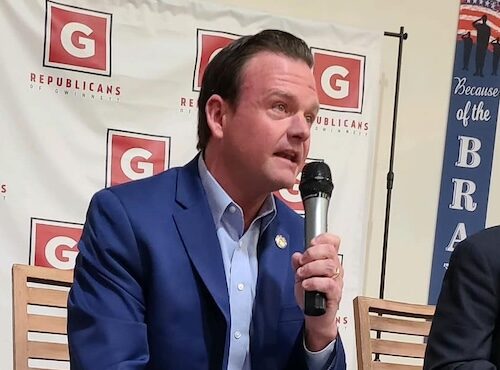
The senator who authored Georgia’s swatting law is condemning the wave of swatting hoaxes that targeted multiple Georgia universities Friday night. Senator Clint Dixon (R-Mulberry), calls the false reports of campus shooters “an act of domestic terrorism.”
The University of Georgia in Athens, Clark Atlanta University in Atlanta, and the University of West Georgia in Carrollton all received calls about gunmen on campus. Each incident triggered lockdowns, emergency alerts, and heavy police response before investigators confirmed the threats were hoaxes.
Dixon: “Georgia will not tolerate criminals”
In a statement Saturday, Dixon said the false alarms endangered lives and wasted critical resources.
“I am outraged by the disgraceful swatting hoaxes that disrupted universities across our state yesterday,” Dixon said. “Swatting is not a prank. It is an act of domestic terrorism that demands the strongest possible punishment. That is why I introduced and championed Senate Bill 421, which made swatting a felony.”
He added that, having been a swatting target himself in 2023, he knows the danger firsthand. “Georgia families deserve to know that their safety is our top priority. Those who choose to terrorize our students and communities will face the full force of the law.”
Timeline of Friday’s hoaxes
-
University of Georgia: At 8:51 p.m., UGA activated its alert system after a caller claimed a gunman was near the main library. Officers searched the area and reviewed security footage, finding no threat. An all-clear was issued at 10:40 p.m. “We strongly condemn hoax reports and swatting attempts,” UGA said in a statement.
-
University of West Georgia: At 9:54 p.m., UWG texted students about a reported man with a gun near Ingram Library. Police quickly determined the report was false.
-
Clark Atlanta University: Around the same time, CAU issued a shelter-in-place order “out of an abundance of caution.” Officers later confirmed the report of an armed man was a hoax, according to WXIA.
Part of a nationwide surge
Friday’s false reports came days after Mercer University in Macon was also targeted. Across the country, universities including Villanova, the University of Texas–San Antonio, the University of Arkansas, and the University of South Carolina have experienced similar hoaxes—some accompanied by recorded gunfire played over the phone.
The FBI’s Atlanta field office confirmed it is investigating the surge in swatting calls, working with state and local authorities.
Law enforcement officials warn these hoaxes not only waste resources but also risk deadly consequences if officers believe a threat is real—or lead to complacency in the event of a genuine emergency.