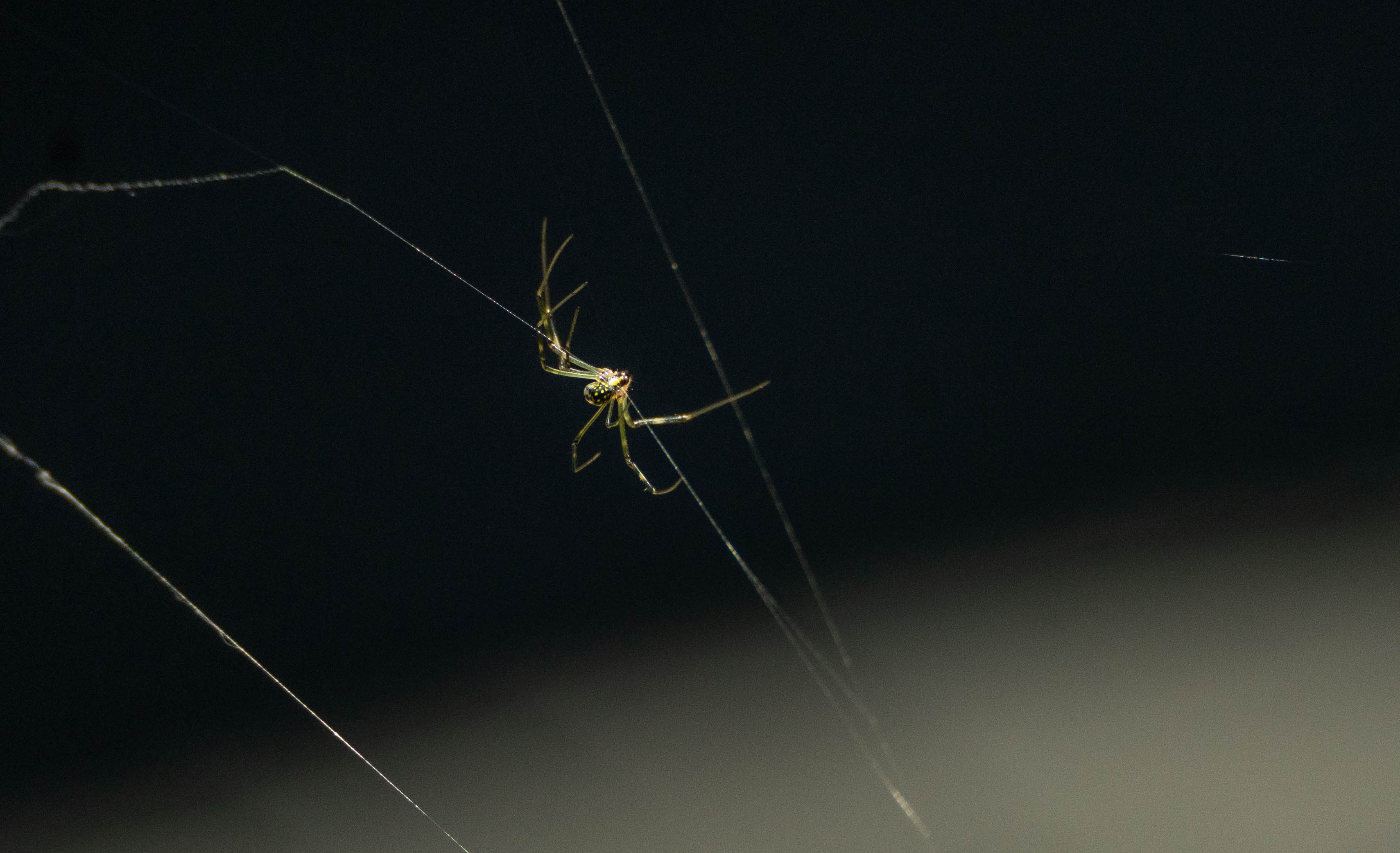
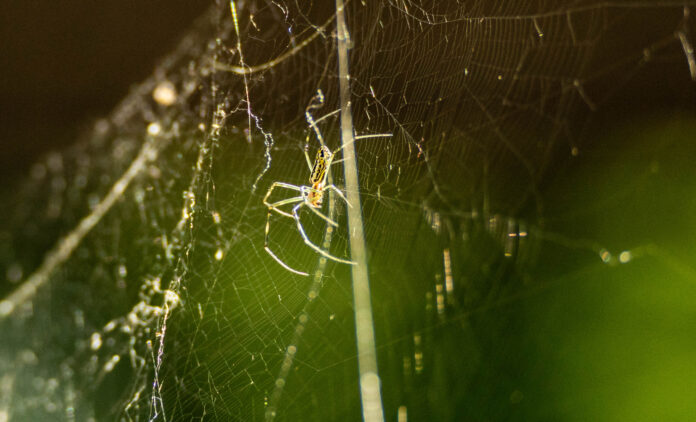
If you’ve stepped outside in North Georgia lately, you may have noticed the golden glint of a web stretched between trees—or worse, a palm-sized spider hanging just above your front door. The Joro spider, an invasive species from East Asia, has made itself right at home in the Southeast. And experts say it’s only spreading from here.
The first Joro spider was reported in the United States in Hoschton, Georgia, in 2013. The first confirmed sighting by ecologists came just a year later in 2014. Now, just 11 years later, these black and yellow spiders can be found, well, absolutely everywhere.
What are they?
Native to East Asia, Trichonephila clavata can be found in China, Japan, Korea and Taiwan. The common name, Joro Spider, comes from Japanese culture and the Jorōgumo. The Jorōgumo is a mythical creature that can transform in to a beautiful woman who can control spiders. The spider has a mainly yellow abdomen, with striped black and white legs. Females can have both blue and red towards the back of their abdomen as well.
Like with most spiders, females are much larger than males. Most females top out at around 1″ across the abdomen at most, but can get as large as 1.5″. With fully extended legs, they can reach a staggering 6″ or slightly more across making them a truly daunting insect to have hanging from your outdoor swing.
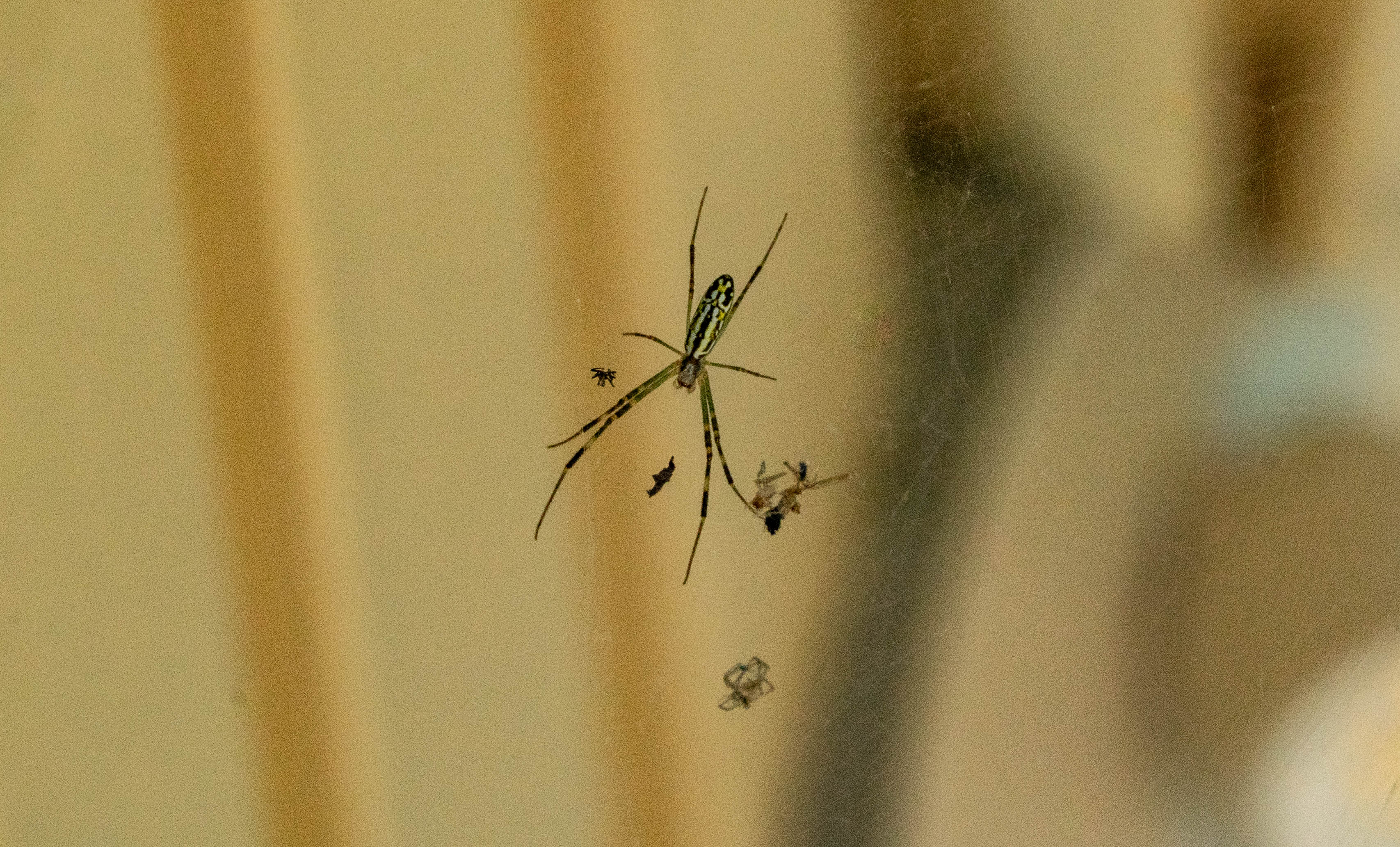
They spend the winter as eggs that hatch in the spring. The juveniles spread by loosing some web that carries them along any breeze, a common theme among spiders known as ballooning.
Are they dangerous?
The short answer: no. Joro Spiders are rarely known to bite humans unless extremely agitated. Simply walking into their web is rarely enough to trigger a bite. When they do bite, their venom is extremely weak towards humans, resulting in something like a cross between a mosquito bite and a bee sting that quickly goes away.
Speaking of webs: they are sticky. Joros belong to the orb-building family of spiders known for their spiral-shaped webs. Joro webs are particularly strong, as anyone who has ever had the displeasure of walking into one will tell you. They can stretch up to 10 feet wide, with support strands even longer. Locally, they can often be seen building on lamps, trees, and between power lines. I can attest they are strong enough to stop a weather station from functioning properly, as this unfortunate female had to be removed from her spot.
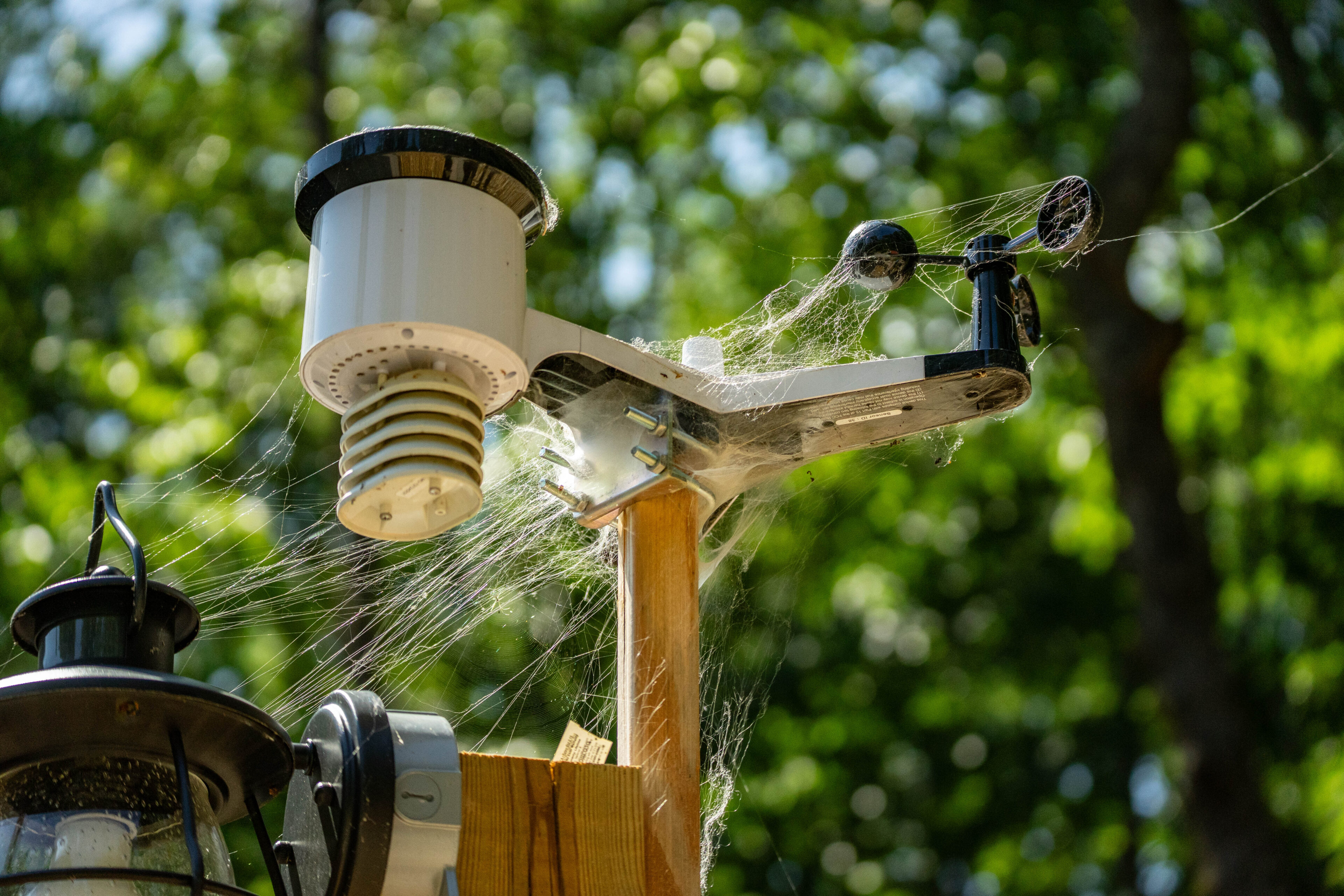
The webs are generally golden in color as well, which can make them appear quite beautiful in the early morning and late evening light.
Are they bad for the environment?
Joro spiders are considered an invasive species. In areas where they have spread, they have become the dominant orb weaver, causing declines in native populations. They will eat anything that falls into their webs, including other spiders, as well as other invasive species.

One positive aspect of the Joro spider is that they find the invasive stinkbugs (also from the same regions as them) especially tasty, something other native spiders haven’t been able to properly control just yet. They also eat invasive beetles and the highly problematic lanternflies that have yet to reach Georgia but will likely soon be here. Their strong, sticky web enables them to catch larger beetles and stinkbugs more easily than native species, which are not accustomed to such large prey.
Since they have only been around for a decade, it remains to be seen what long-term effects the spiders could have on our local ecosystems. Females lay up to 500 eggs a year, with the spiders expanding in range by around 10 miles per year on their own without any hitchhiking. They will certainly have a negative impact on native populations, which is already being seen, but will the good outweigh the bad? I guess we’ll see. The Joro Spider is a new neighbor we’re going to live with for a long, long time.