WASHINGTON (AP) — Overpowering Speaker Mike Johnson, a bipartisan coalition in the House voted Wednesday to push forward a measure that would revive an enhanced pandemic-era subsidy that lowered health insurance costs for roughly 22 million people, but that had expired last month.
The tally of 221-205 was a key test before passage of the bill, which is expected Thursday. And it came about because four GOP centrist lawmakers joined with Democrats in signing a so-called discharge petition to force the vote. After last year’s government shutdown failed to resolve the issue, they said doing nothing was not an option as many of their constituents faced soaring health insurance premiums beginning this month.
Rep. Mike Lawler of New York, one of the Republicans who crossed party lines to back the Democratic proposal, portrayed it as a vehicle senators could use to reach a compromise.
“No matter the issue, if the House puts forward relatively strong, bipartisan support, it makes it easier for the senators to get there,” Lawler said.
In the end, nine Republicans joined Democrats to advance the measure.
Republicans go around their leaders
If ultimately successful in the House this week, the voting would show there is bipartisan support for a proposed three-year extension of the tax credits that are available for those who buy insurance through the Affordable Care Act, also known as Obamacare. The action of forcing a vote has been an affront to Johnson and GOP leaders, who essentially lost control of their House majority as the renegade lawmakers joined Democrats for the workaround.
But the Senate is under no requirement to take up the bill.
Instead, a small group of members from both parties is working on an alternative plan that could find support in both chambers and become law. One proposal would be to shorten the extension of the subsidy to two years and make changes to the program.
Senate Majority Leader John Thune, R-S.D., said any plan passing muster in the Senate will need to have income limits to ensure that it’s focused on those who most need the help and that beneficiaries would have to at least pay a nominal amount for their coverage.
That way, he said, “insurance companies can’t game the system and auto-enroll people.” Finally, Thune said there would need to be some expansion of health savings accounts, which allow people to save money and withdraw it tax-free as long as the money is spent on qualified medical expenses.
Democrats are pressing the issue
It’s unclear whether the negotiations will yield a bill that the Senate will take up. Democrats are making clear that the higher health insurance costs many Americans are facing will be a political centerpiece of their efforts to retake the majority in the House and Senate in the fall elections.
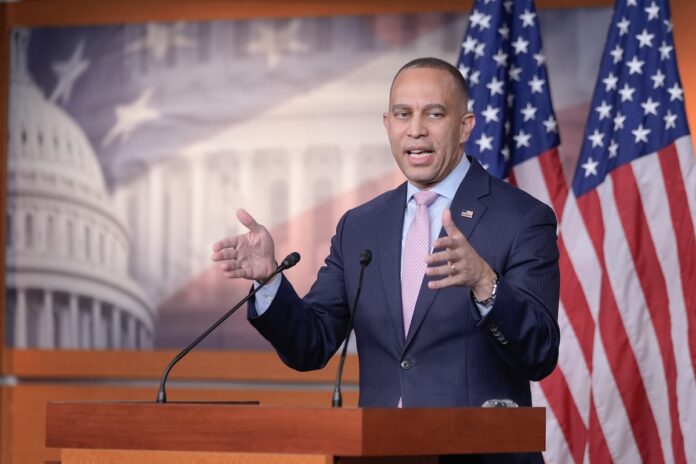
Democratic Leader Hakeem Jeffries, who led his party’s effort to push the health care issue forward, particularly challenged Republicans in competitive congressional districts to join if they really wanted to prevent steep premium increases for their constituents. Before Wednesday’s vote, he called on colleagues to “address the health care crisis in this country and make sure that tens of millions of people have the ability to go see a doctor when they need one.”
Republican Reps. Brian Fitzpatrick, Robert Bresnahan and Ryan Mackenzie, all from Pennsylvania, and Lawler signed the Democrats’ petition, pushing it to the magic number of 218 needed to force a House vote. All four represent key swing districts whose races will help determine which party takes charge of the House next year.
Johnson, R-La., had discussed allowing more politically vulnerable GOP lawmakers a chance to vote on bills that would temporarily extend the subsidies while also adding changes such as income caps for beneficiaries. But after days of discussions, the leadership sided with the more conservative wing of the party’s conference, which has assailed the subsidies as propping up a failed program.
Lawmakers turn to discharge petitions to show support for an action and potentially force a vote on the House floor, but they are rarely successful. This session of Congress has proven an exception.
A vote requiring the Department of Justice to release the Jeffrey Epstein files, for instance, occurred after Reps. Ro Khanna, D-Calif., and Thomas Massie, R-Ky., introduced a petition on the Epstein Files Transparency Act. The signature effort was backed by all House Democrats and four Republicans.