
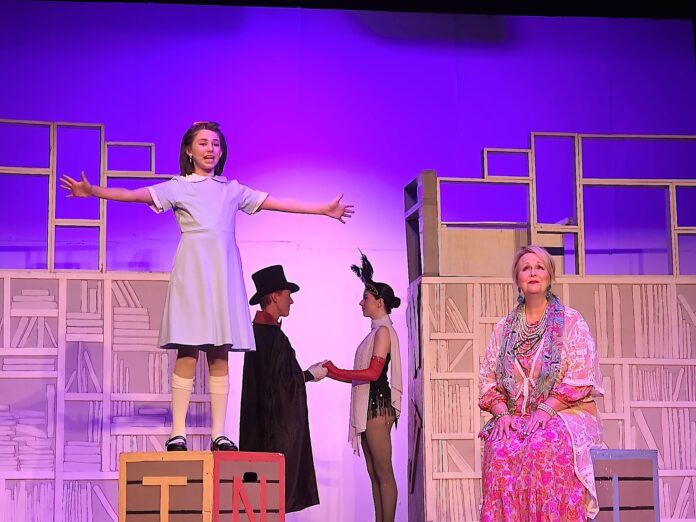
During Monday’s dress rehearsal at the Habersham Community Theatre, the cast of Matilda the Musical delivered a performance brimming with energy and invention. Clever stagecraft, infectious choreography, and pitch-perfect humor brought Roald Dahl’s beloved story to life, reminding audiences that courage, cleverness, and a fierce sense of justice can still topple tyranny—even when tyranny comes in the form of a hammer-throwing headmistress.
A story of justice that endures
For the uninitiated, Matilda tells the story of an extraordinary little girl with an insatiable appetite for books and a keen moral compass. Matilda Wormwood, born into a family of boorish, self-absorbed grifters, finds refuge in reading and learning. At school, she faces the tyrannical Miss Trunchbull, a headmistress so terrifying she hurls children across the playground by their pigtails. But through her wit, resilience, and a touch of telekinesis, Matilda fights back—not just for herself but for her classmates and her teacher, Miss Honey.
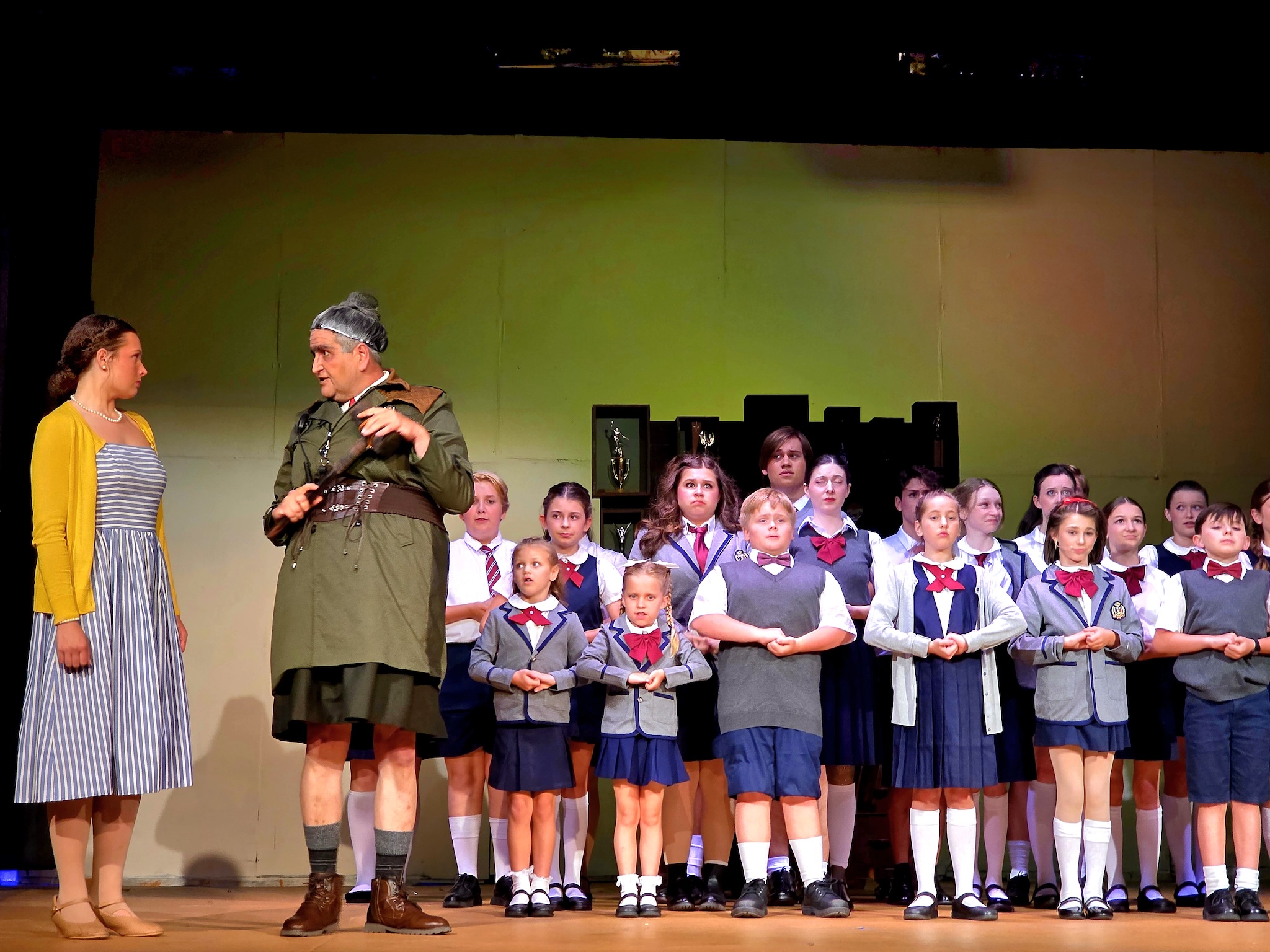
The tale, first published in 1988 and adapted for the stage in 2010, resonates because it taps into something deeply human: the yearning for fairness. Children, more than anyone, need to believe the world can be set right. Dahl’s story suggests that through courage and cleverness, even the smallest among us can upend injustice and claim happiness, not just for ourselves but for others, too.
A magnetic Matilda
It helps, of course, to have a Matilda who radiates the infectious spirit and sweetness of the original character. That evening, young Ella Miller did exactly that—commanding the stage with the precocity of a young Natalie Wood. Her British accent, carried even through her songs, lent an authenticity rare in a performer so young. With exaggerated gestures and bold, expressive movements, she embodied the clever, defiant heroine.
Miller shares the role with Alivia Worsham. The young actresses perform on alternating schedules, as do the other young cast members, due to the demands of their roles.
Scene stealers abound
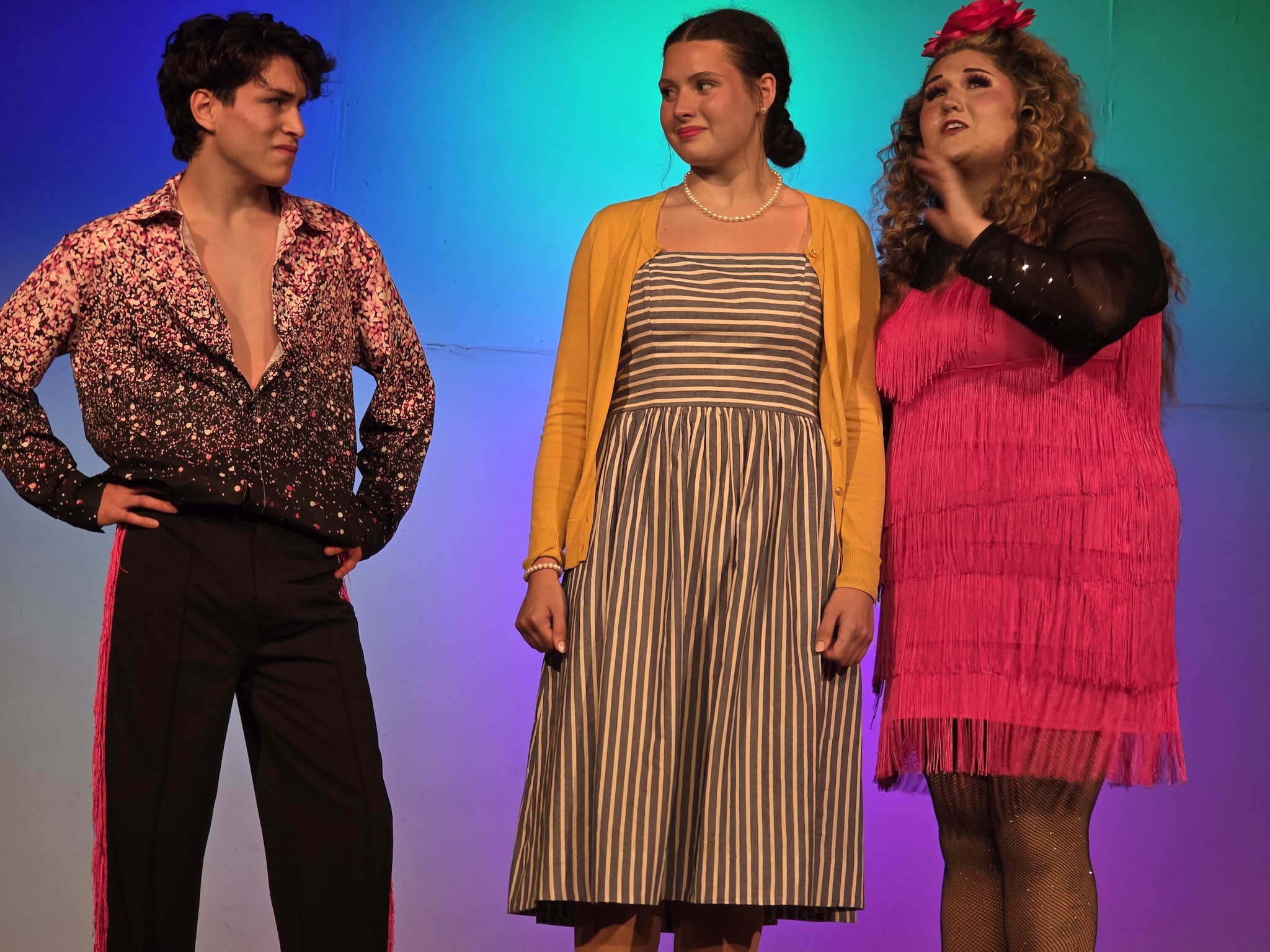
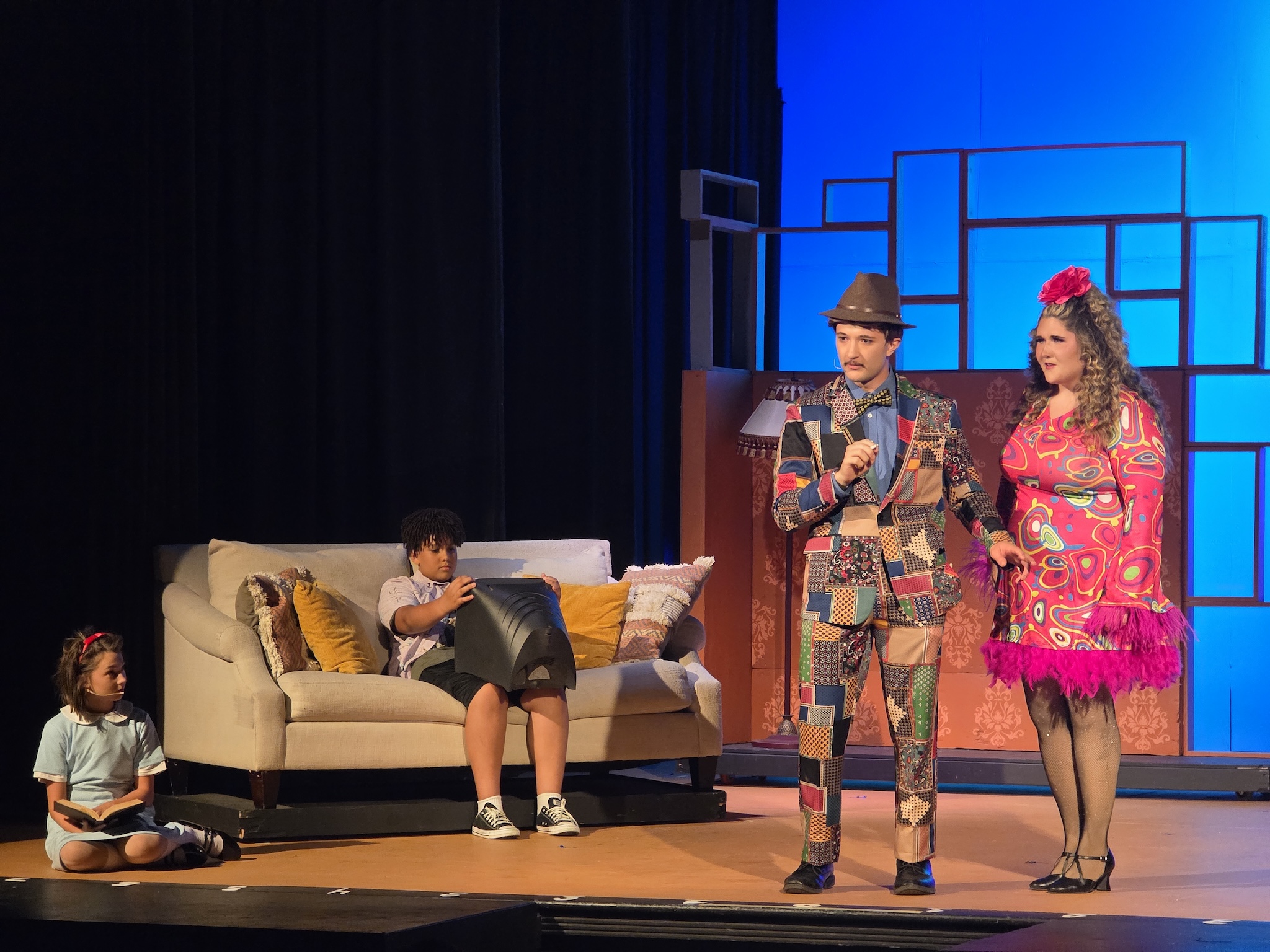
Around the production’s lead swirled a vibrant, colorful ensemble. Julianna Weyrich brought glittering energy to Mrs. Wormwood, Matilda’s narcissistic and appearance-obsessed mother. In her scenes with Rudolpho—a flamboyant dance instructor brought to life by Joshua Gamboa—Weyrich embraced a delicious caricature of the restless housewife, all manicures and microwaved dinners.
Gamboa, for his part, oozed the carefully rehearsed confidence of a self-styled sophisticate, his exaggerated Latin accent deployed when it suited him and conveniently dropped when it did not. Together, they had the audience in stitches.
Clark Ivie, as Mr. Wormwood, displayed excellent physical comedy abilities. With his garish 1970s Danny DeVito–chic costumes and hapless bluster, he formed a delightfully dysfunctional double act with his onstage son, Michael Wormwood, played by Eye’N Banks. Their dynamic offered moments of humor that offset the story’s darker themes.
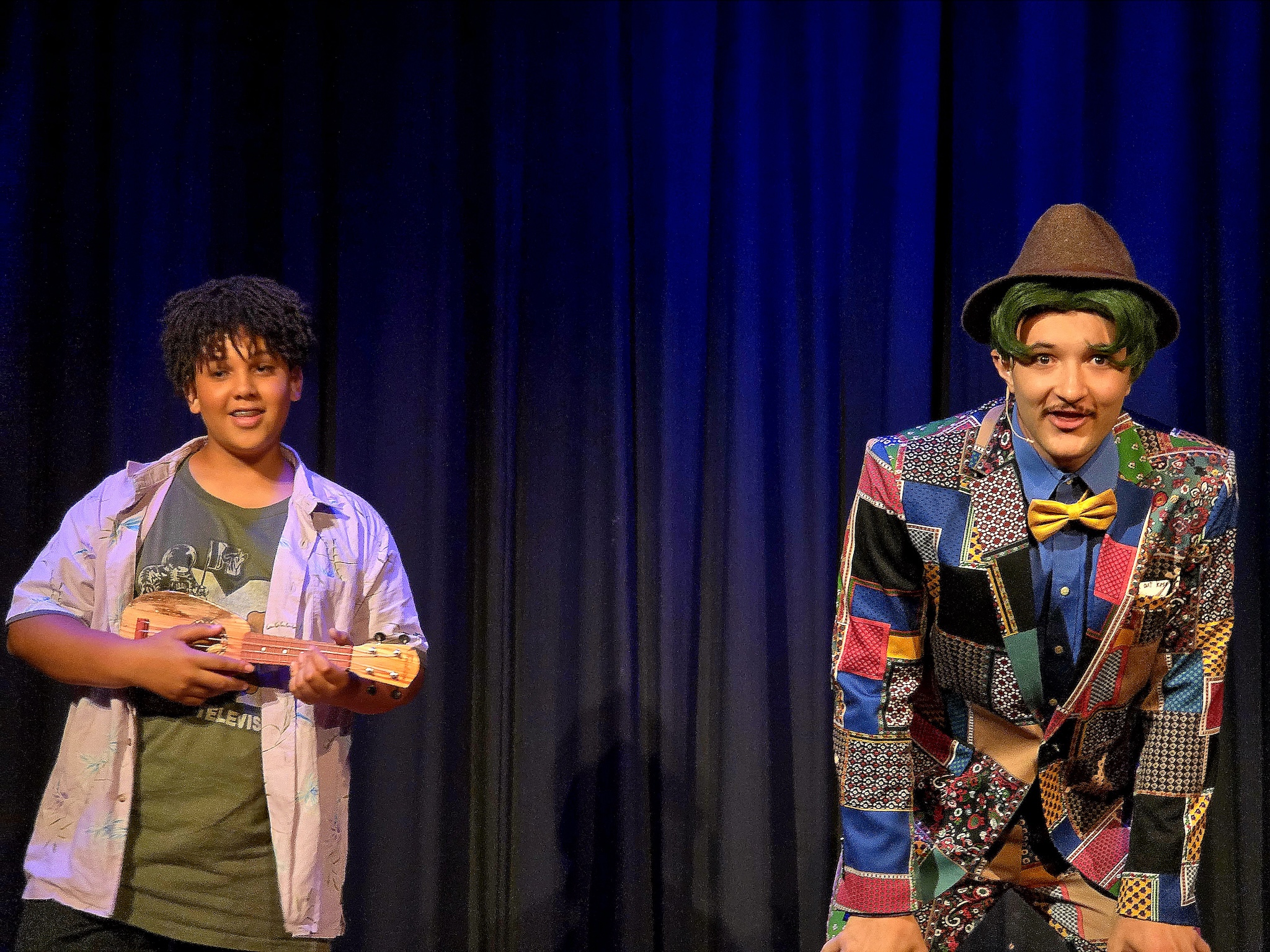
Another standout, Oliver McFaddin, seemed as if he had wandered straight out of Oliver Twist—a young actor born to play a put-upon British schoolboy. With expressive eyes and impeccable comedic timing, McFaddin brought Bruce Bogtrotter—the hapless, cake-eating bandit—to life. His songs were delivered with an endearing mix of mischief and vulnerability, earning some of the night’s most resounding applause.
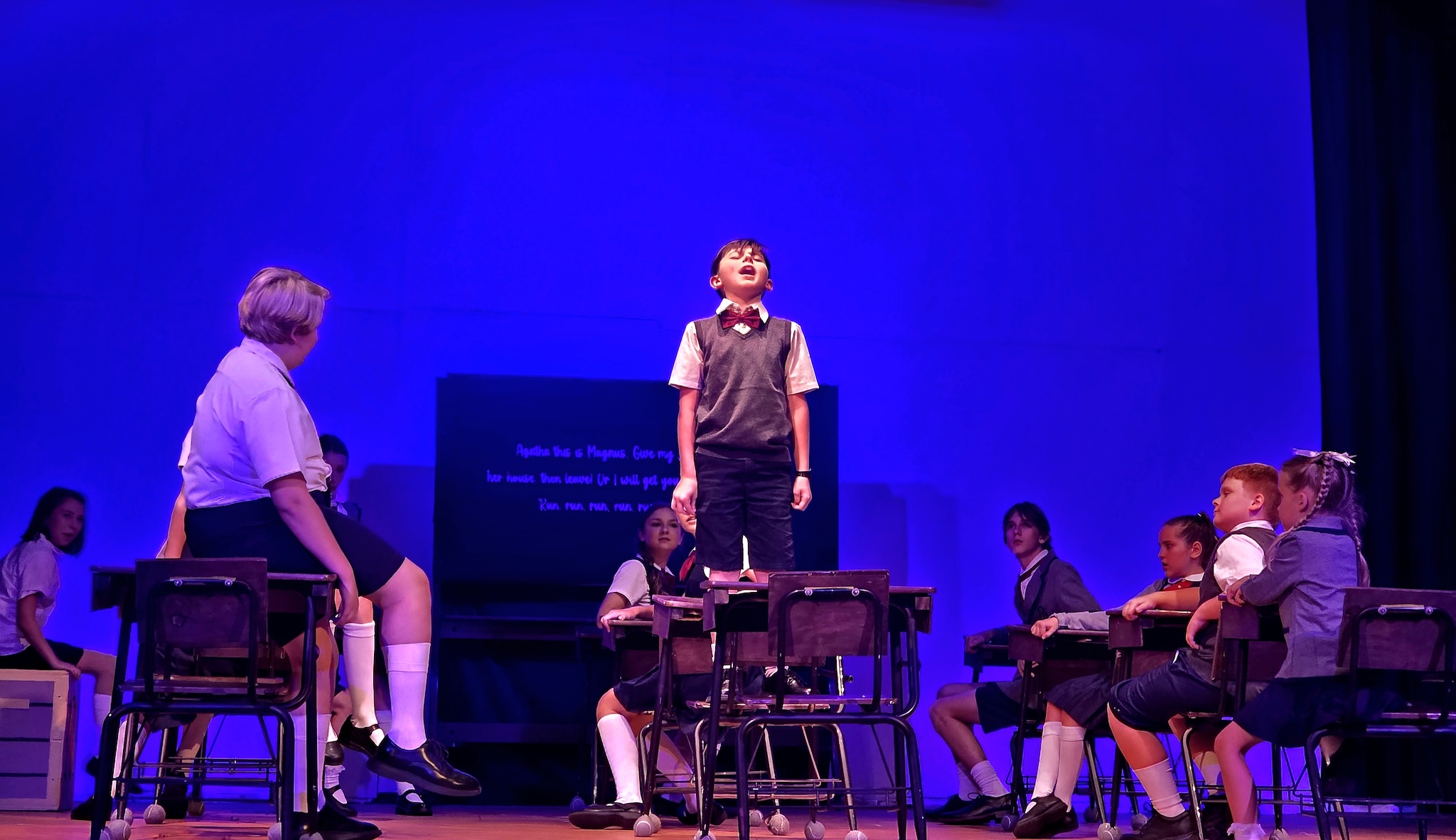
Then there was Mara Bishop, who played Amanda Thripp, the blonde little girl with the pigtails, whose performance quietly became one of the show’s most memorable. In “School Song,” her wide eyes darted in terror at the horrors of Crunchem Hall. Later, her “flight” across the stage—propelled by the fearsome Miss Trunchbull—was a crowd favorite.
Bishop, who shares the role with Hallie Hatchett on alternating schedules, wasn’t the lead. Still, her impeccable dancing and genuine expressions underscored one of Matilda’s key truths: even small players can make a big impact.
Hilarious & delightfully grotesque
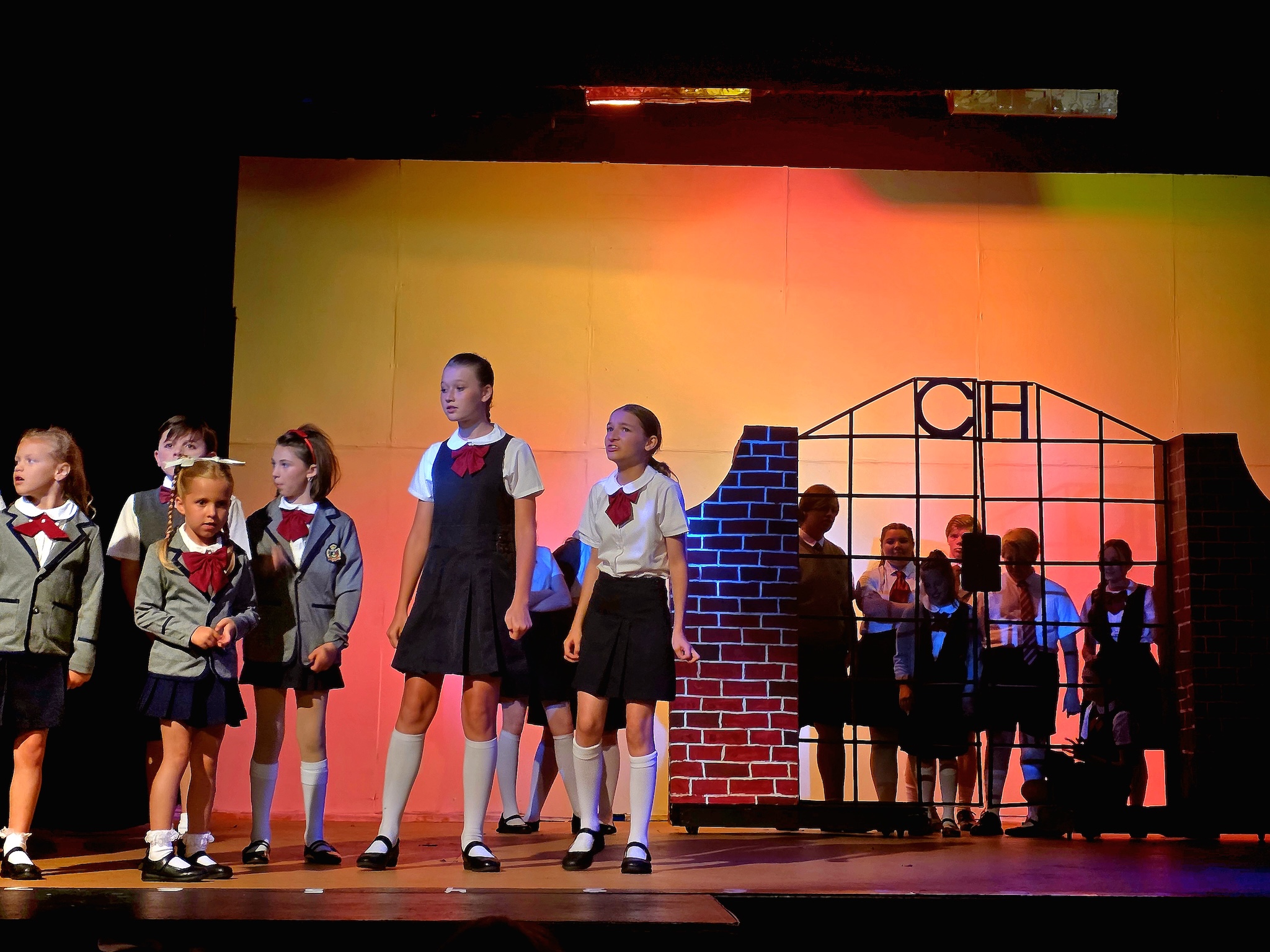
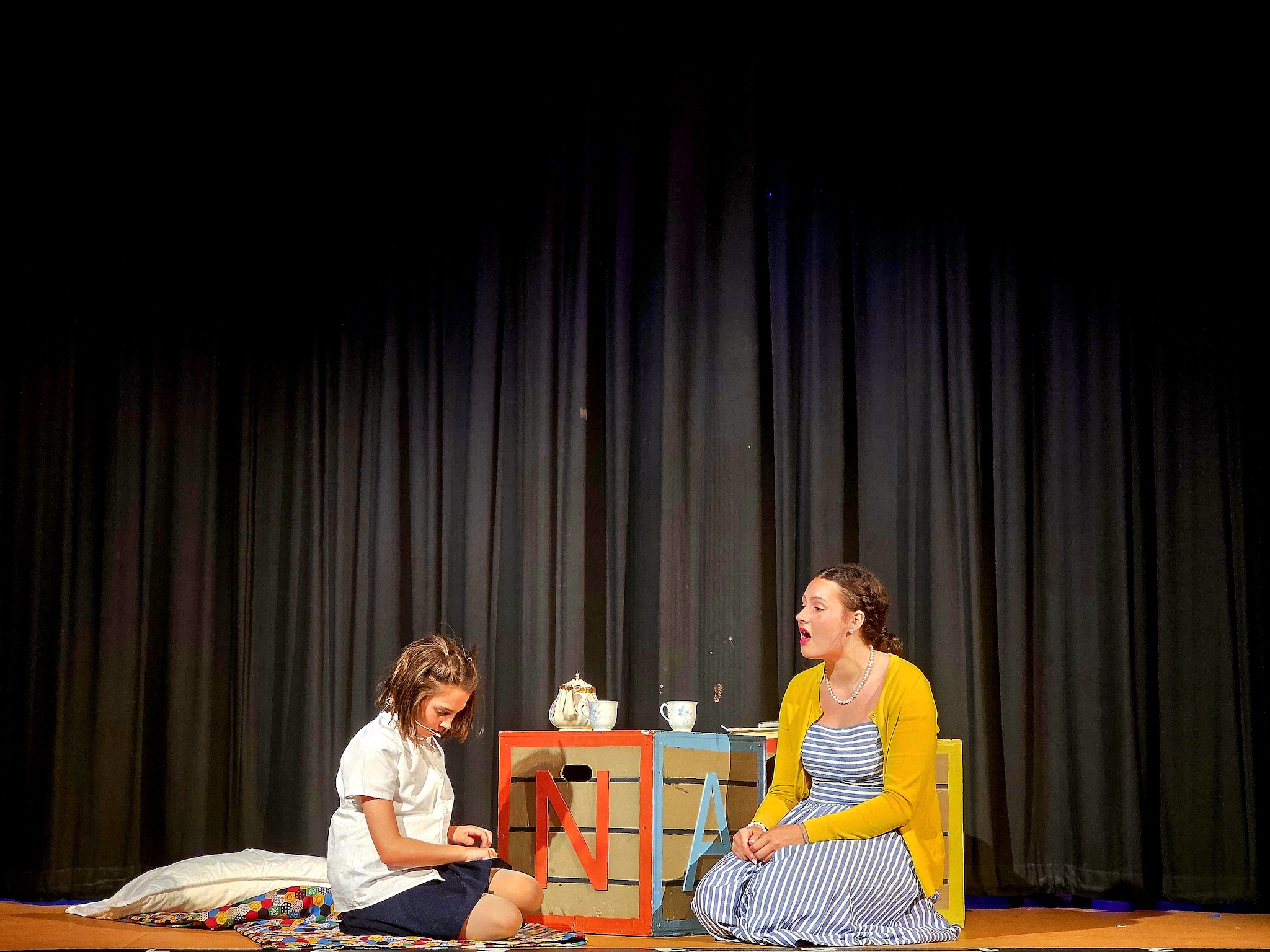
The musical numbers, composed by Tim Minchin, struck a perfect balance between irreverence and poignancy. “This Little Girl is a Miracle,” sung by Abigail Taylor as Miss Honey, showcased her endearing soprano, casting a gentle spell over the room. Meanwhile, “When I Grow Up” delivered a gut punch of quiet longing. As the children sang of their visions for adulthood—equal parts hopeful and heartbreaking—the parents in the audience grew sentimental.
Choreography, crafted by director Chris Parker, brimmed with bold, angular movements that mirrored the show’s quirky sensibilities. Parker also starred as Miss Trunchbull, his towering presence and hilariously grotesque mannerisms striking a delicate balance between menace and absurdity.
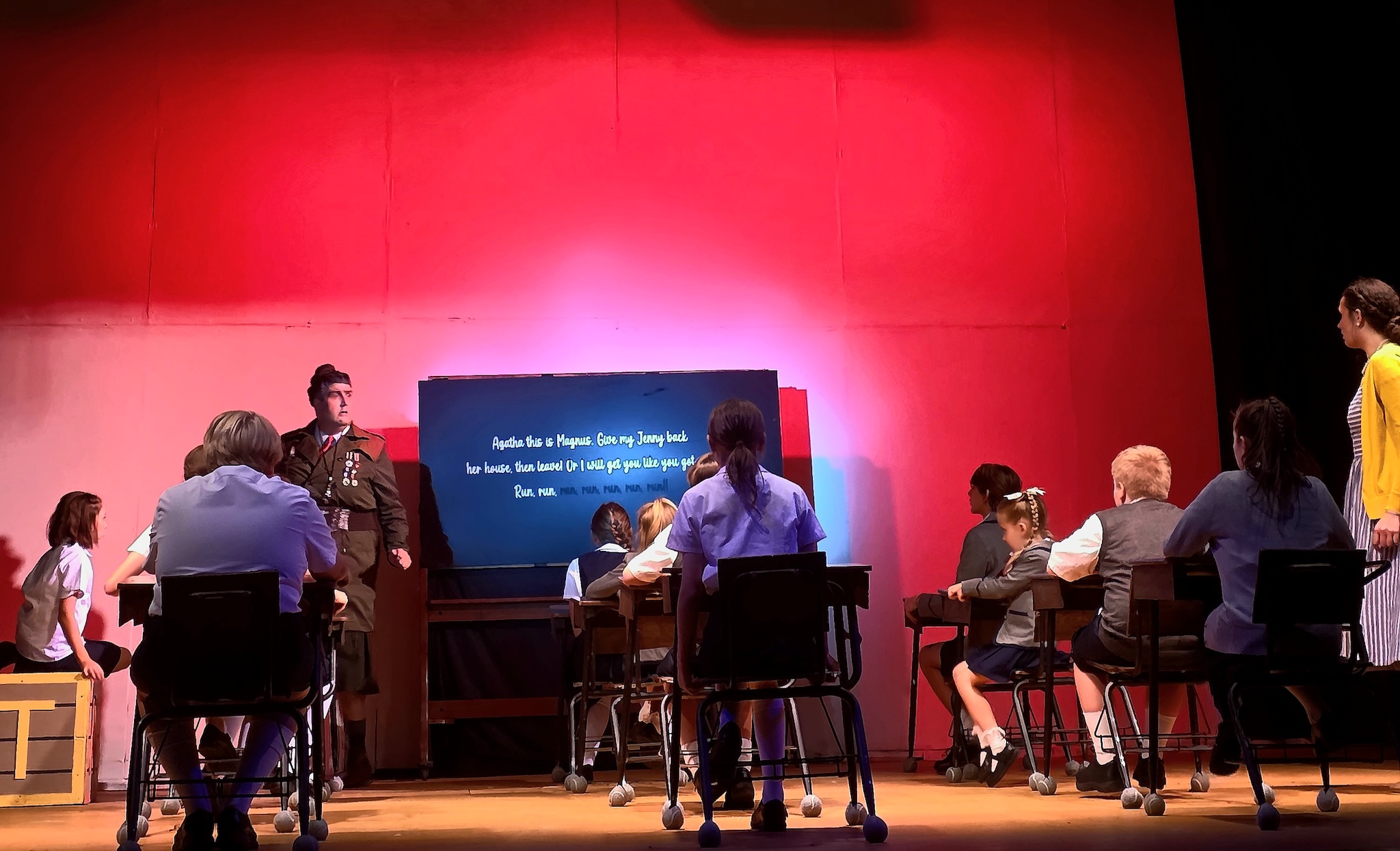
The lighting design was particularly clever, using bursts of red to heighten fear and punctuate comedic beats. Combined with costumes ranging from early-20th-century circus flair to gothic school uniforms and Wormwood family ensembles dripping with gaudy tackiness, the visual storytelling felt as rich and layered as the narrative itself.
A legacy of mischief and magic
Since its West End premiere in 2011 and Broadway debut in 2013, Matilda the Musical has enchanted audiences worldwide, winning seven Olivier Awards and five Tonys. Though the original Broadway run ended in 2017, touring and regional productions continue to breathe new life into Dahl’s creation. This production proves why: Matilda isn’t just a story about a precocious little girl; it’s a timeless reminder of the power of reading, justice, and kindness.
In an era when children confront a world that often feels chaotic and unfair, Matilda offers a vital reassurance. Evil may loom large, but courage and cleverness can still prevail. And in that victory, happiness is not only possible—it’s deserved.
At the final bow, it was clear: this cast had worked hard and poured their hearts into the performance. For seven months, they had been learning and living with their characters. The result was a production brimming with energy, humor, and that elusive touch of magic Dahl would surely have approved of.
Performances of Matilda the Musical run July 16–20, July 23–27, and August 2–3, 2025. Weeknight and Saturday shows are at 7:30 p.m. with 2 p.m. Sunday matinees and an extra matinee on Saturday, August 2. Tickets are available for purchase online.
This article has been corrected to reflect that Mara Bishop performed on the night of this review.