Editor’s note: In July 2025, Now Habersham weathercaster Tyler Penland headed west to hike and camp in Yellowstone National Park. His latest “Go West, young man” series features the stunning images he captured and the stories he brought back.
As you stand at the Mammoth Visitor’s Center in Yellowstone, you may get a whiff of sulfur in the air. If you plan on spending much time in the geothermal features of the park, you’d best get used to that smell.
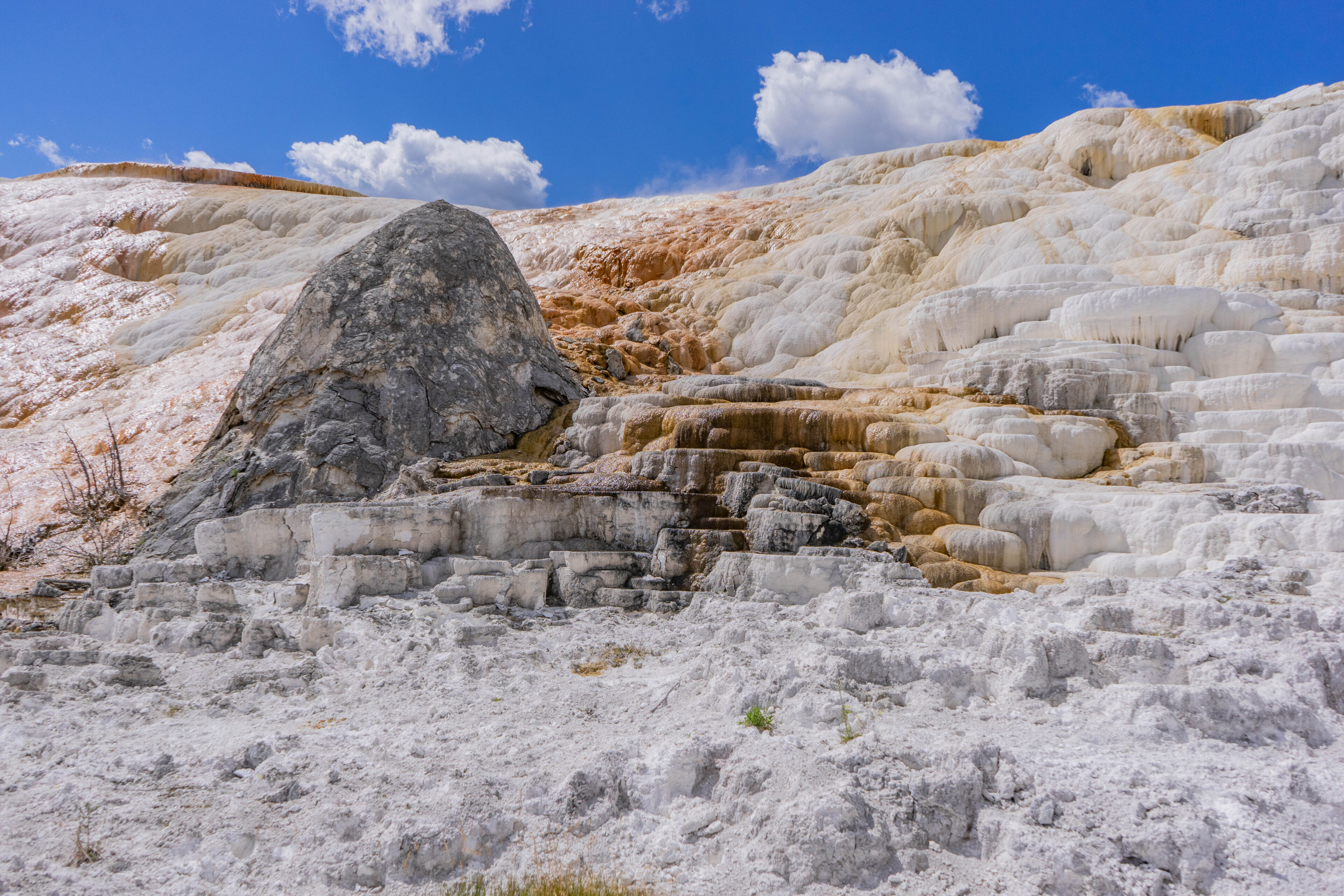
On the crisp mid-60s morning of July 23rd, steam was rising from the giant white hill lying just beyond the buildings. This stark white stands out from the rest of the surrounding green and grey hillsides. If you look closely, you’ll probably see some prairie dogs poking their heads out of the grass as you drive towards the giant pile of steaming rock. Finding parking was easy for us this particular morning, although that isn’t always the case. The Mammoth Hot Springs are the main feature of the northern end of the park.
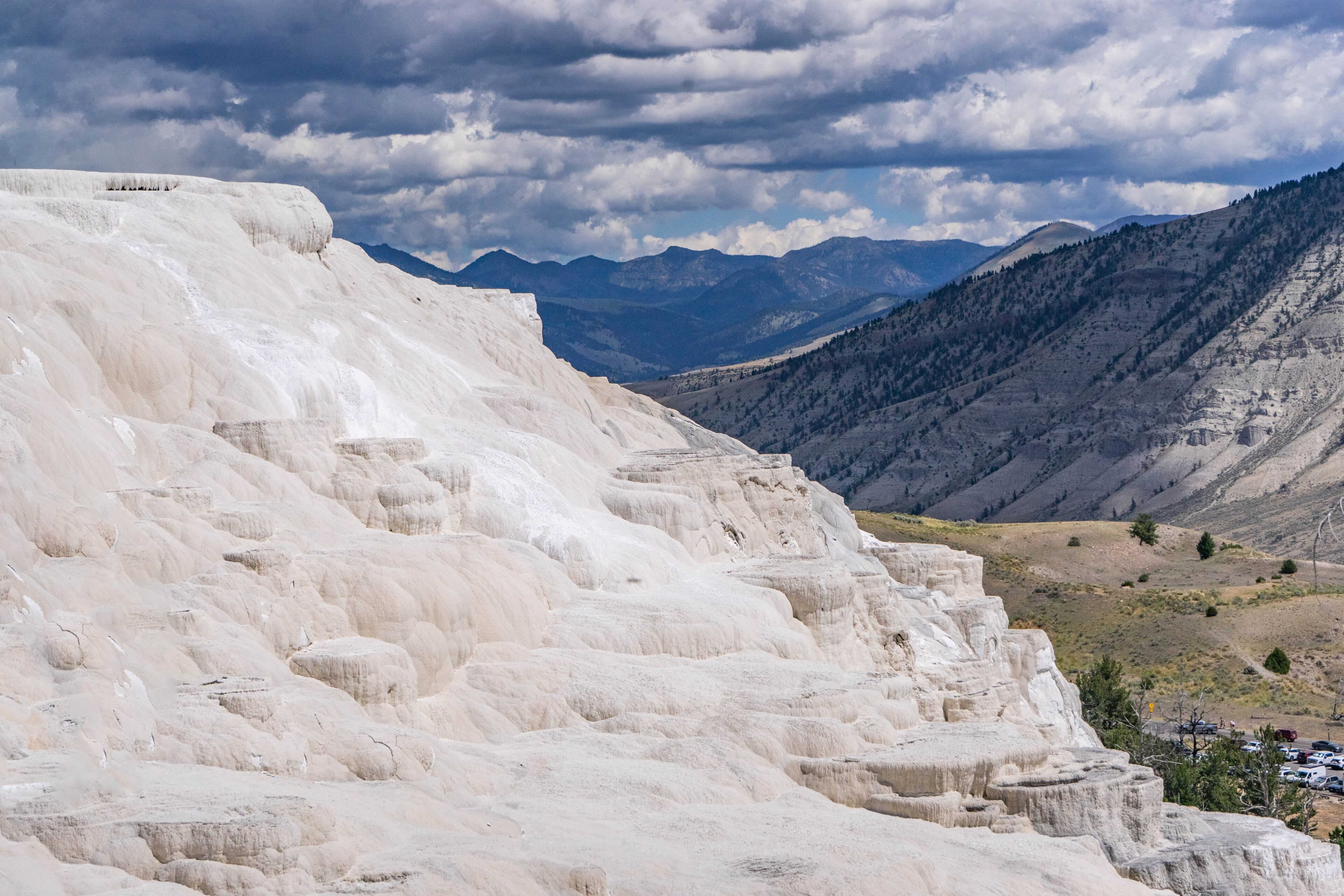
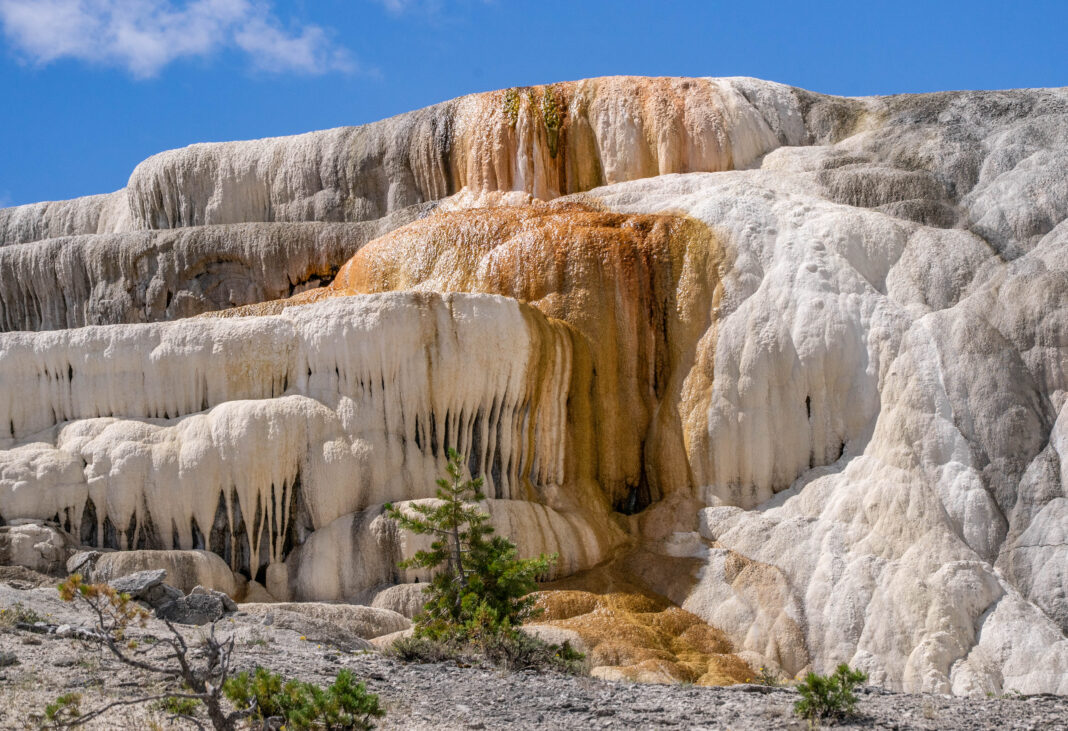
These hot springs have been active for several thousand years and are constantly changing. The water supply comes from the Norris Geyser Basin and travels along a fault line from south to north before bubbling through the surface into superheated springs. As it travels, the water picks up limestone, which then gets deposited in stunning white, grey, tan, and rust colored rock formations. This rock is known as travertine, and the formations are mostly known as terraces, due to their terraced nature.
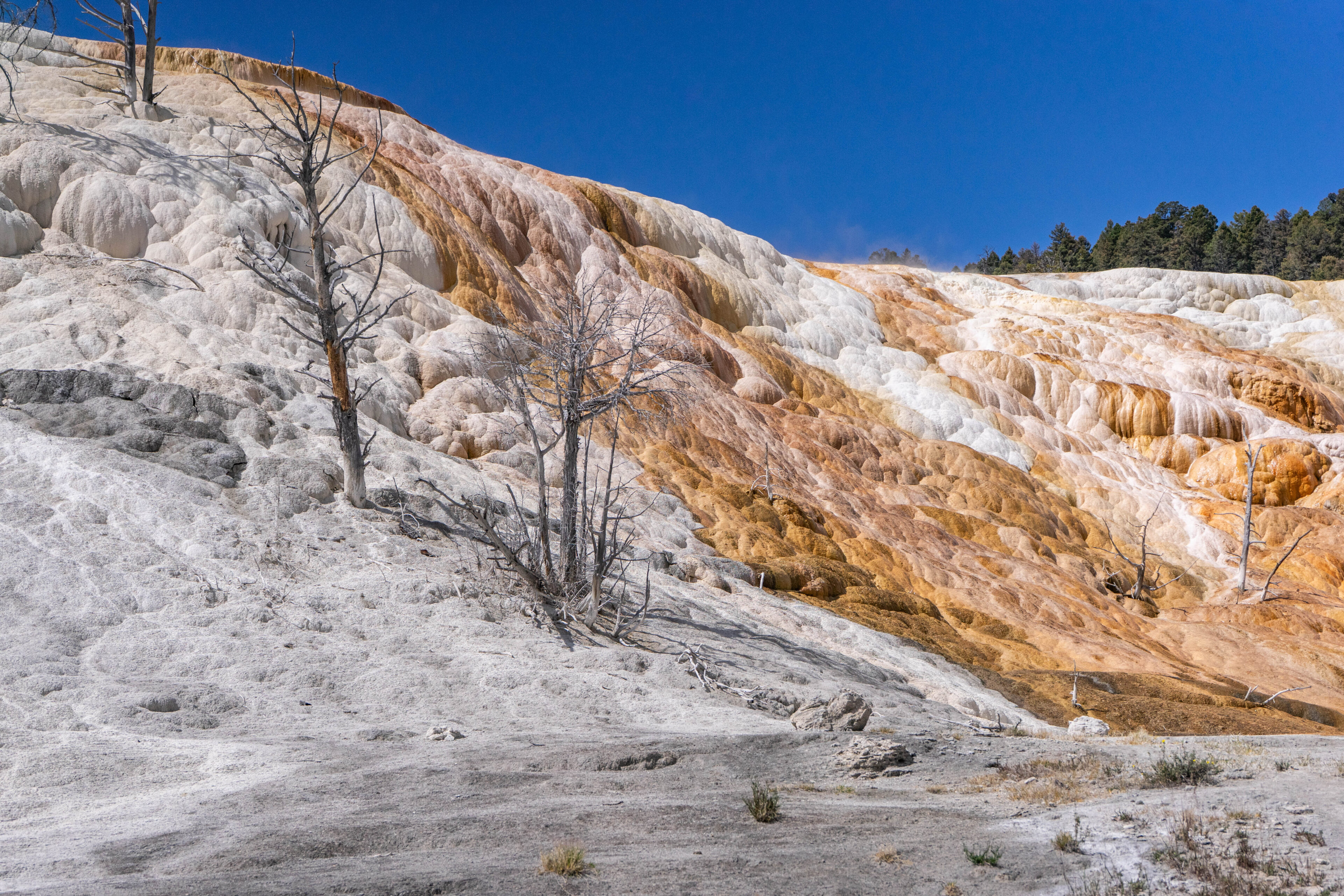
These terraces are in a state of constant change. They are constantly being built downstream and eroding above. Water flow from the different springs has changed over the past few decades. According to a report from the USGS in 1978, the area consists of over 100 springs, although many of these spend much of the time dormant. Currently, there are a handful of vibrant springs visible from the many boardwalks that take you over this fragile area.

The area is fragile and also quite dangerous. The water temperatures can reach maximum temperatures around 160ºF, although they are generally slightly cooler. Plentiful steam rises from the springs and terraces on cool days. One interesting point is that the water isn’t particularly acidic. Acidic water is commonly associated with volcanoes and volcanic features, but most of the water in Yellowstone isn’t very acidic. In fact, after emerging around a PH of 6 (barely acidic), the waters in Mammoth Hot Springs turn slightly basic once losing their carbon dioxide.
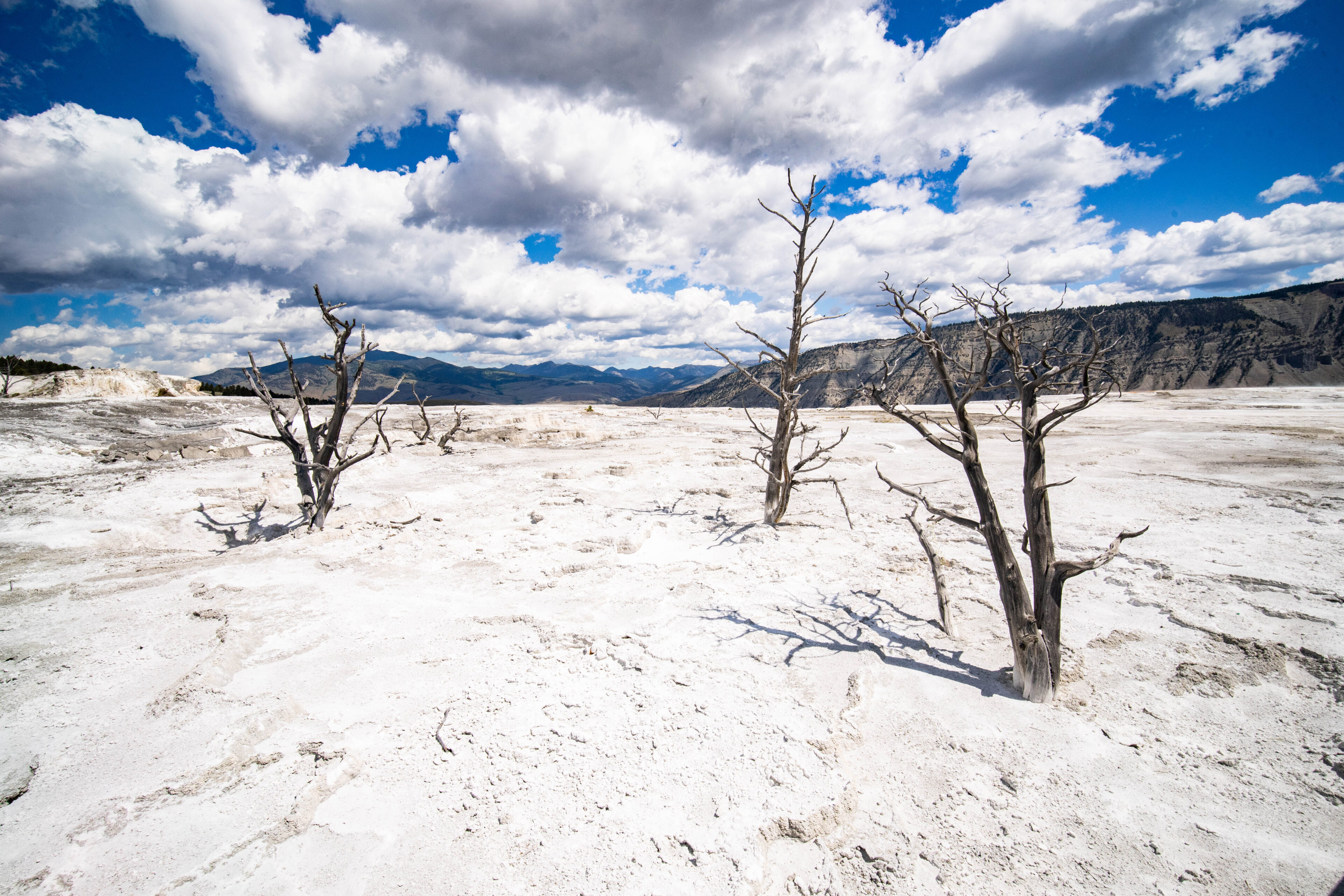
The constantly changing nature of the terraces is evident in the number of unfortunate trees that were trapped in the advancing limestone. These dead trees stick out of the chalky ground in numerous spots.
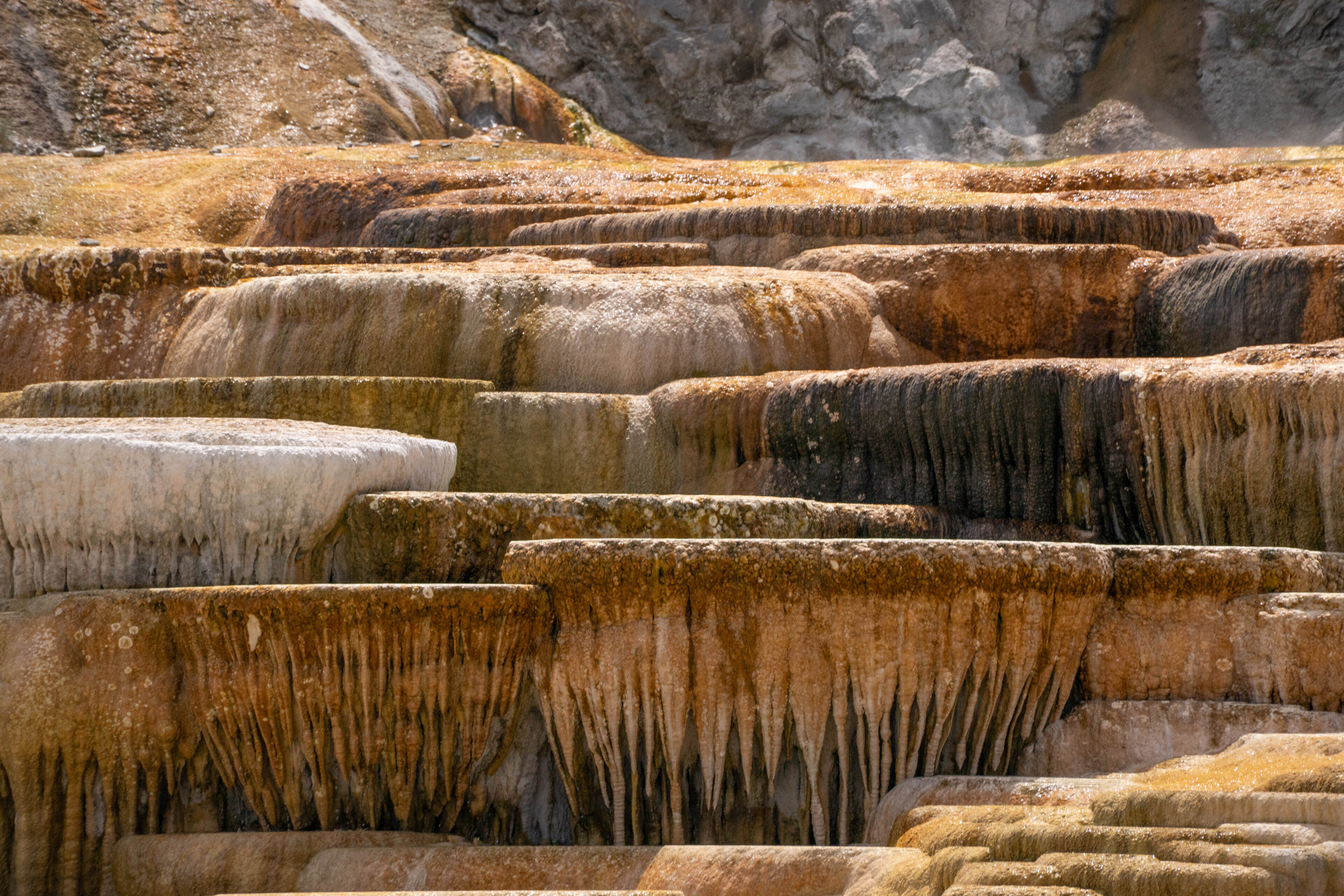
Viewing these terraces up close reveals the truly fascinating nature of the travertine. It looks like something you would see in a cave (which it is). The slow drip of the water results in fascinating spires of rock that look like they come from an alien planet.
No spot is as beautiful as the Minerva Spring Terrace. The beautiful colors of the rock really show off in this spot full of small stepped terraces and taller ones towards the top.

We spent about an hour and a half exploring this area, but our journey was just beginning. It was time to go climb our first mountain….
Other articles in this series:
Go West, young man: To where it started