Editor’s note: In July 2025, Now Habersham weathercaster Tyler Penland headed west to hike and camp in Yellowstone National Park. His latest “Go west, young man” series features the stunning images he captured and the stories he brought back.
After getting a nice 4-mile hike up Bunsen Peak, it was now time to go watch the Earth sneeze. And by that, I mean see some geysers.
Norris Geyser Basin is located a ways south of Bunsen Peak, but the drive there is absolutely gorgeous. This shouldn’t be a surprise if you saw the images from last week’s story that featured the giant, beautiful valley located at the north end of the park. As you approach the basin, though, the elevation dips a bit, and you start to see more and more springs and random bits of steam. You’ll also drive by Roaring Mountain, a large area of fumaroles that in the early 1900s could be heard from several miles away.
You get some nice overviews of some natural lakes and springs on the drive down as well. This particular lake is located just above Norris and is called Nymph Lake. Note the deep blue colored spring just visible through the trees near the bottom of the image.

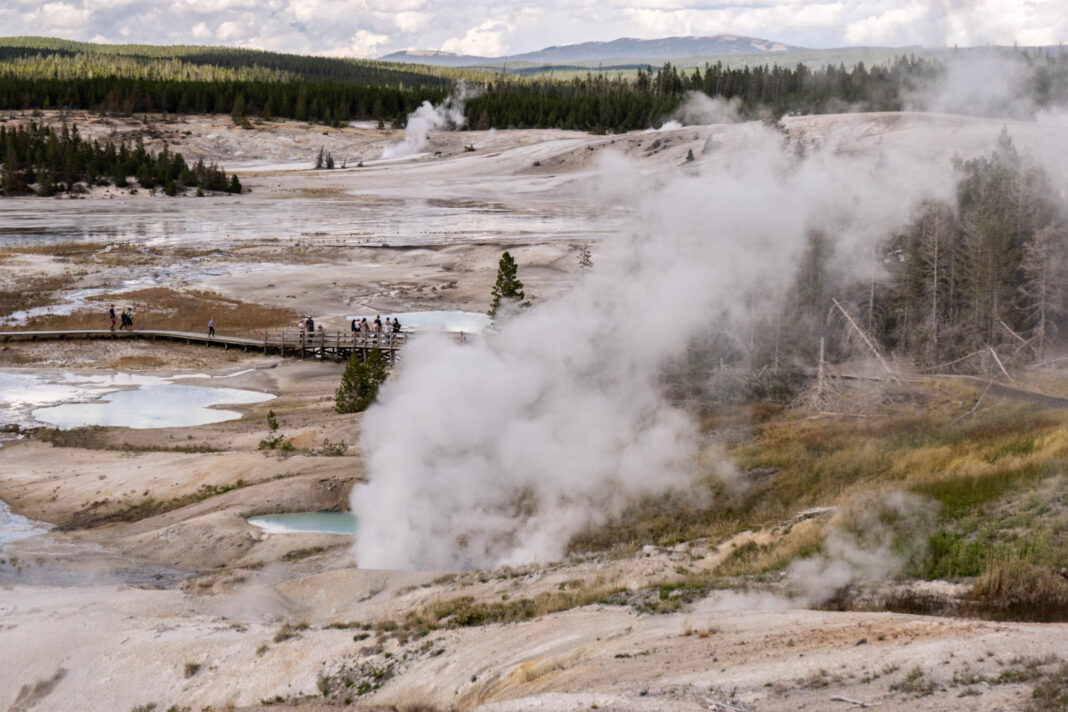
There are several boardwalks that run through Norris Geyser Basin. The basin is actually split into three areas: Porcelain Basin, Back Basin and One Hundred Springs Plain. The main things you will see are Porcelain and Back Basins as these contain some of the more impressive parts. On this particular day we were treated to partly cloudy skies and a very active landscape. Ledge geyser was particularly active on this day as it emitted a very loud growl of steam. The view overlooking the Porcelain Basin is really something else and photos don’t really do it justice.

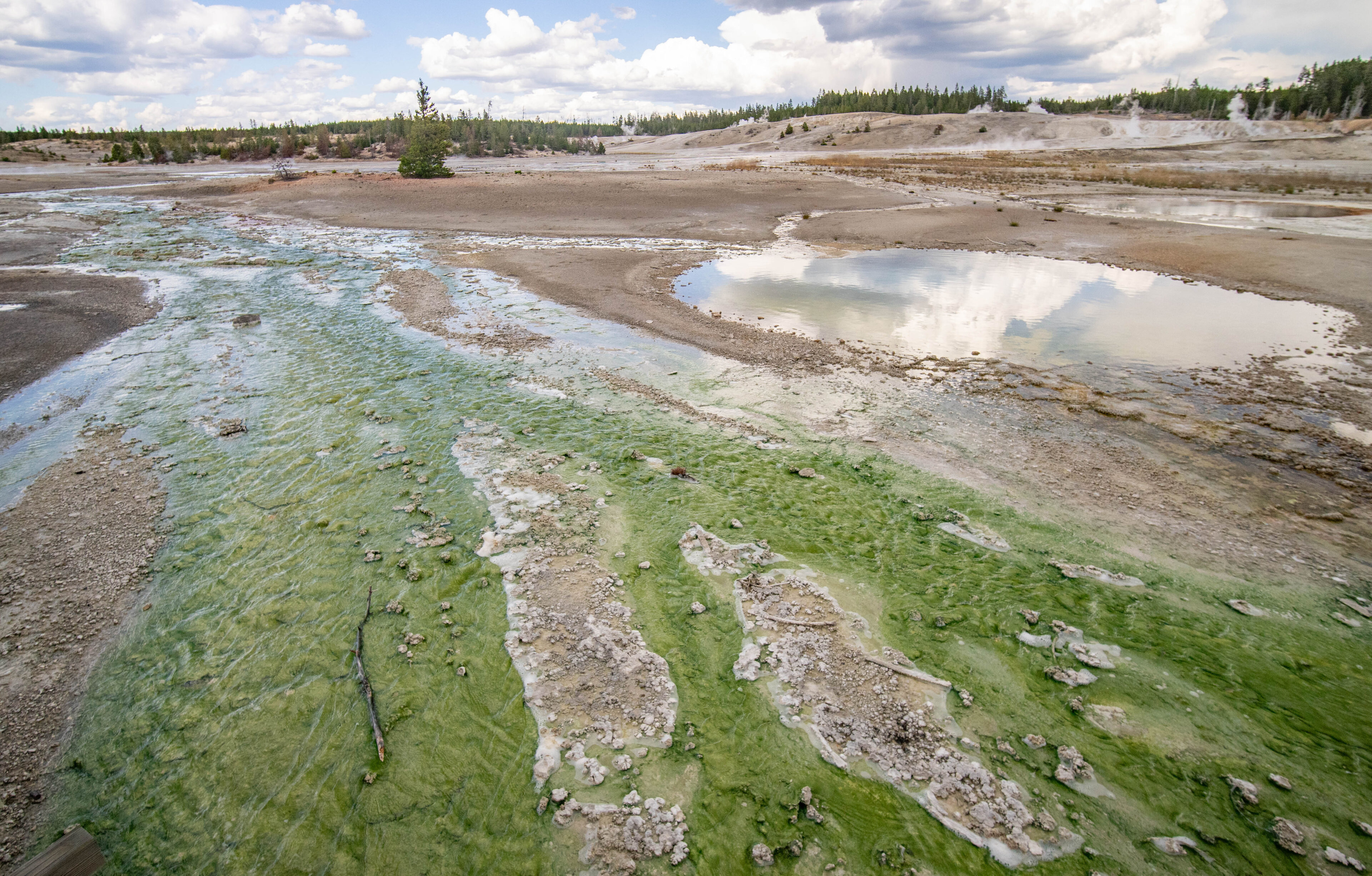
As you walk along the boardwalk you will see pool after pool of bubbling water and countless steam vents. If you weren’t used to the smell of sulfur already from visiting Mammoth Hot Springs, you’ll definitely have to get over it here as the air is full of the stench from time to time. Norris Geyser Basin is the hottest basin in the park with almost all of the thermal features being above the boiling point (199º at this elevation). The hottest temperature ever recorded in the park came from a drilling project in the basin where a temperature of 439ºF was recorded just 1000 feet down, very impressive. The waters here are also very acidic which is the opposite of the rest of the park. Algae manages to grow in the flowing waters between the springs and shows as a brilliant green against the otherwise mostly white, tan and gray landscape.
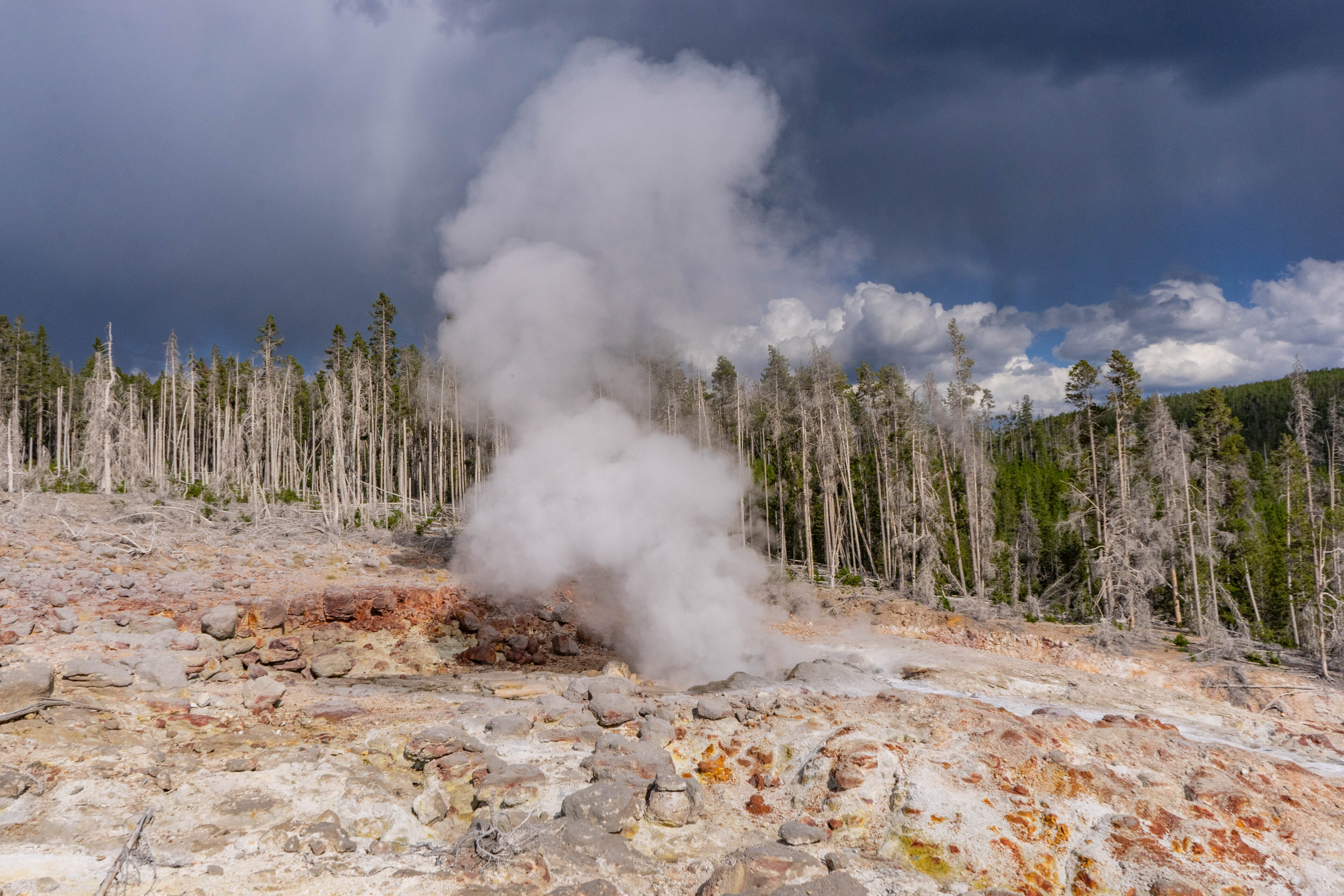
As you head towards Back Basin you will get to see the largest active geyser in the world: Steamboat Geyser. This geyser has an extremely irregular eruption schedule, sometimes going days and other times decades between major eruptions. When it does erupt, it can send water as high as 300ft into the air, nearly double the height of the infamous Old Faithful. While it wasn’t erupting during our visit, the geyser is almost always putting off plenty of steam. The red colors of these rocks are largely due to extremophile bacteria thriving on the acidic soils.
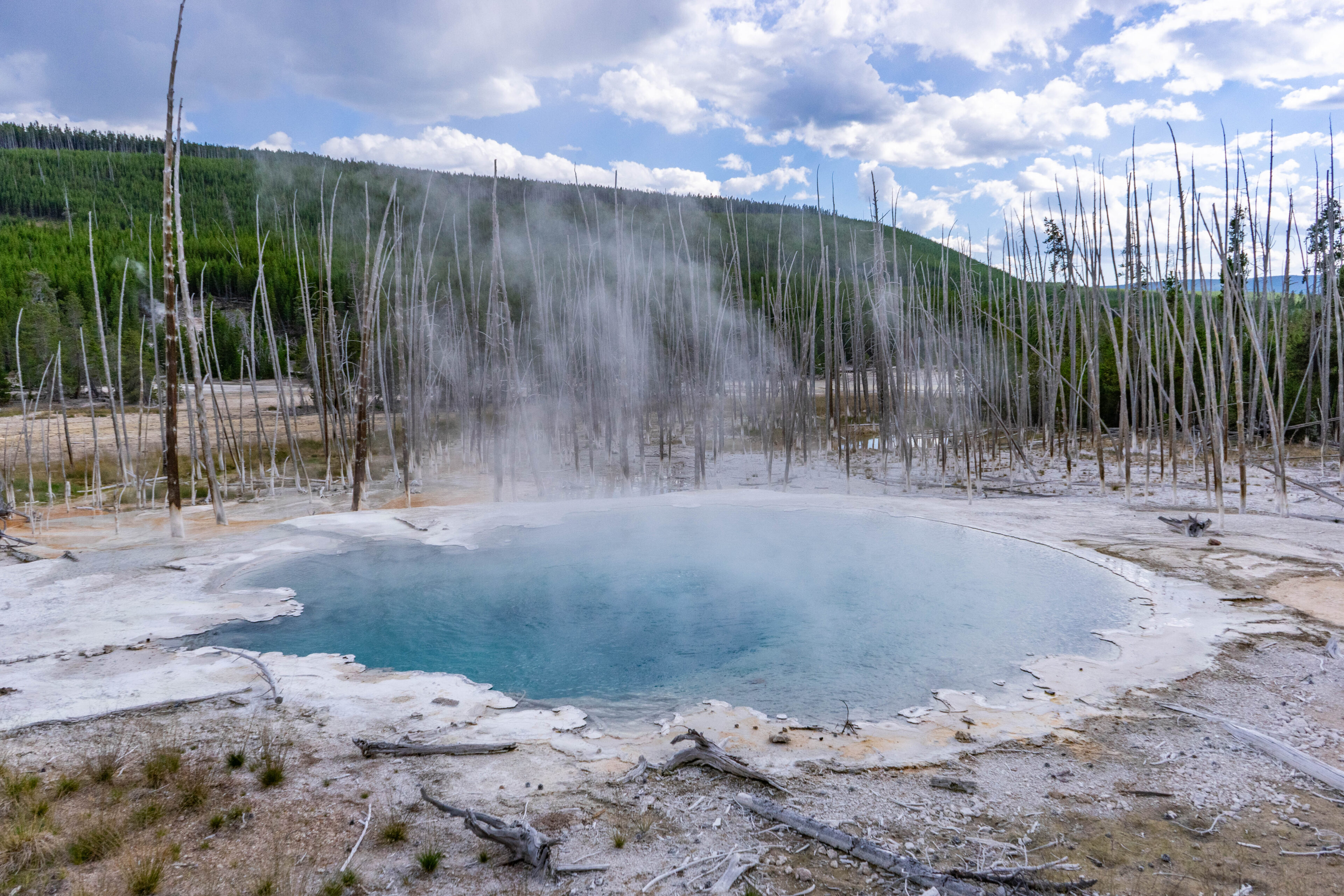
The colors in the Back Basin vary quite a bit and are different than many other areas in the park due to the acidity. This beautiful, deep blue pool, known as Cistern Spring, is surrounded by trees that have fallen victim to the harsh volcanic environment.
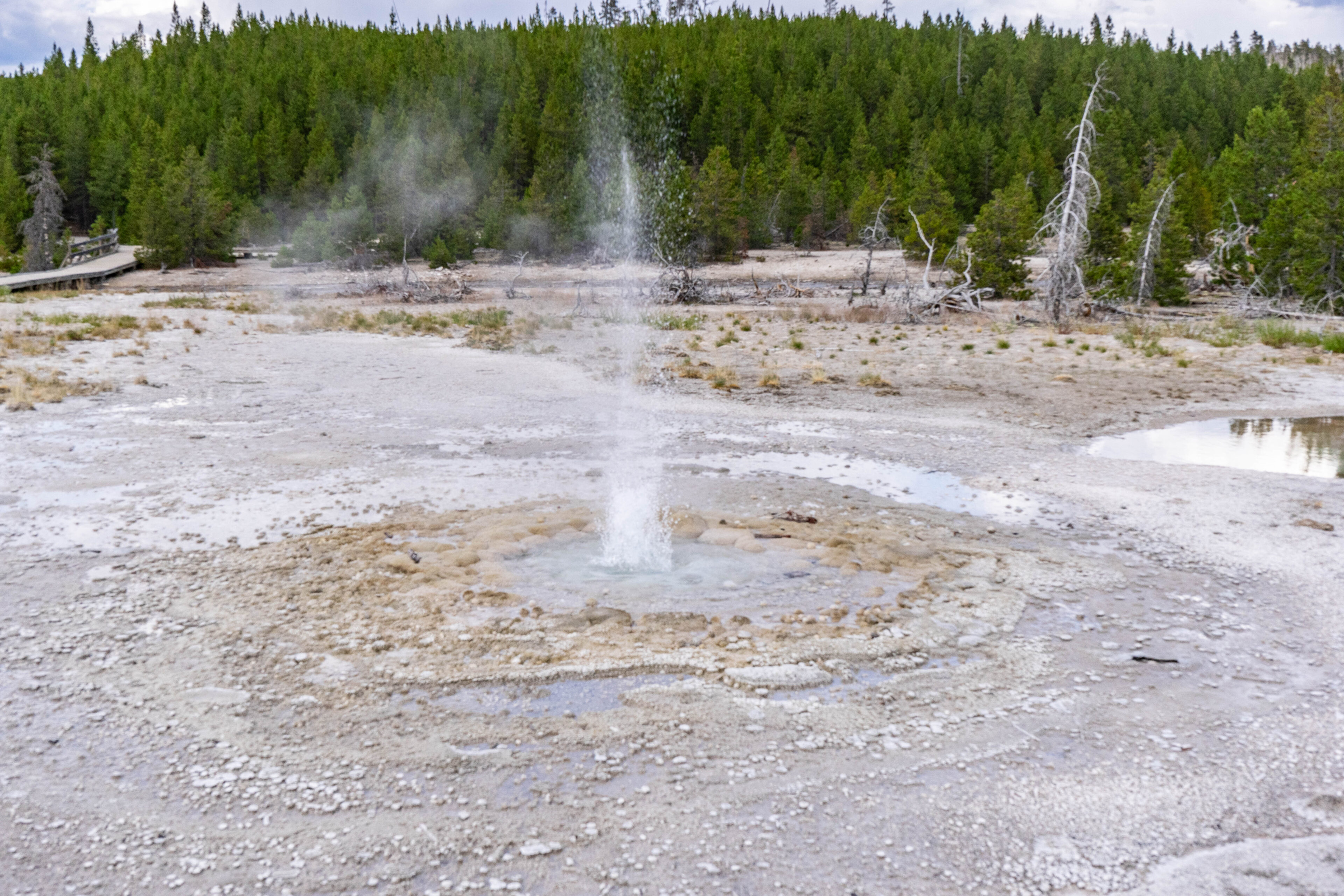
If you pay close attention, you will likely also get to see plenty of small pools bubbling like mad. This tiny pool was trying its best to be a full-blown geyser, shooting water around 6-8ft in the air.
Perhaps my favorite spot was the Black Hermit Cauldron, where water churns out of a hole in the hillside, but unfortunately, the steam didn’t allow for any great photos; you’ll have to go see it for yourself.

The rest of the hike around the basin is filled with views like the one below. Beautiful pools, spouting steam, and the smell of sulfur all lead to feeling like you are on another planet.
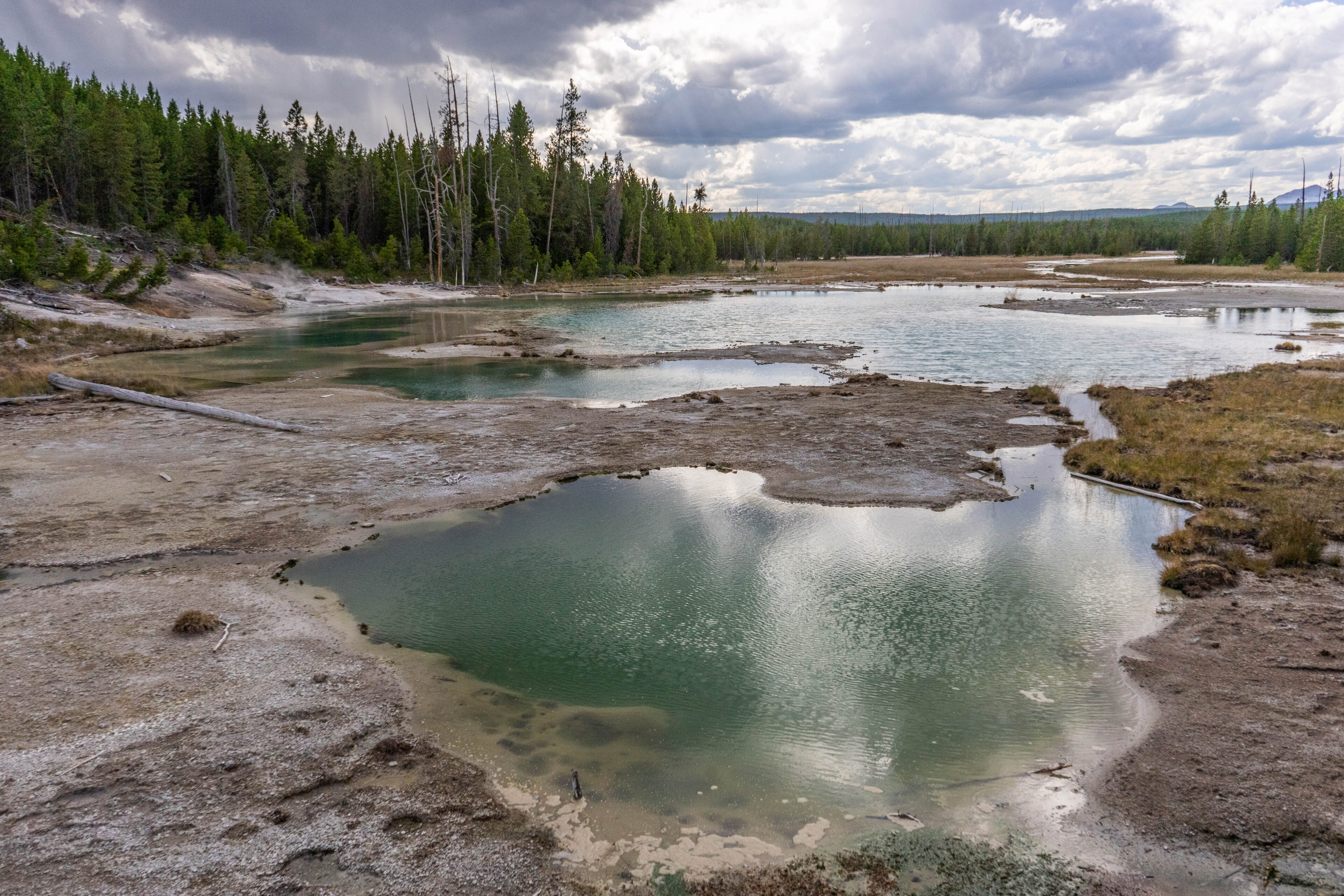
Unfortunately for us, by the time we got done at Norris Geyser Basin, the day was drawing near a close. It was time to head to our campsite for the night, which was going to require a 2-mile hike in, so we’d best get going….
Other articles in this series: