Editor’s note: In July 2025, Now Habersham weathercaster Tyler Penland headed west to hike and camp in Yellowstone National Park. His latest “Go west, young man” series features the stunning images he captured and the stories he brought back.
The geography across Yellowstone National Park is very diverse. Up to this point, we had seen mainly the rolling hills and valleys with just a couple of sections of steep mountains. In the northeast corner of the park, however, stands one of the world’s greatest geological wonders: Yellowstone Canyon.
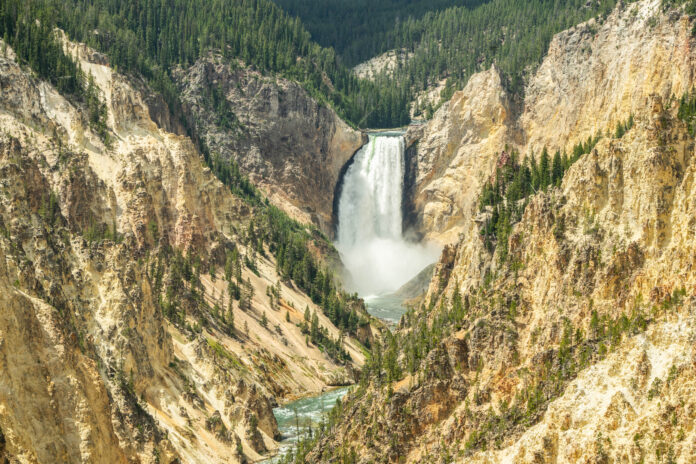
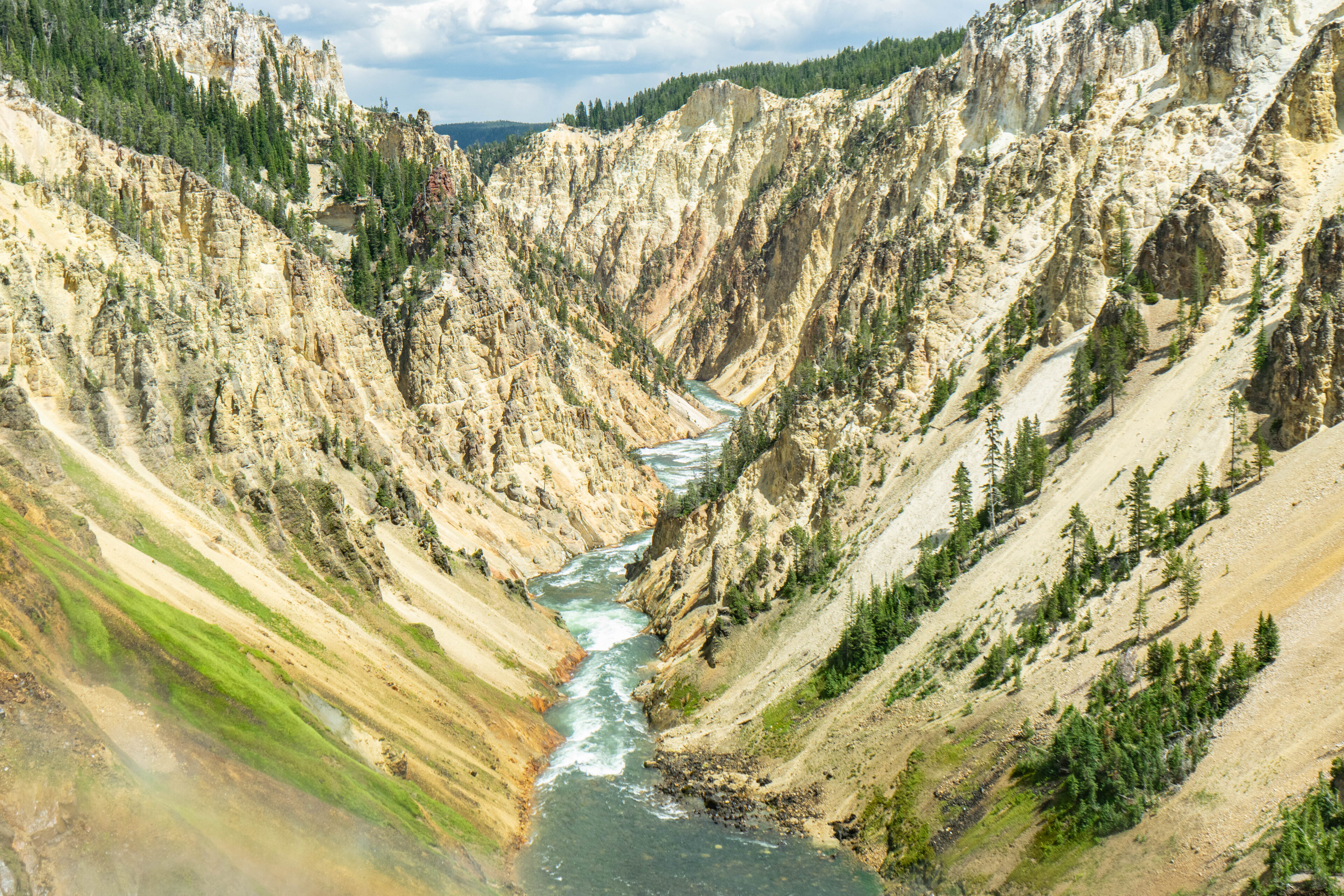
Dubbed the “Grand Canyon of the Yellowstone”, this 1,000-foot-deep ravine is carved for roughly 20 miles. It features three stunning waterfalls, including Upper and Lower Yellowstone Falls and Tower Falls. Its width varies from 1,500ft to 4,000ft, and the walls are lined with colorful rocks. The canyon’s colors almost look fake in person.
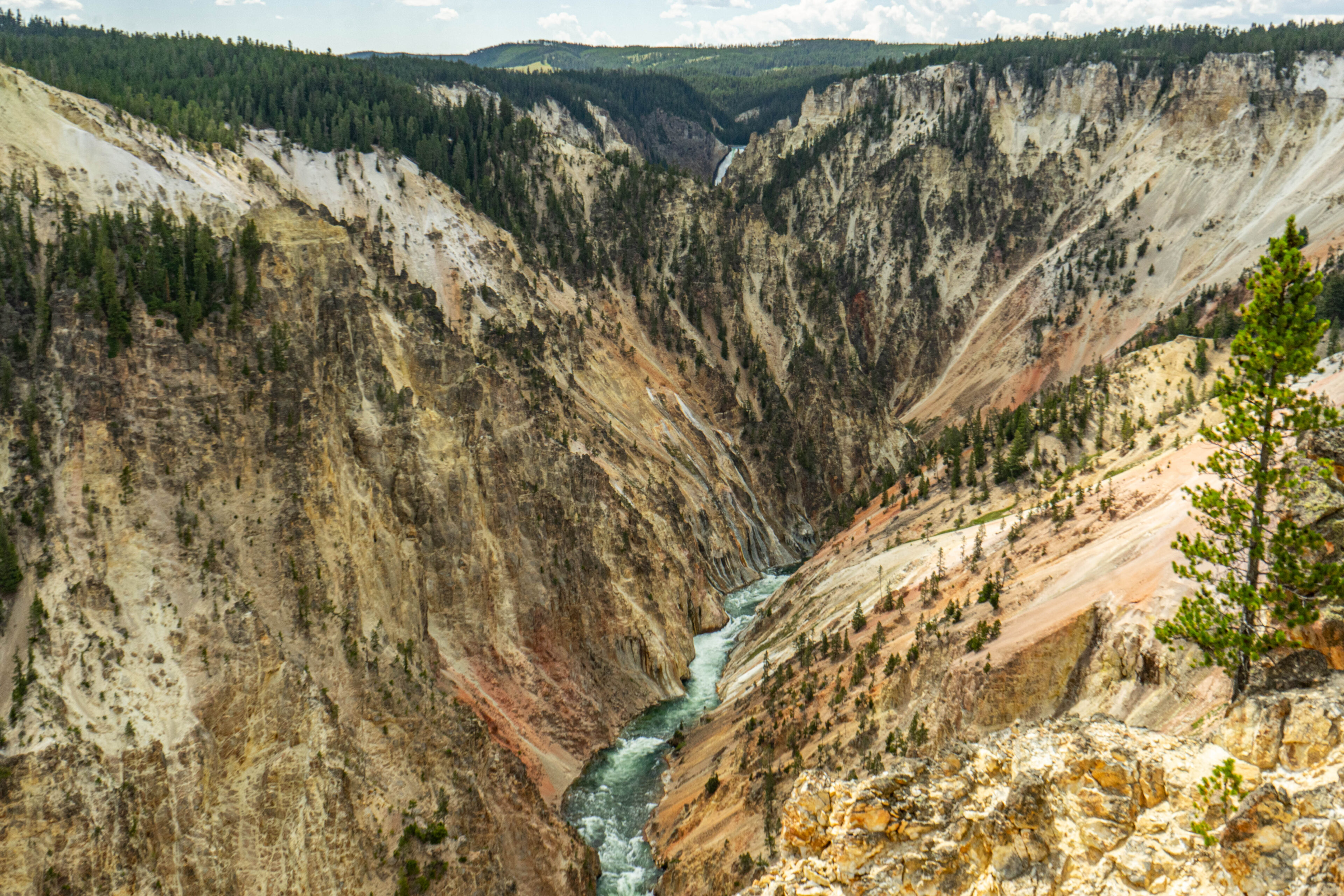
The canyon itself is relatively young by geological terms. The last eruption of the Yellowstone Supervolcano was “only” 630,000 years ago, and the canyon has formed since then. Geologists with the National Park Service and USGS believe a smaller canyon formed no more than 140,000-160,000 years ago. Over time, changing hydrothermal activity gradually weakened the rocks, allowing the river to carve its way down. Hydrothermal activity, including geysers, fumaroles, and steam vents, can still be spotted from time to time within the canyon walls.
The main show of the canyon, though, is the pair of giant waterfalls at its upstream (southwest, in this case) end. The upper falls look very similar to the iconic Linville Falls in North Carolina. When visiting the upper falls overlook, I ran into some camera issues that precluded me from getting any good photos, but I was able to snap this from downstream later in the day.
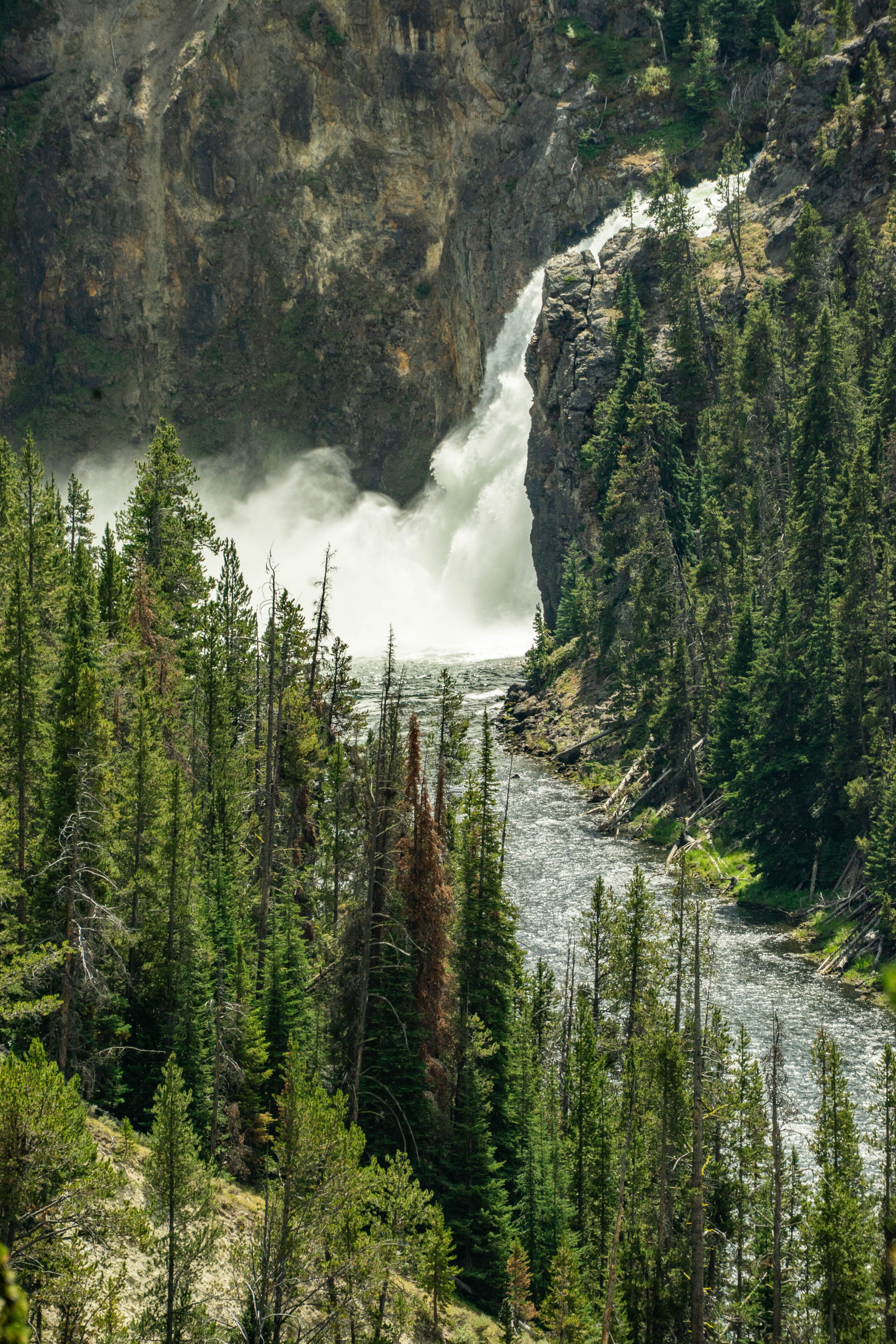
The upper falls drop 109 feet, more than twice as high as the aforementioned look-alike in NC. It is here that the river begins to cut into the softer rock, with much harder volcanic rock found upstream. Just a few hundred yards downstream, the real fun begins.
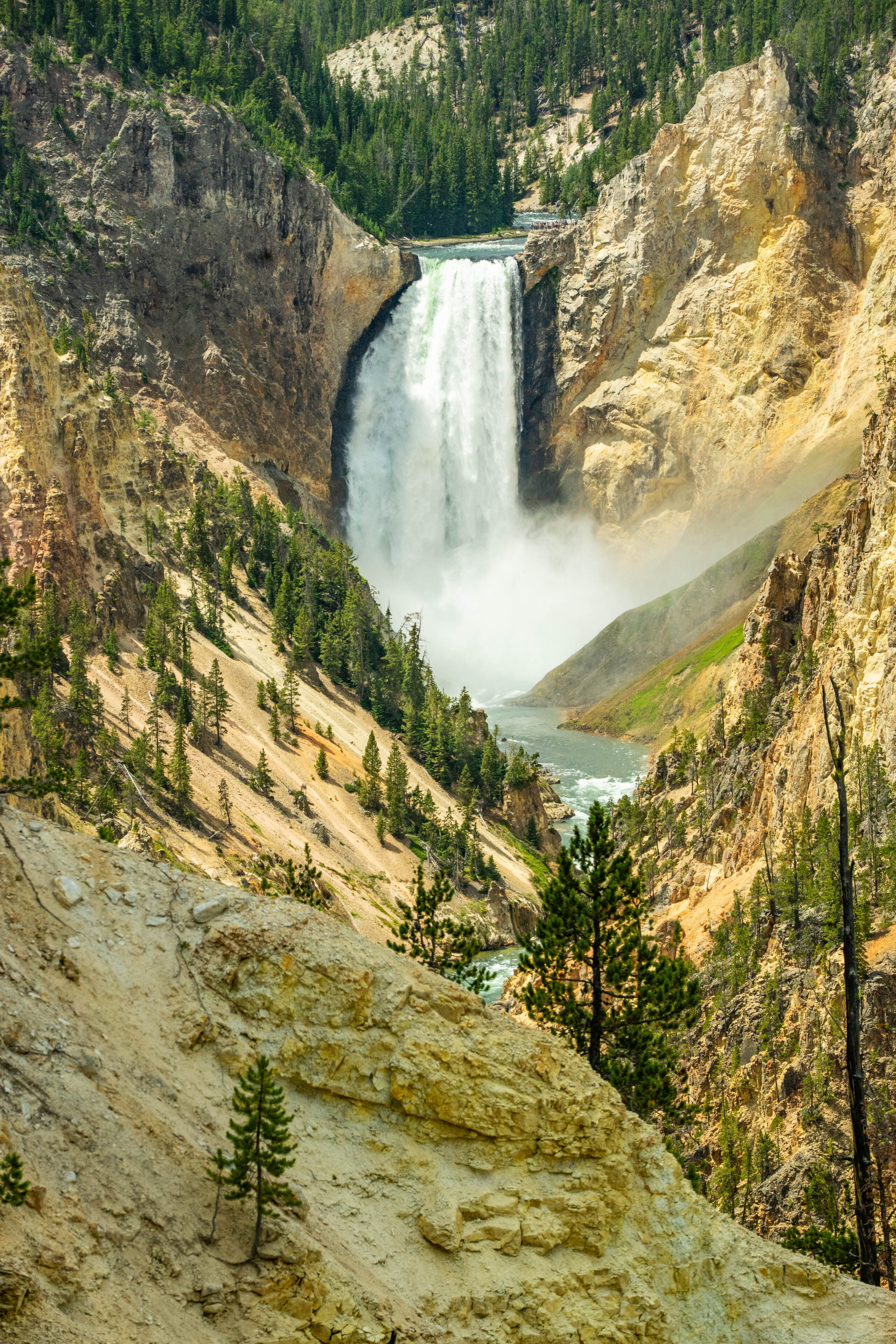
Lower Yellowstone Falls is absolutely gigantic. It drops 308ft from the top to the river below, and accomplishes it in one fell swoop. The lower falls are the centerpiece of one of the most iconic views in the entire National Park System. Artist Point is located on the southern rim and offers an unobstructed view of the beautiful canyon with the massive falls in the distance.
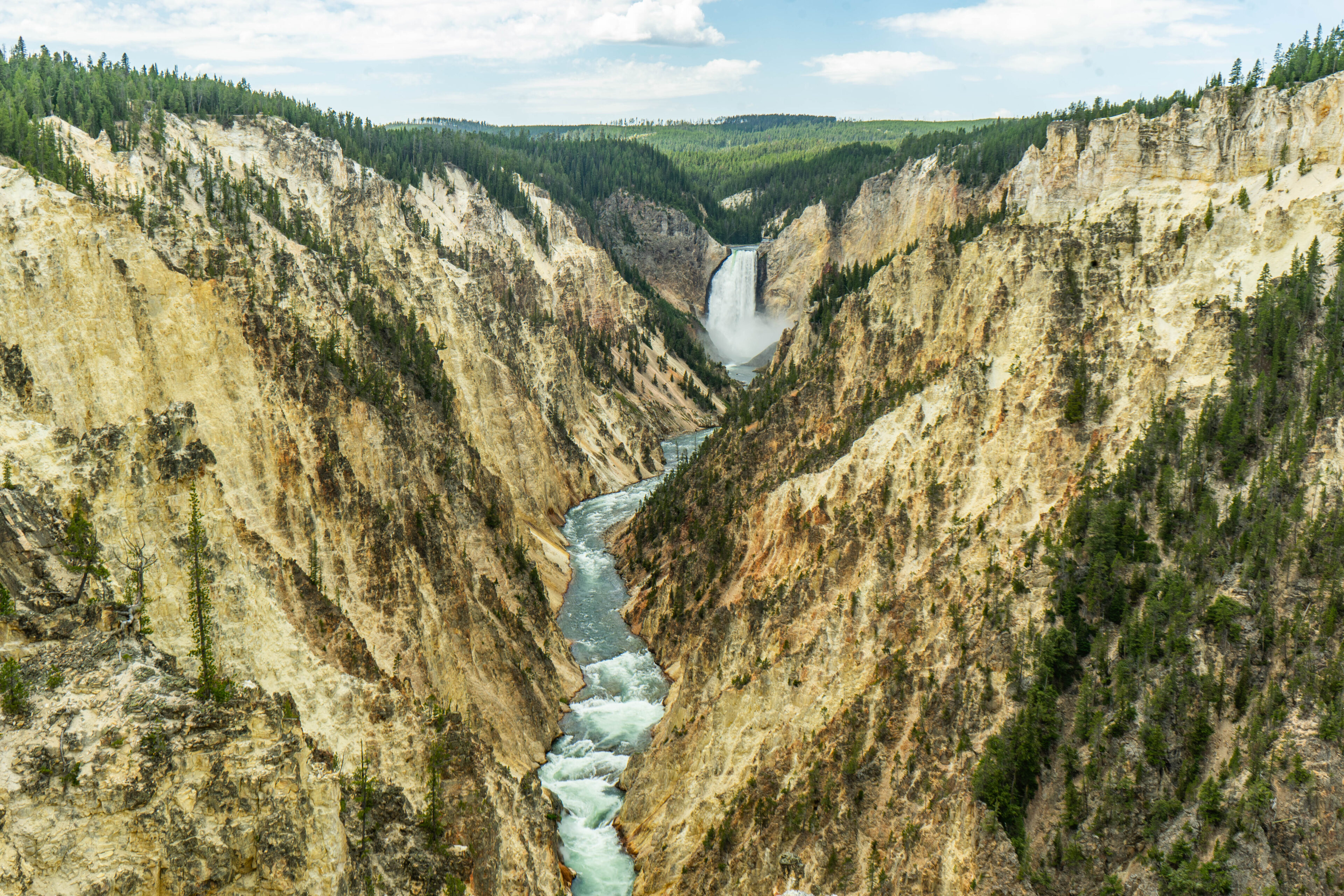
The views of the lower falls are limited from the south rim, but a quick drive around the north rim offers many different perspectives. Parking can be a challenge in this busy spot, and we saw license plates from all over the country, plus Canada.
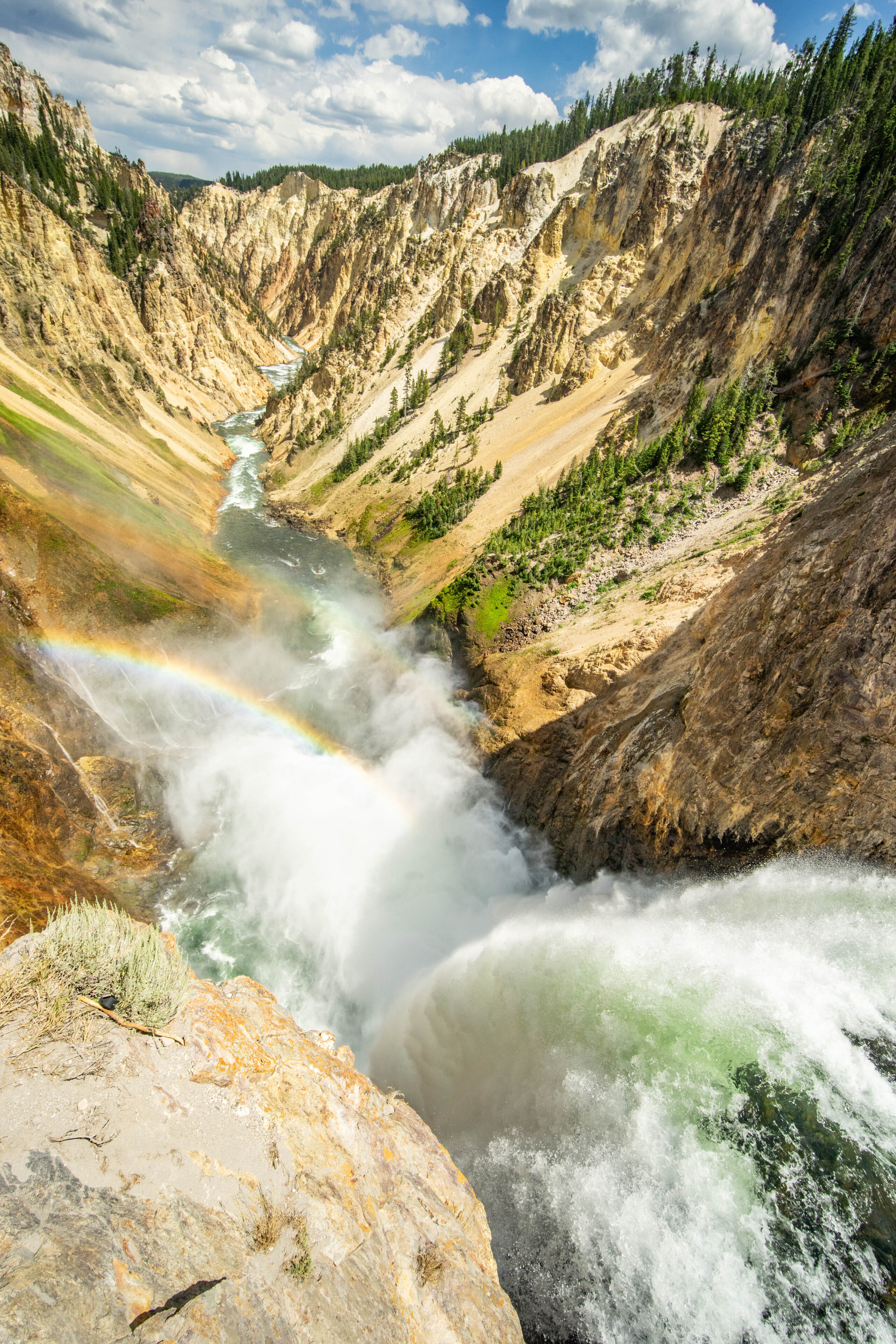
A steep trail descends to my favorite viewpoint we visited: the brink of the lower falls. A narrow trail and viewpoint bring you literally to the edge of the lower falls. From here, you can see the water falling a football field distance below you. On this day, we were treated to a beautiful double rainbow in the steam. I got my favorite photo of the trip from this spot, making it well worth the steep hike.
From there, we were limited on time but hit a couple more viewpoints. I made sure to capture some photos of the fantastic rock formations on the far side of the canyon, showing them in isolation. Photos really don’t do the colors justice. The deep browns, reds, and yellows stand out starkly against the green vegetation and blue sky.

From the canyon, we had to quickly make our way towards our next stop and campsite for the night. And we might meet a few “friends” along the way….
Check out Tyler’s other articles in this series:
- Go West, young man: To where it started
- White Mountain
- Bunsen Peak
- Norris Geyser Basin
- Star light, star bright
- A ‘Faithful’ meeting
- Shattering Earth
- Isn’t She Grand?