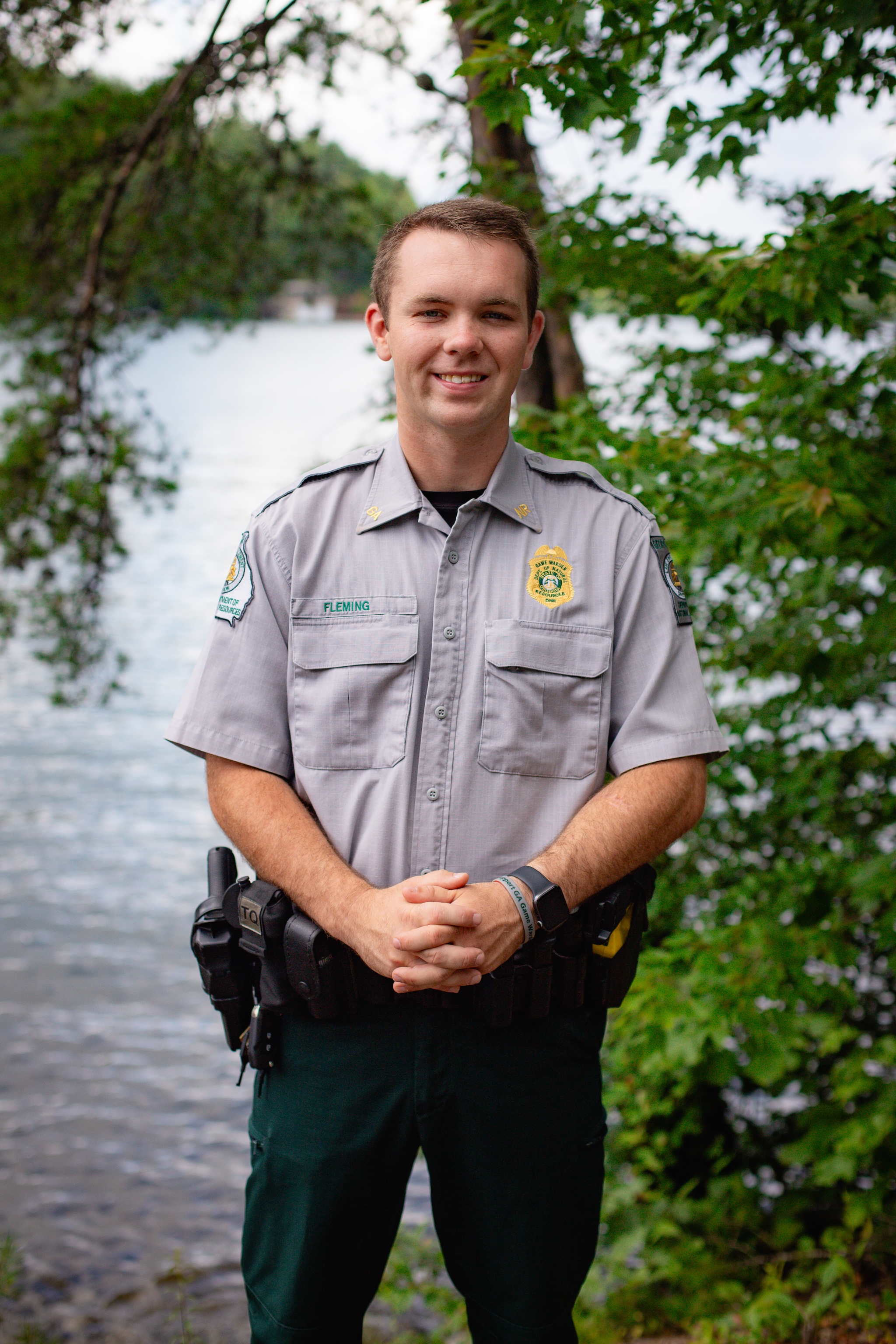
Chase Fleming, at 25 years old, hasn’t been on the job as a Georgia Game Warden very long, but his tenure has had its tense moments. Approaching a couple on Lake Lanier one day last year, he soon discovered that they had been enjoying the fruit of the vine (or some other spirit, perhaps). When he indicated that he would have to cut short their revelry because of BUI concerns—that’s Boating Under the Influence—the woman expressed herself rather forcefully.
“She came up with swear words I’d never heard before,” Fleming says.
By the rules
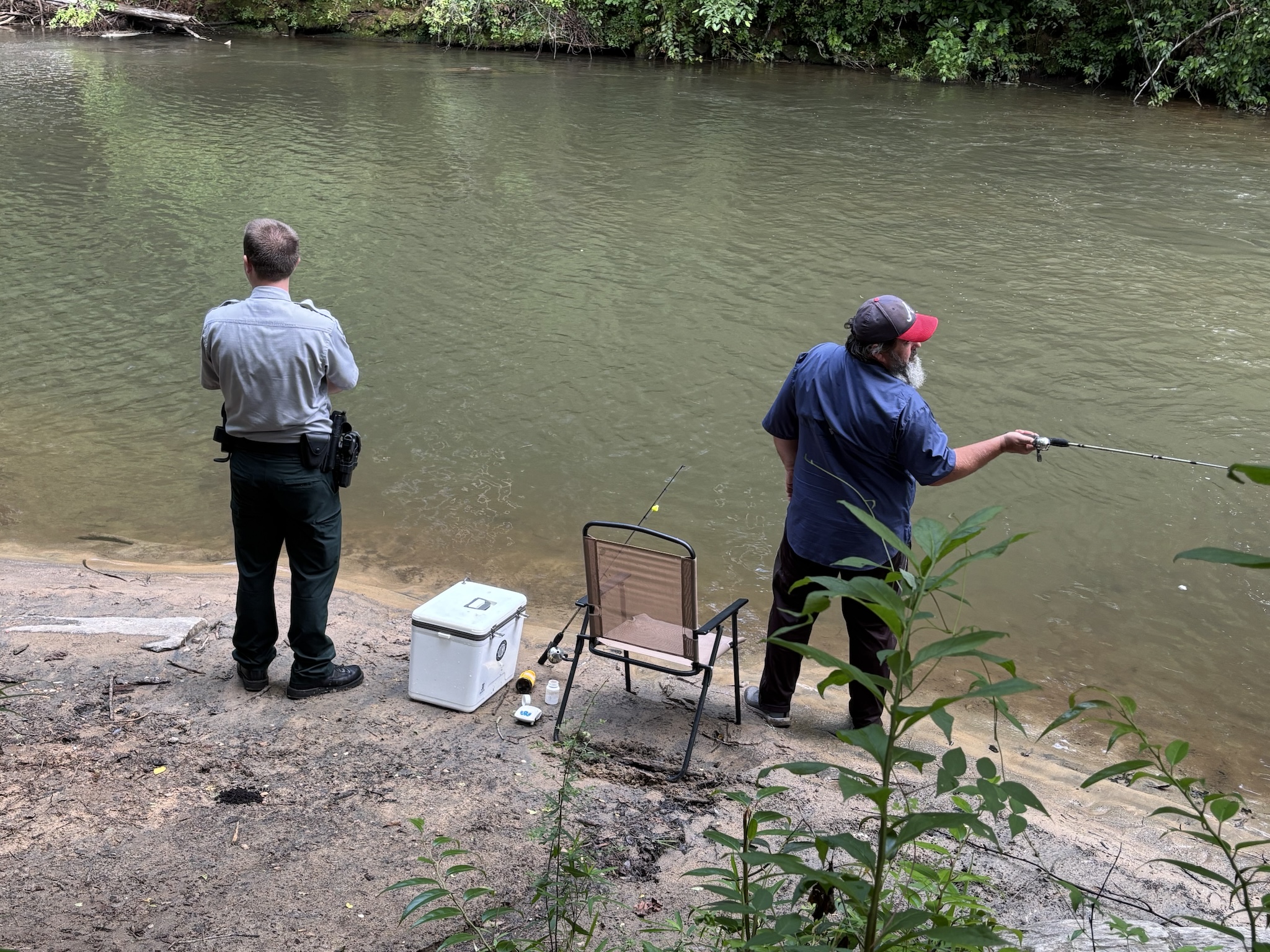
Georgia Game Wardens comprise the law enforcement arm of the Georgia Department of Natural Resources. Their principal job is to protect people enjoying the state’s natural wonders, and to ensure that the state’s beautiful fauna and flora are preserved (after the legal limit is caught or shot), up to the limits of the law. In District 2, composed of 26 counties across the entire northeast part of the state, 34 game wardens and supervisors are charged with patrolling the entire vast area, so any given hunter or fisherman may not see a warden very often.
Eight fish a day is the maximum take, so Fleming, who took this reporter on a “ride-along” earlier in June, had his eye out for fishermen (and yes, they were all men) who might be taking more than their fair share. In the forests, the state parks, the lakes, and even on quiet country roads, you’ll find the state’s wardens patrolling, hoping to ensure safety for all their charges, whether they have two or four legs, wings, or fins.
Fleming’s first two encounters with fishermen enjoying the cool waters and luring the abundant trout in the Soque River were met affably by the sportsmen, without incident. One, a student who’d stepped away from class at North Georgia Technical College, simply produced his license and moved on.
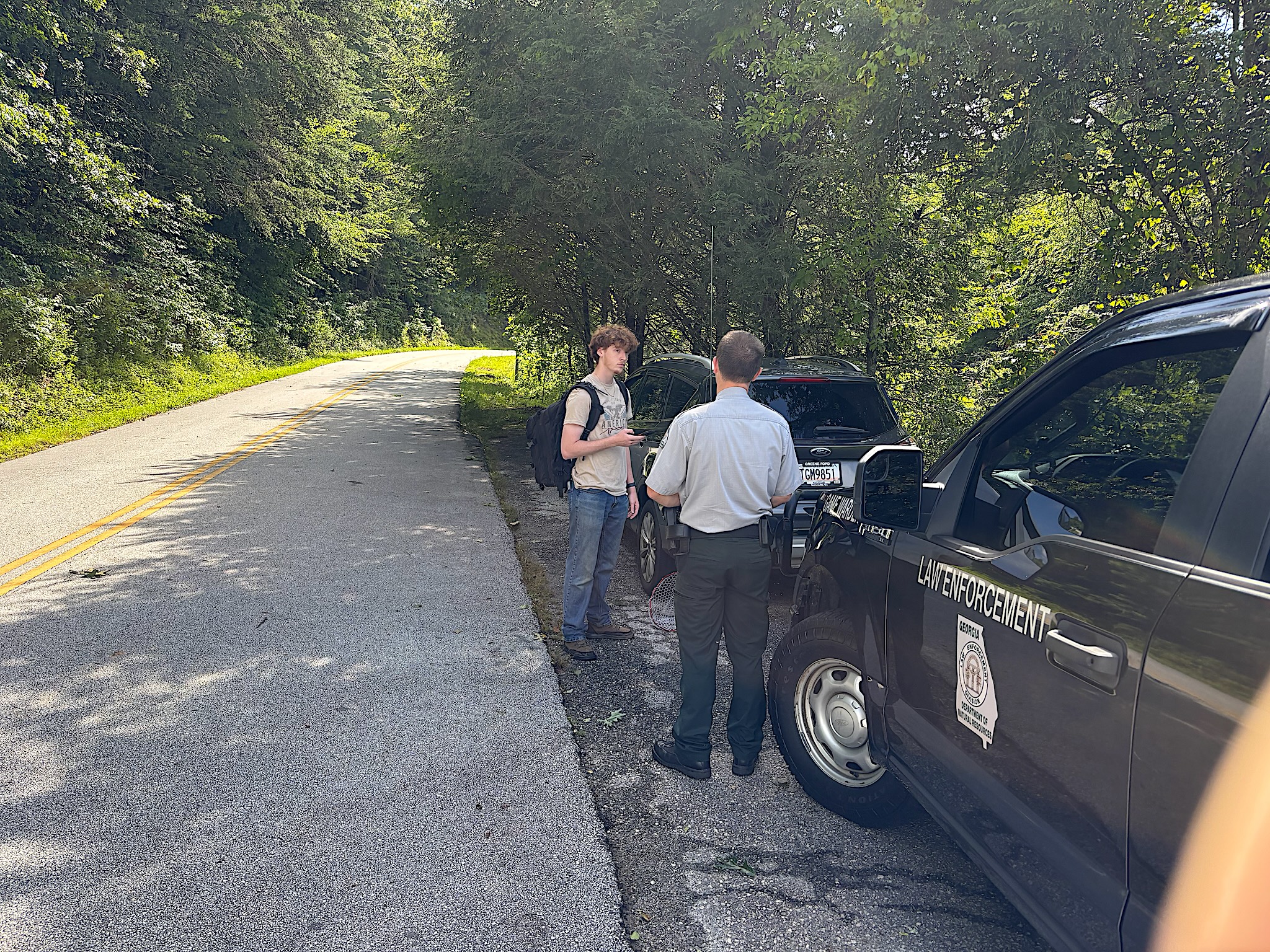
The licenses, costing just a few dollars even for non-Georgians, demonstrate that the holder has permission to fish and at least a passing familiarity with safety and environmental rules.
Keeping it stocked
Russell Aiken of Martin, Georgia, was one of two fishermen enjoying leisure time near the Kelvin Jackson Bridge on the banks of the Soque, where it flows under Route 197, about nine miles north of Clarkesville.
“This is my favorite creek,” said Aiken, who had the look of any aging “good ol’ boy,” and a thick accent to match. He gestured at the four rainbow and brown trout on a hook he’d already captured that day, one of them still flopping about, as it was submerged in the clear, shallow water. He said he fished a few times a week, and more often ever since an accident involving a horse forced his retirement.
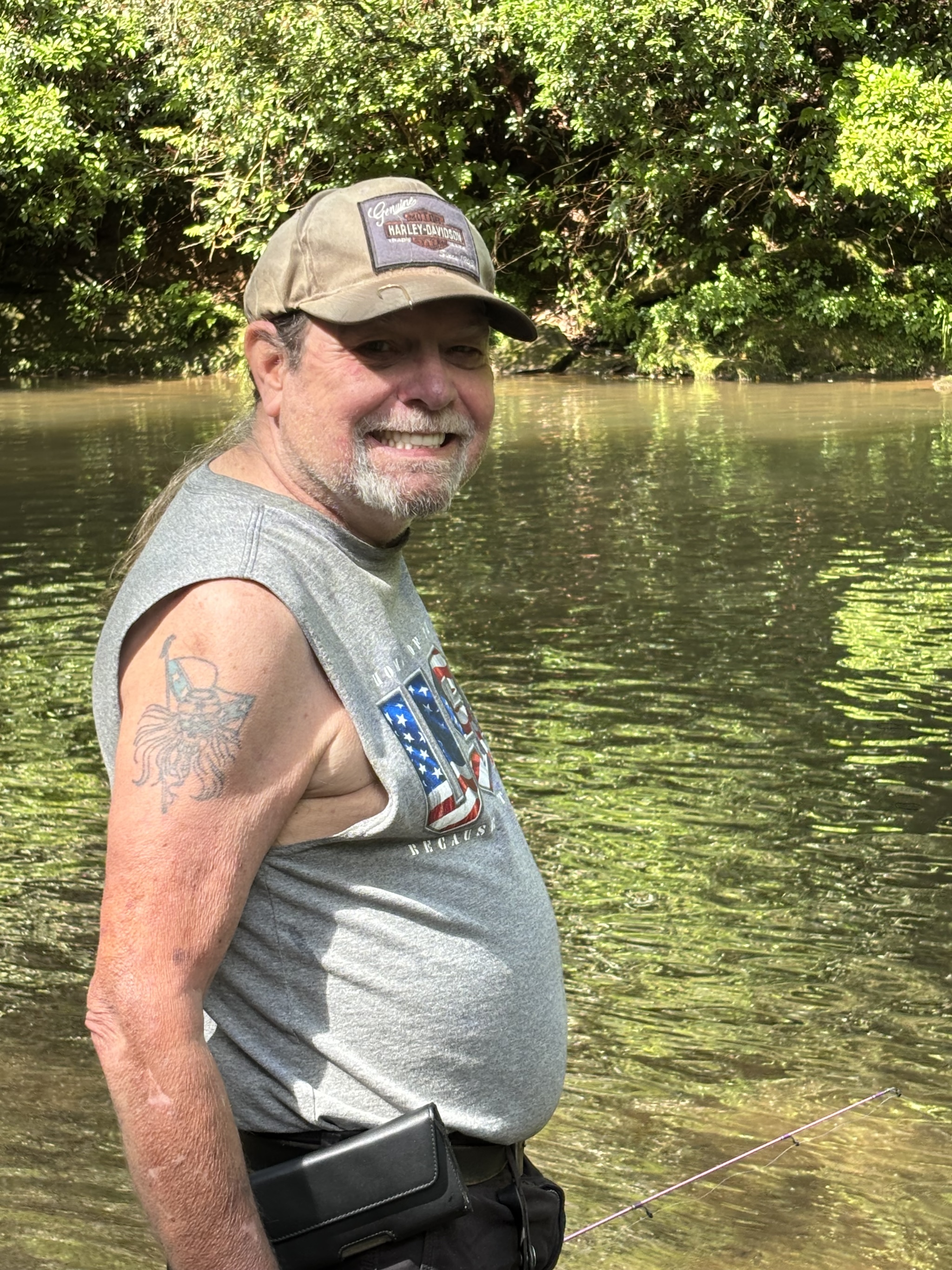
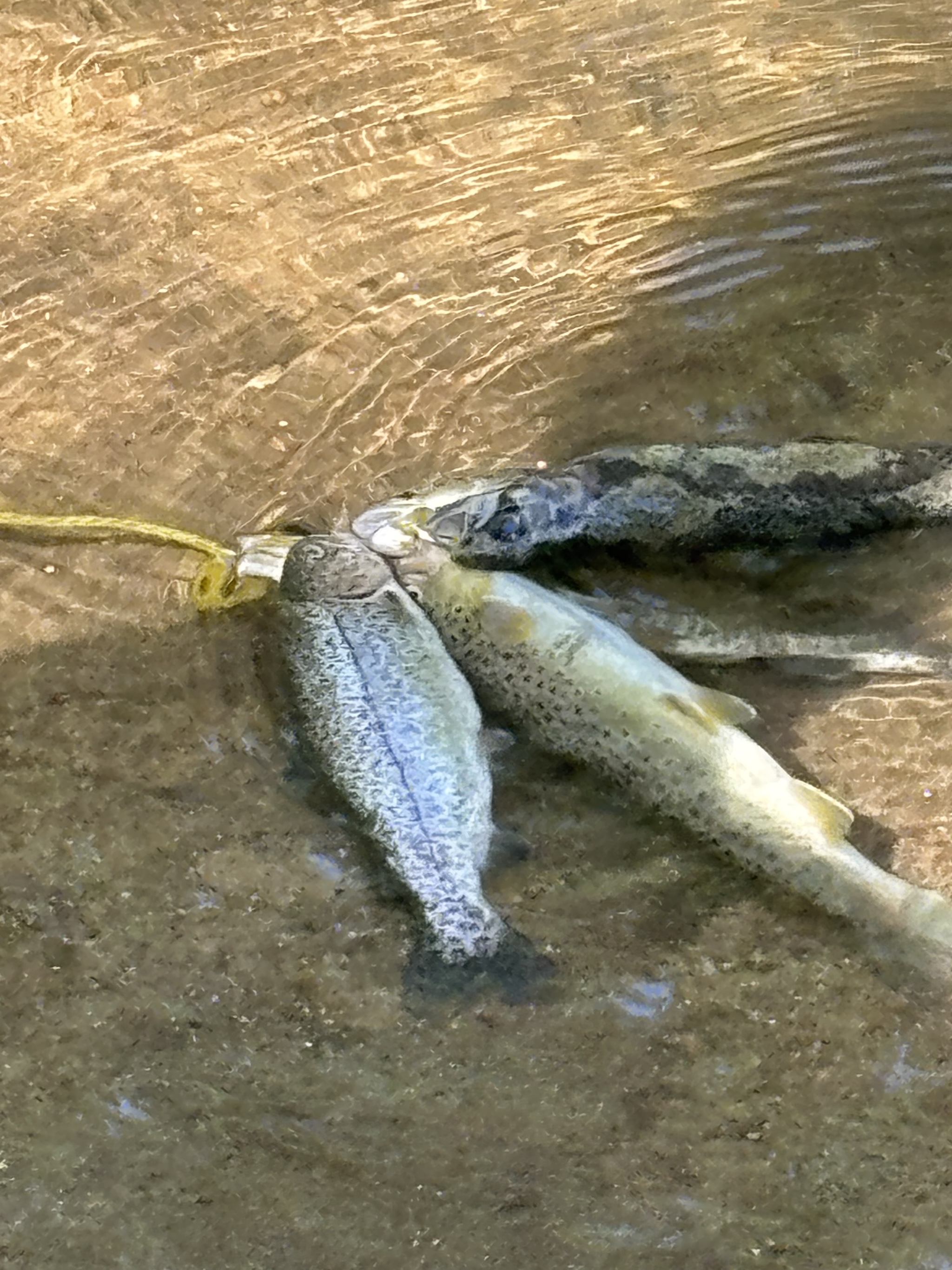
Aiken, chatting with Warden Fleming, told him he’d recently seen another group of fishermen capture their limit, hide the catch in their car, and then return to the stream to illegally collect more. He resented it, he said, because breaking the rules hurts every other fisherman’s chances by depleting the stock.
“Next time you see that, I hope you’ll give us a call,” Fleming urged, and Aiken agreed. (The number to call, Fleming added, is (800) 241-4113).
Keeping it safe
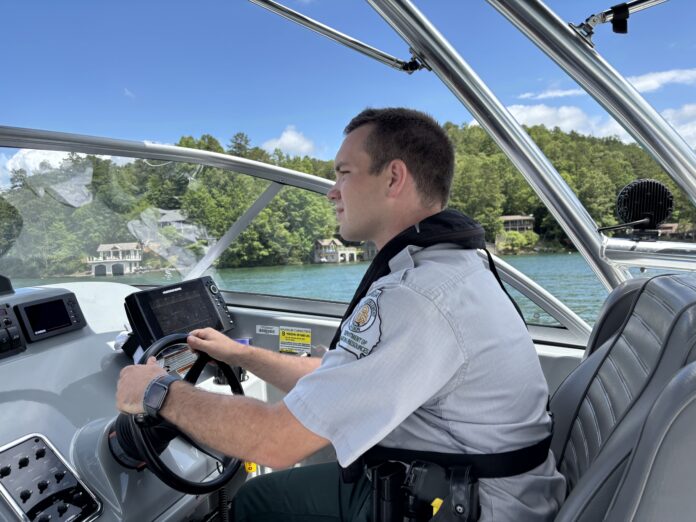
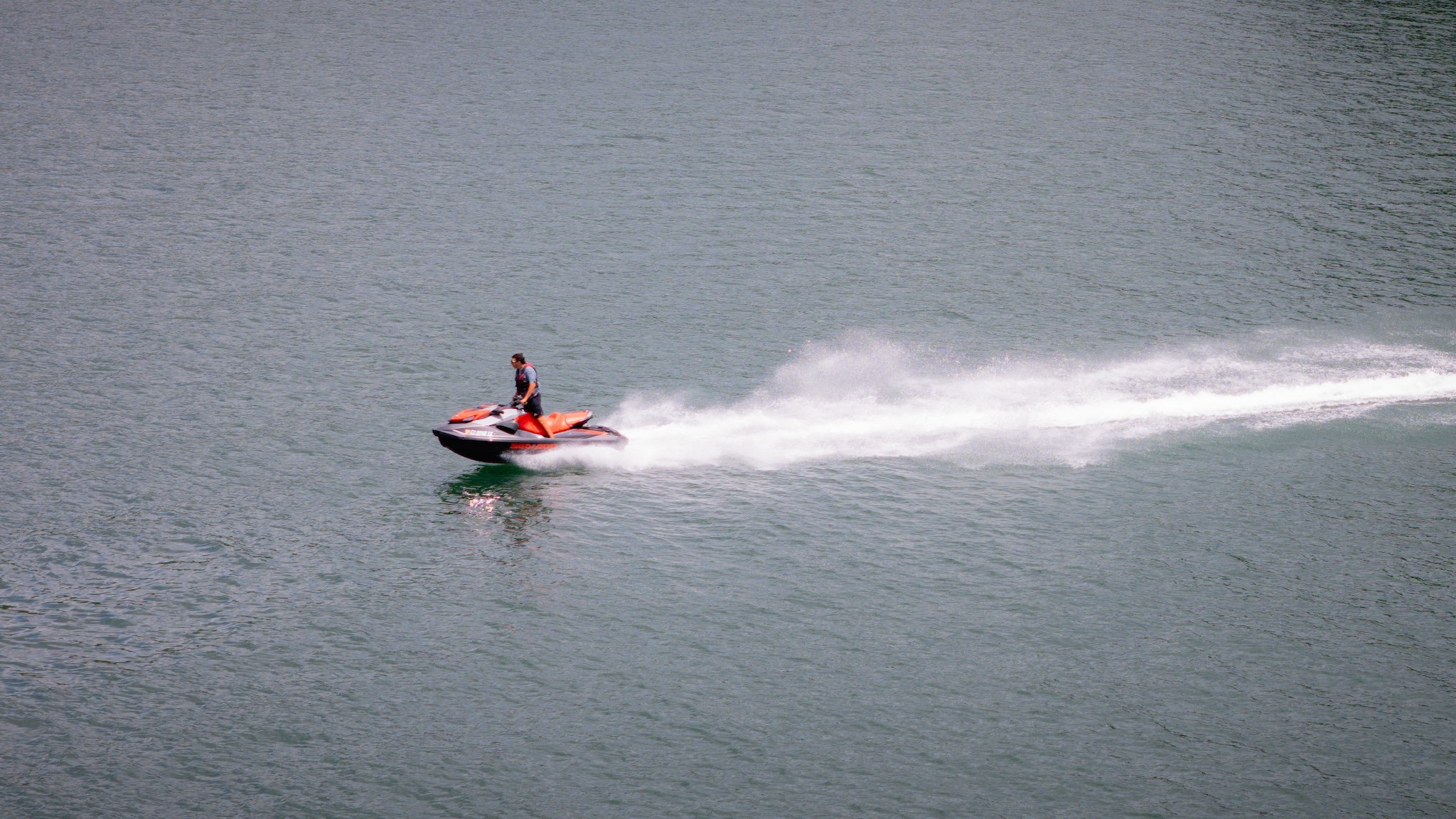
Later, on the DNR’s 250-horsepower Cobia boat, Fleming patrolled Lake Burton, looking out mostly for safety violations, which he says are common. Young passengers must wear—not just carry—life jackets. Jet skis towing a raft must have one passenger looking backward to monitor the people on the raft, while the driver navigates the vessel forward. Boats approaching bridges, docks, and other “no wake zones” must generate…no wake. And he is always on the lookout for the kind of hapless marine meandering that usually ends up smelling like alcohol or marijuana.
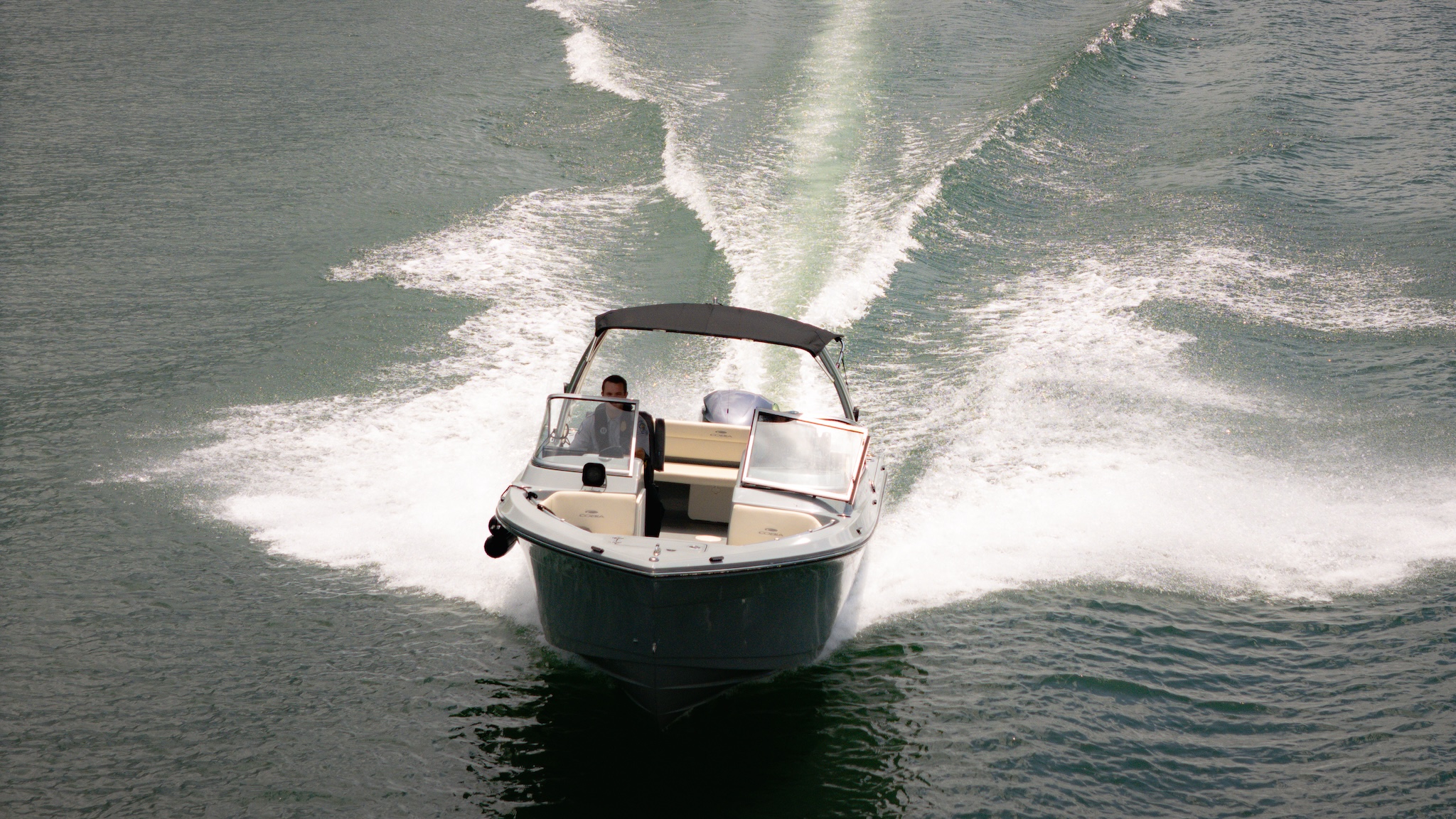
The alcohol limit is the same on a boat as in a car — .08 percent blood alcohol — and many a boat-motorist, hopped up on a Budweiser or four, can be unmindful of the true havoc they could cause. For the sake of both the boater and his potential victims, Fleming is happy to run interference and begin the judicial process that can lead to significant fines —as much as $5,000 upon a third offense — and loss of boating privileges.
“Last week, I had a guy hit a sea wall in Lanier; he was intoxicated way over the limit, with a reading of .175 percent. We brought him to jail, and he bailed himself out,” Fleming says. “Getting caught boating while intoxicated doesn’t affect your right to drive on the roads,” Fleming said, seeming to lament that.
Private land
Not every hunter is happy to see us coming
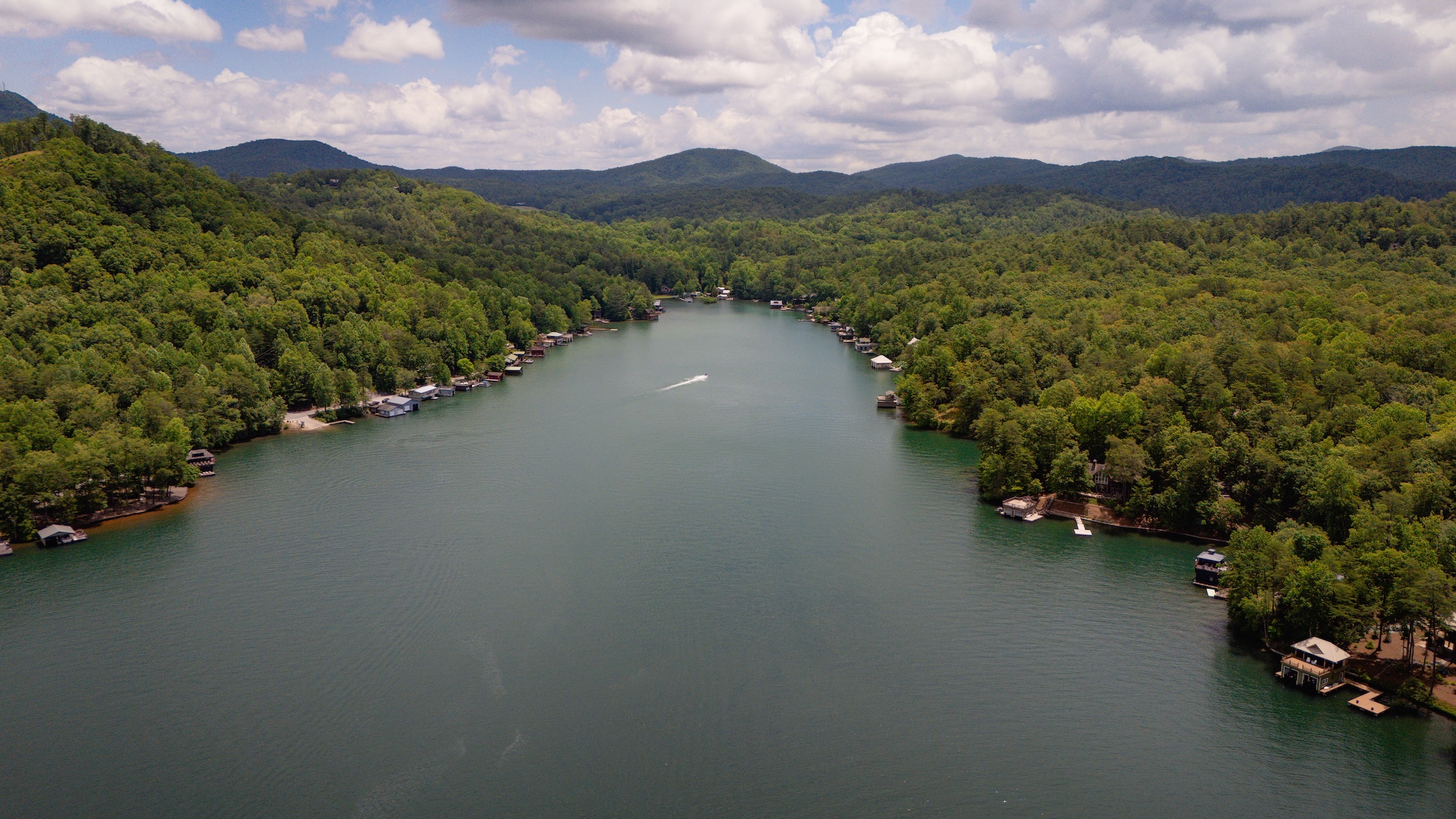
The state’s DNR District 2, where Fleming patrols, covers the northeast corner of the state, from the North Carolina and South Carolina borders to Fannin and Newton counties in the West, and Elbert, Rabun, Hart, and Stephens counties on the east. Fleming’s usual beat is a subsection of the five counties farthest east and north, encompassing Lake Burton (usually quiet) and Talullah Gorge—a regular site of chaos, when hikers get stuck, fall, or burn out on the gorge’s mountainous trails.
In the fall, when deer hunters emerge for hunting season, the presence of guns and strict safety rules sometimes combine to present a problem. “Not every hunter is happy to see us coming,” he says. When he approaches a fisherman or hunter, he loudly and clearly identifies himself; the distinctive tan uniform and shiny badge certainly help.
Some of the rules are a little more obscure than others. People may think they can hunt on land near a road that they think is public, but most of the land in the county not clearly marked as parkland is private. Hunting and fishing on those lands can be secured only from the landowner, who fills out a state form called an affidavit, indicating, by name, who is allowed to use their land for recreational purpose; anyone else is deemed a trespasser. Wardens have access to the affidavit file, and will stop any visitor who is not listed, or who can’t provide other proof he or she belongs there.
Private lives

Fleming hails from Toccoa, and lives with parents— “I want to save money for now,” perhaps with an eye to getting serious with his girlfriend, whom he met on patrol one lucky day. “She may or may not have been breaking the trespassing rules at Talullah Gorge,” he reported with a grin. After a strictly professional encounter in the field (she got off with a warning), she found him on social media and inquired about his interests. They’ve been dating ever since.
Fleming mentions that, for the record, one needs to obtain a special permit to hike the Gorge floor, since it is dangerous and slippery, and rescue resources are limited. Not every violator ends up with a boyfriend, though.
Not a walk in the park (forest or gorge)
Becoming a game warden is no picnic, Fleming says; the three months at the Georgia Public Safety Training Center include:
- Physical training—three-mile runs, several times a week
- Circuit training—for strength and endurance
- Weapons: Recruits must be certified on two different kinds of handguns and a rifle. Fleming says this is so strenuous that quite a few aspirants drop out during this phase
- Expertise on boat, gun, and road safety, including officer water survival skills
- ATV training, learning to maneuver the all-terrain vehicles commonly driven on patrols through wooded or uneven landscapes
- “Grappling,” which is combat training for a warden caught without a weapon in a confrontation with an angry civilian
- ALERRT (Advanced Law Enforcement Rapid Response Training), when there is an active shooter at large. This is rare, but wardens are prepared, their supervisors say, and sometimes called on by the Georgia State Police for additional man- and womanpower.
But more typical is Fleming’s recent trip out onto the Chattooga River area, along the border with South Carolina.
“Three girls got lost on the river,” Fleming said. “One of them got separated from the others and went for hours without water; we had to go in with ATVs to find her; she was having a difficult time.”
That’s what the wardens are there for.
Outside work
Captain Derek Dillard, overseer of all the DNR game wardens in District 2, has served in the post since 2020, following years as a sergeant and a front-line warden.
Dillard says he likes to get around to talk about conservation and safety to civilian groups, particularly back in his native Rabun County, where his people go back to the Revolutionary War. He acknowledges that he is a descendant of the Dillard family that gave the little city on the North Carolina border its name.
Dillard says his administrative role can be tough; he got into the DNR to work outside, and encourages others to do the same. Though mostly male, his workforce has three women, one of whom just retired, and he wouldn’t mind a bit if that number grew.
Until they need you…
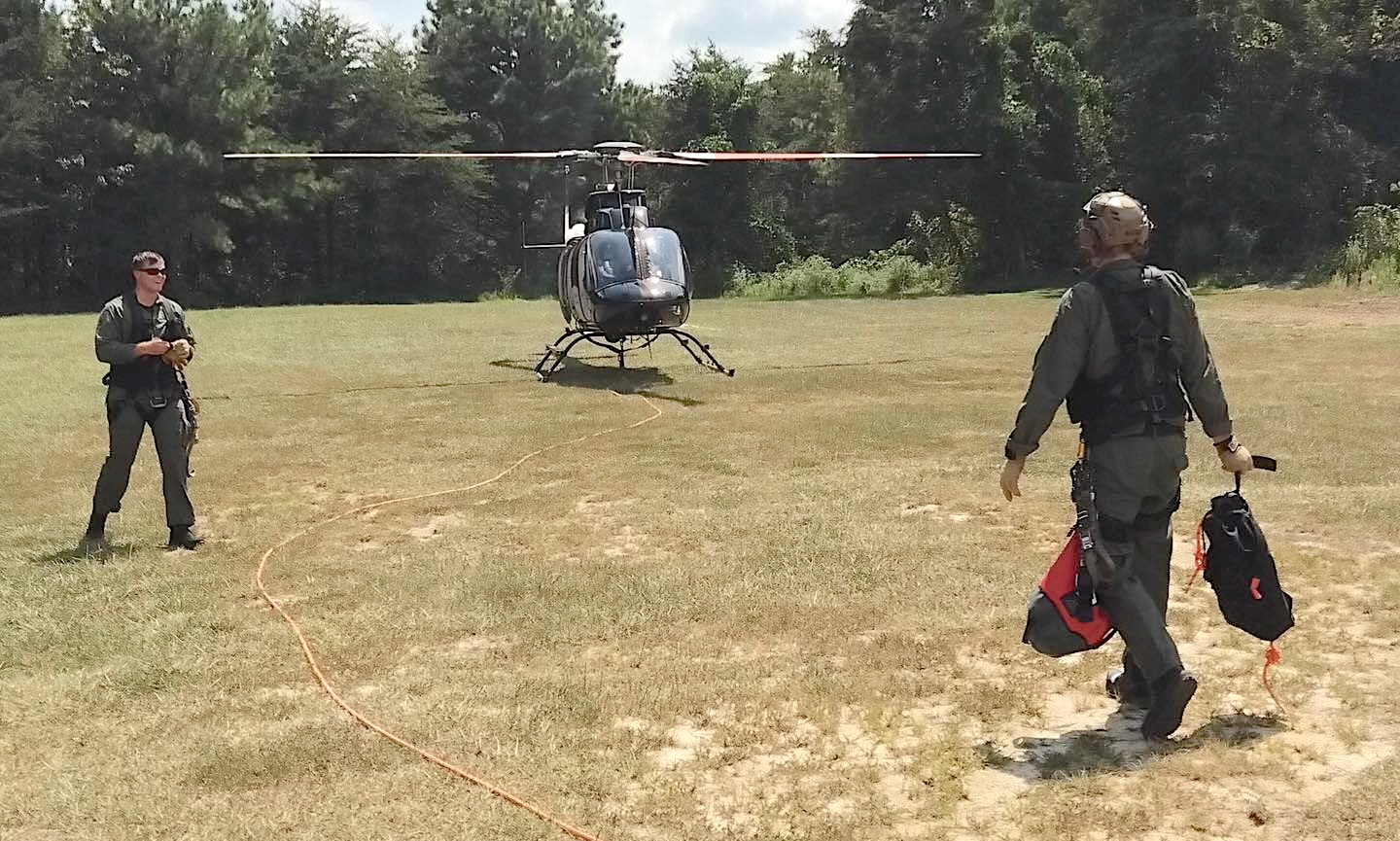
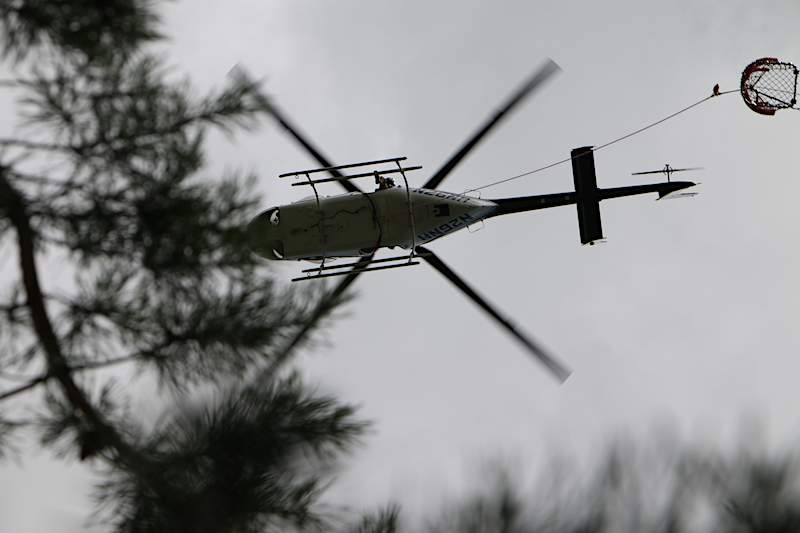
One of the two big challenges on his beat, Dillard, says, is back at Talullah Gorge, where rescues are commonplace. When hikers get into serious trouble, the “official” rescuers in uniform are joined by volunteers from the area, as often as 60 times a year, he says. “It’s our helicopter that flies in to bring people out, but often the volunteers that hook them up to the long line” that lifts hikers up to the chopper and out to safety—sometimes to a hospital.


He notes that his wardens are not necessarily the most visible people in the community. He shrugs: “People only need law enforcement when they need you; they don’t even think about you until they need you.”
But sometimes, nature-lovers surprise him, Dillard says. “People have come up to us just to say they appreciate what we do. That’s really nice to hear.”