“Divorced. Beheaded. Died. Divorced. Beheaded. Survived. And tonight, Georgia, we’re Divorced. Beheaded. Live.”
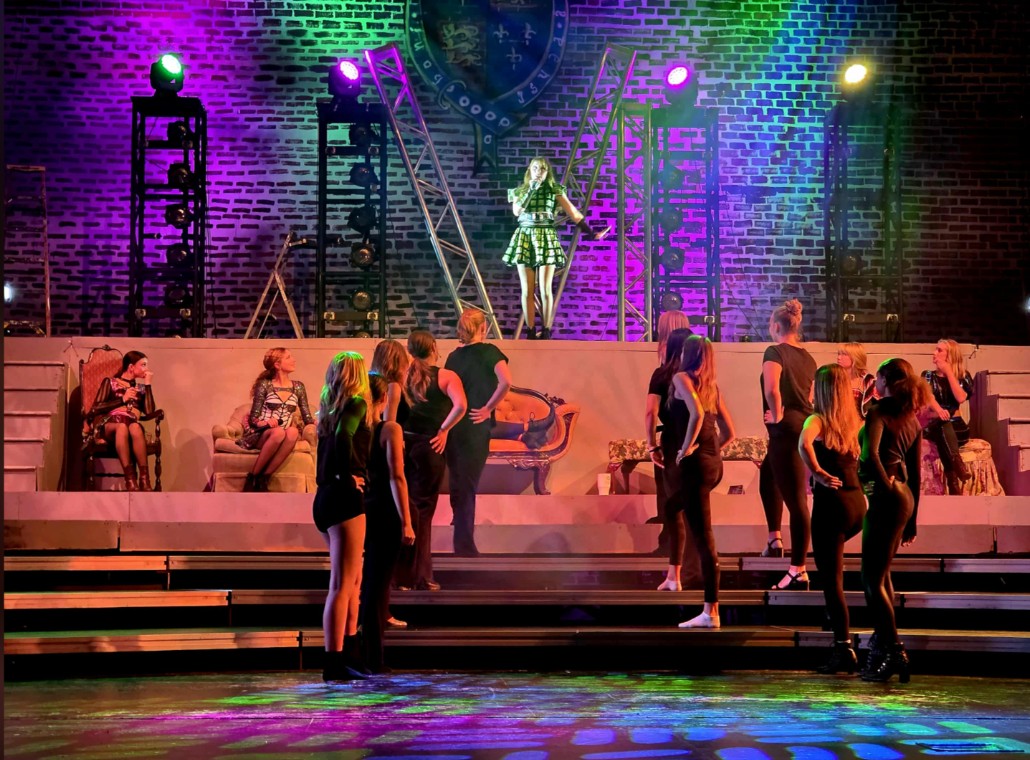
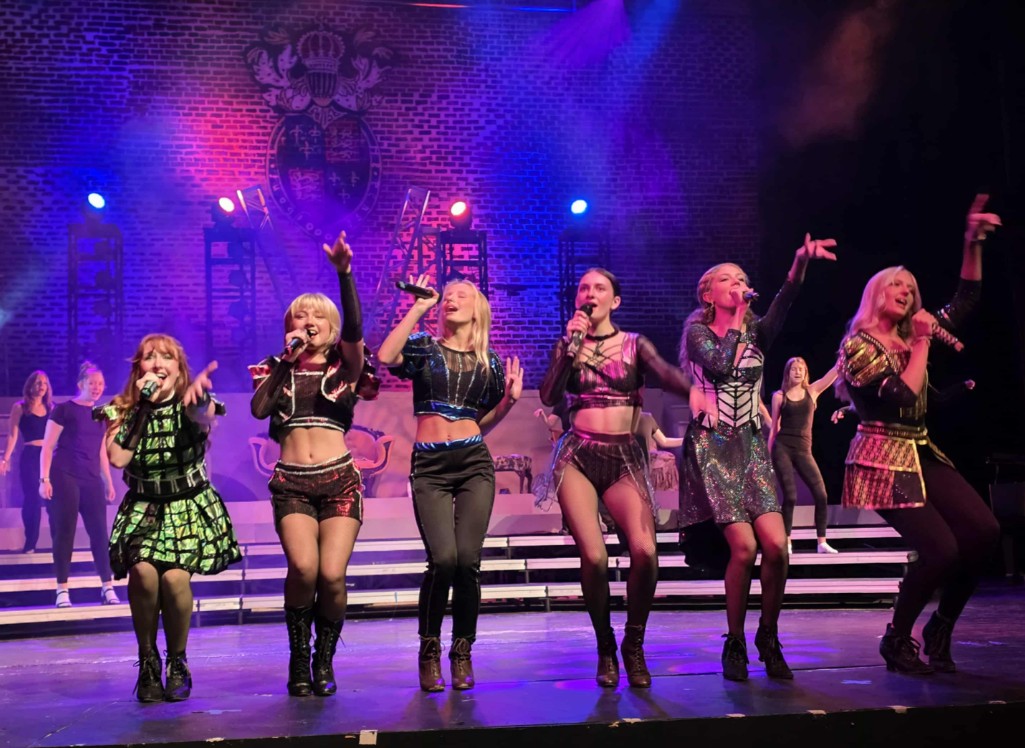
With this punchy refrain, the Rabun Gap Nacoochee School’s production of Six: Teen Edition bursts onto the stage, inviting the audience into a reimagined royal court where history collides with a pop concert. For an hour and a half, teens portraying the wives of Henry VIII sing, strut, and spar under the lights, transforming a 16th-century story of neglect and execution into a glittering display of resilience and voice.
It is theater as liberation, performed by young women still in their teens who understand precisely what it means to fight for the right to be heard.
A school with global reach and local roots
Rabun Gap Nacoochee School, tucked into the mountains of northeast Georgia, is no ordinary school. Its head of school, Jeff Miles, describes it with a touch of pride: “We are one of the most globally oriented schools in the entire country. And in my opinion, one of the most talented schools in the country.”
That global reach is not an abstraction. In the tech crew alone, students from Ghana, Ukraine, and Georgia (the American one) are wiring lights, balancing microphones, and hauling set pieces. Some are theater veterans, while others stumbled into stagecraft when athletics didn’t work out. Adria Donohue admitted candidly, “I didn’t make the tennis team, so I tried tech… The worst that could happen is that I was bad at it. And now I’m here, it’s been the best experience.”

Rabun Gap’s arts program, according to Miles, is “booming.” Recent investments have been poured into sound, lighting, and facilities. Professional choreographers, musicians, and set designers have joined the faculty. And the school’s ambition is clear: “Our shows, I would compare them to really anything that you’d see on Broadway, [in terms of production]” Miles said. “I get this comment at every show: ‘I can’t believe we have this in Rabun Gap.’”
Why Six? Why now?
Joshua Miller, the school’s Artistic Director, has a straightforward answer. “Our females in our department have carried our musical theater department for a very long time,” he said. “We were blessed with so many women who have been awesome this year. When we started talking about the season, that’s where this show really stuck out, the idea of herstory, the idea of these powerful women getting to finally stand up and say who they are and what their story is.”
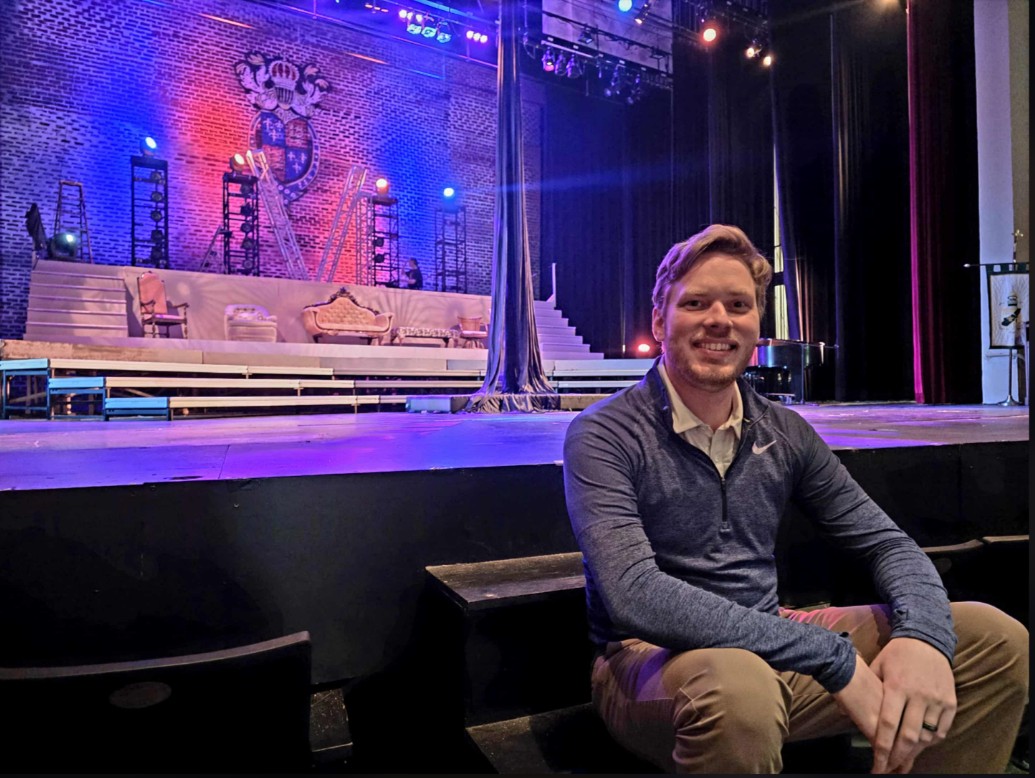
For Miller, choosing Six was about more than just a trendy title. It was about giving young women center stage in a landscape where female-driven musicals are scarce.
“If you’ve been around musical theater a lot, you’ll know that female-led and female-heavy shows are actually really tough to find,” he explained. “Females run about 80 percent of the musical theater population in the professional world, and it’s about 20 percent of the roles. Most of the male roles lead musical theater. So finding a show like this is wonderful for us in that way.”
TikTok queens
For the teenage actresses embodying Henry’s wives, the show’s appeal was immediate. Most didn’t discover it through theater history class but through TikTok.
“I heard about the show through TikTok,” said Makenna Bilbery, the actress playing Anne Boleyn. “Seeing the actresses on TikTok has helped to influence my depiction.”
Her classmate, Abby Hartridge, portraying Anna of Cleves, echoed that digital resonance: “Seeing this show on social media makes me want to make my role that iconic.”
If the original Broadway and West End productions of Six exploded onto the cultural scene, its afterlife has been sustained online, with edits, memes, and viral performances reshaping how young audiences see and interact with theater. At Rabun Gap, that virality translated into teenage ambition: not just to perform, but to embody something shareable, recognizable, and iconic.
Costumes with character
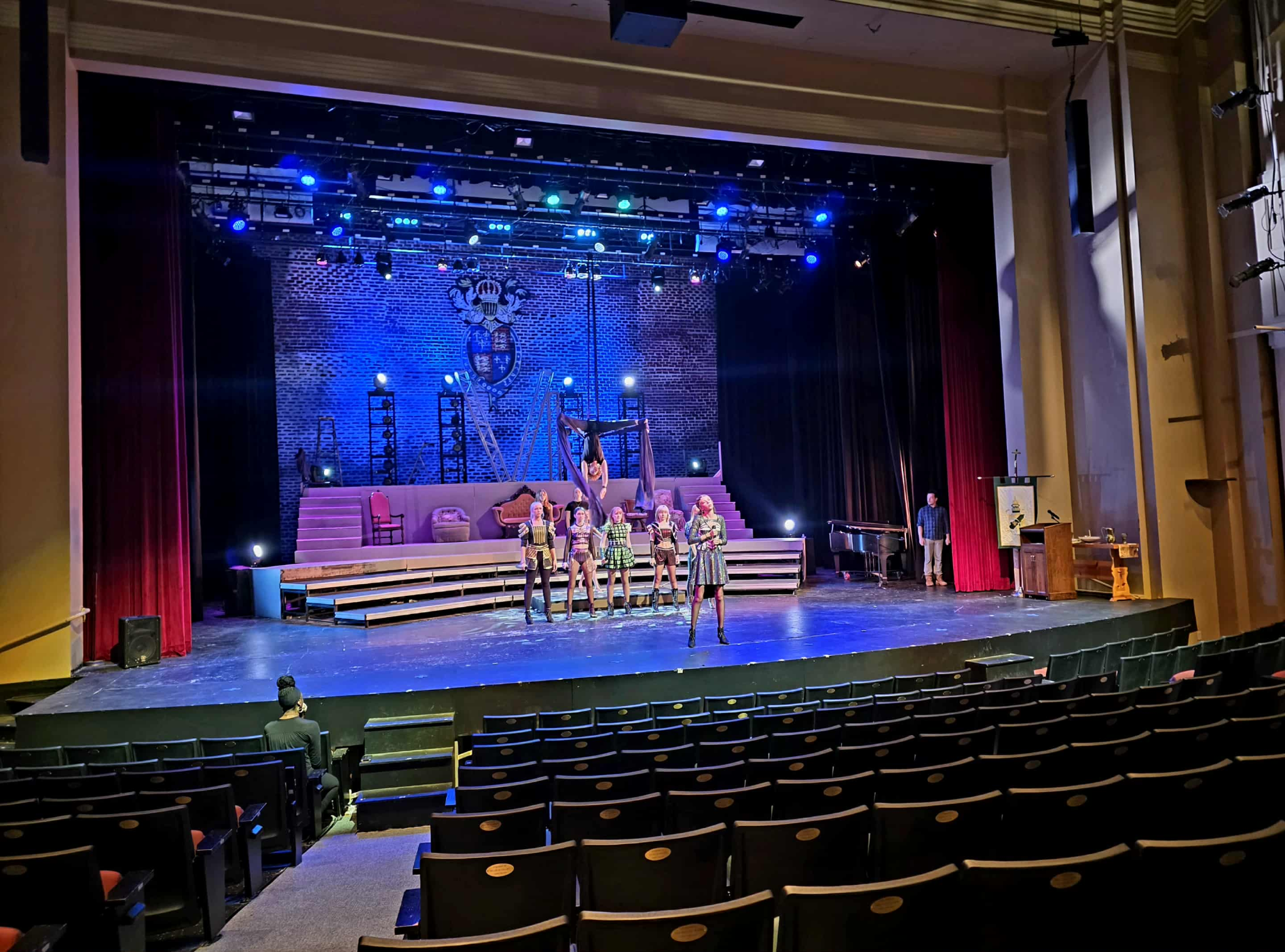
When the costumes arrived, the cast’s reaction was uncontainable. “We came sprinting when they told us our costumes were done,” one student recalled.
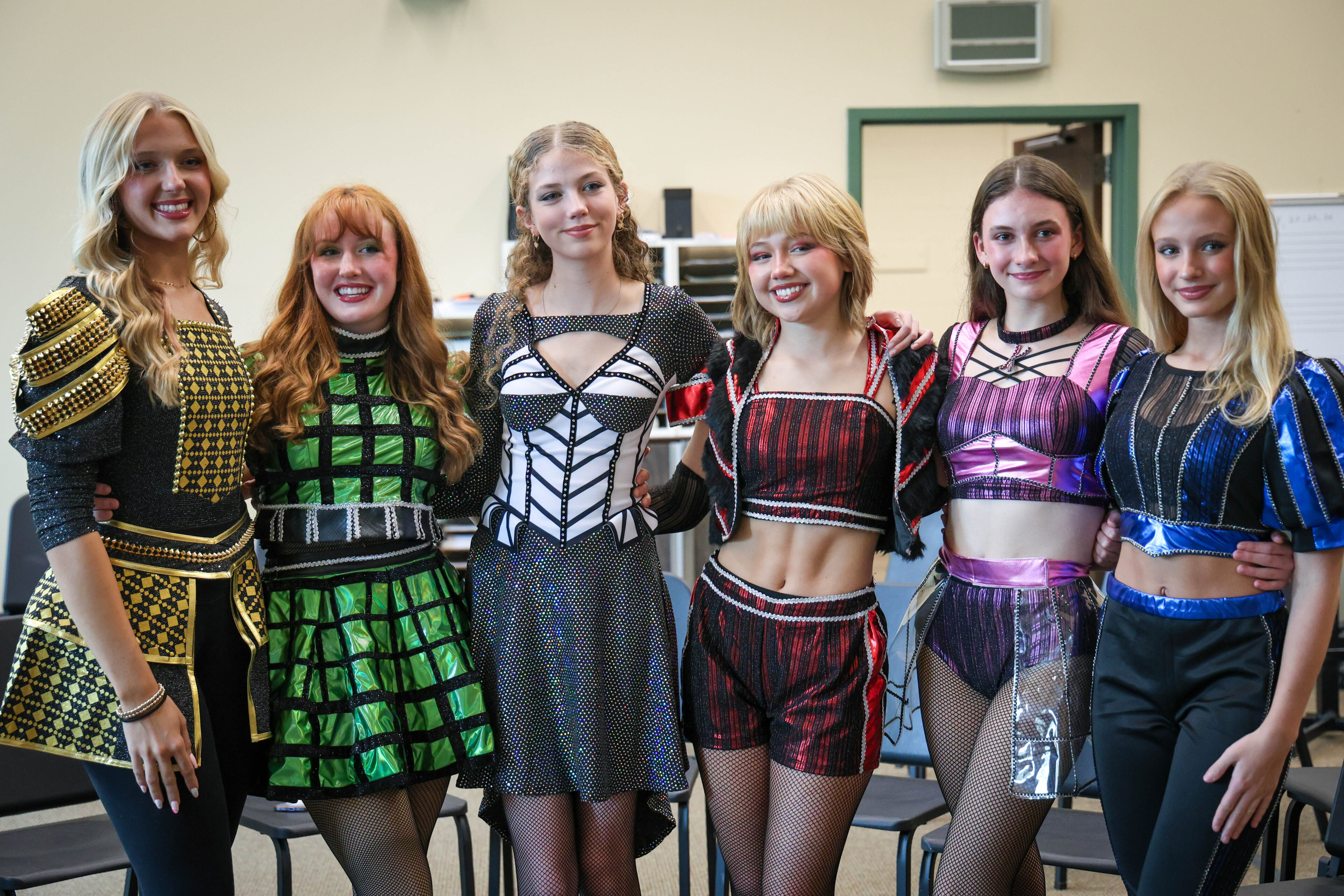
And no wonder. The design choices sharpen character arcs into visual shorthand. Catherine of Aragon, the first wife, appears in regal gold befitting Beyoncé, her pop inspiration. Anne Boleyn sparkles with Avril Lavigne and Lily Allen’s edge. Jane Seymour’s ballad echoes Adele and Sia in structured softness. Anna of Cleves radiates Rihanna and Nicki Minaj bravado. Katherine Howard, remembered as flirtatious and tragically exploited, appears in a pink sequined shorts set styled like a bikini, paired with fishnets, an aesthetic channeling of Ariana Grande and Britney Spears in their teenage years, both of whom were presented as youthful sex symbols. The costume underscores Howard’s own story: a teenager cast in the role of seductress, when in truth she was a victim of sexual exploitation. And Catherine Parr, Alicia Keys-inspired, closes the show with quiet strength and a piano accessory.
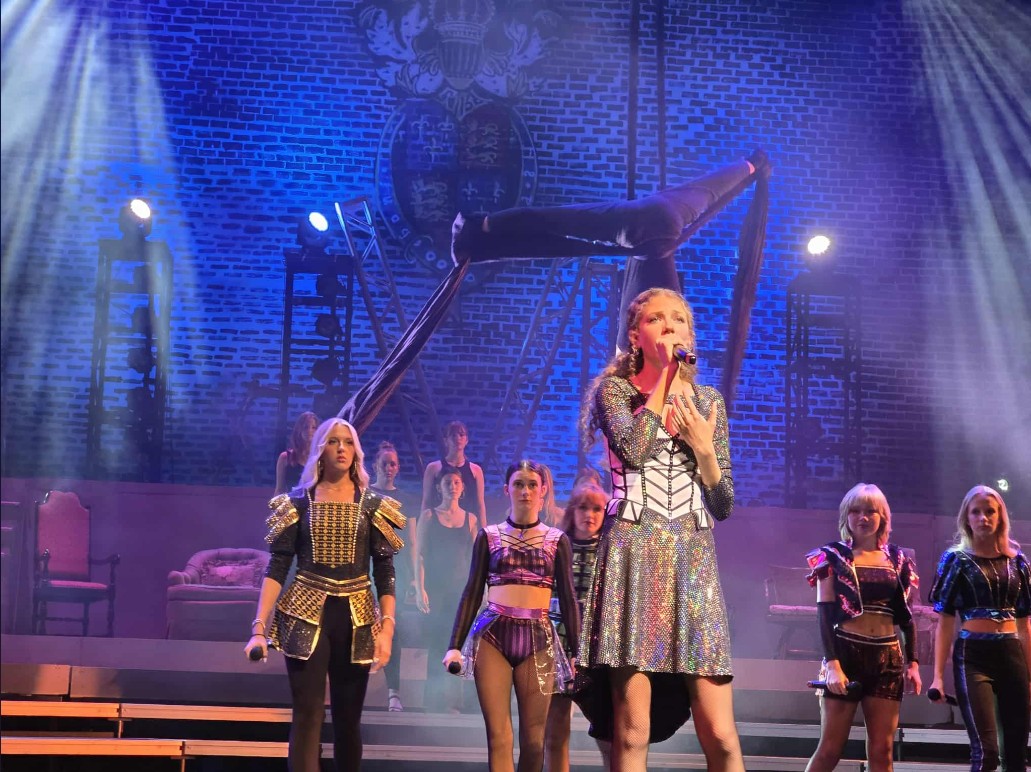
“My favorite part of my character,” admits Malia Albury, playing Catherine of Aragon — “a paragon of royalty,” as the lyrics proclaim — “is that she gets to wear gold.”
And indeed, her costume snaps, crackles, and pops with regal elegance. Where Katherine Howard is bubblegum-pink and Anne Boleyn channels punk rock, Aragon, Jane Seymour, and Catherine Parr wear the more matronly apparel of the more solemn queens, remembered for their piety or their role in producing a male heir. The costumes themselves reinforce the production’s intentionality: every detail communicates character.
Anna of Cleves, by contrast, cuts a bolder figure in blood red. Halfway through her number, her handmaidens strip away a coat with puffed, queenly sleeves to reveal a simpler, less ornate dancer’s costume. It is a visual cue echoing her lyrics — “not very prim and proper” — and a reminder that she was perhaps the most self-possessed of Henry’s wives, while still clinging tight to her royal pedigree and the trappings of royalty without the full burden of the royal mantle.
Editing history for teens
Six: Teen Edition makes subtle but significant changes to the more adult Broadway production. Katherine Howard’s song “All You Wanna Do” still brims with innuendo but softens its sharpest edges, even as it keeps its thrusts.
Where the original line sings, “You can’t wait a second more / to get my corset on the floor,” the Teen Edition substitutes, “You can’t wait a second more / to see me at your bedroom door.”
Elsewhere, “The sexy secretary to the Dowager Duchess” becomes “The fetching secretary.” Yet the innuendo remains: “Spilled ink all over the parchment, my wrist was so tired / Still I came back the next day as he required.”
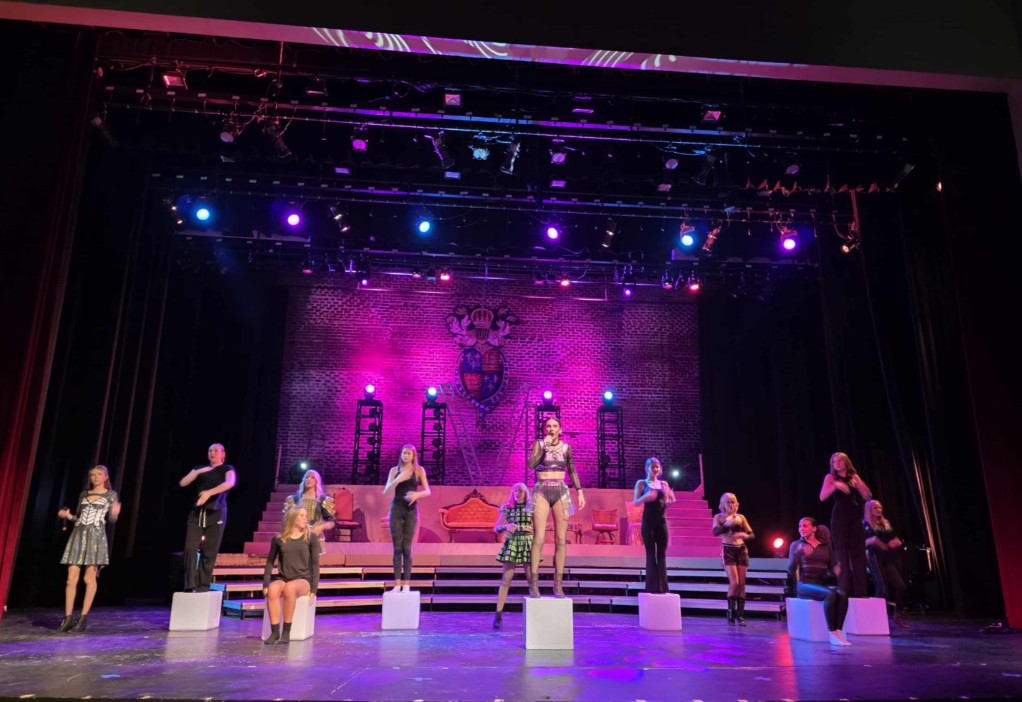
The balance is delicate. The edits allow high schoolers to perform without embarrassment, but the song still communicates exploitation, grooming, and coercion. As Miller puts it, “I take the kids very seriously. Yet, I have a nine-year-old daughter myself. I like to put a level of protection around students. But that protection does not mean not exposing them to ideas. It’s being able to talk and discuss and intellectually play with those ideas in a safe environment. Theater is a great way to explore tough material before you go out in the world where you’re challenged.”
A rock concert with a click track
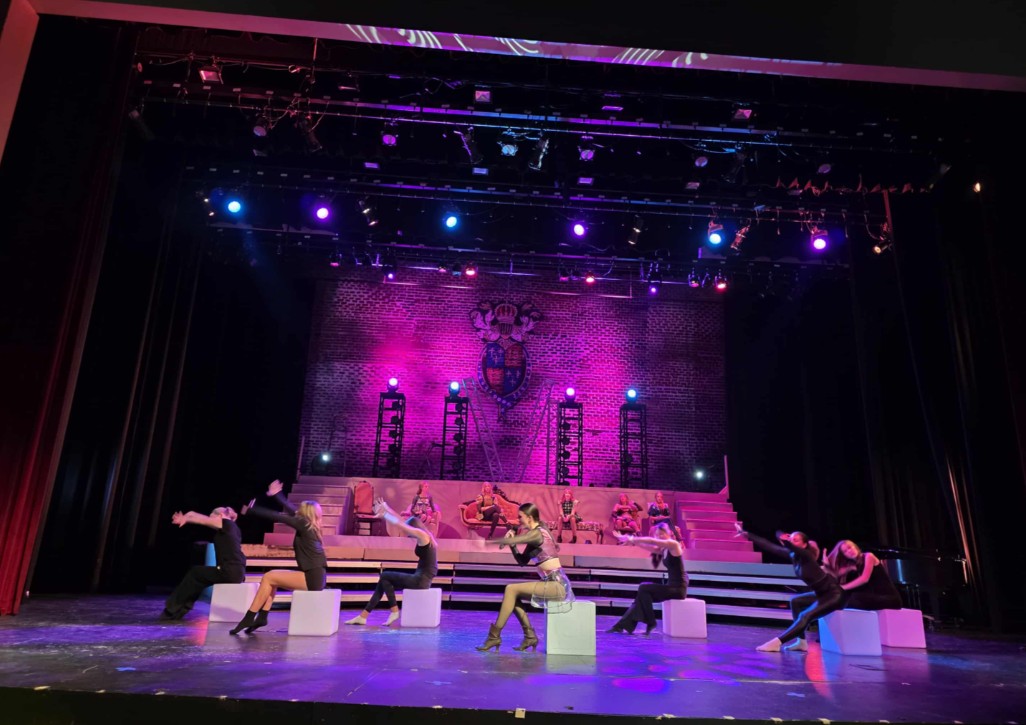
If Six is staged like a concert, Rabun Gap treats it with the same precision. The band plays alongside official licensing tracks that cannot be adjusted mid-performance.
Jonan Keeny, Assistant Music Director, explained the stakes: “What the audience won’t hear is that all the musicians are playing along to a click track that allows absolutely no adjustment on the fly. The margin for error with the music in this show is incredibly thin.”
Music Director Mary Lauren Keeny, who leads with the professional musicians, including Brandon Bush of the band Train, stressed the payoff: “This show is unlike any other. It’s relatable to them. It gives them the opportunity to be Taylor Swift for an hour and a half.”
Stamina, she added, came only through discipline. “We married the movement and dance with actually singing from the beginning. It’s been a conditioning exercise throughout the rehearsal process.”
Dance and aerial silks
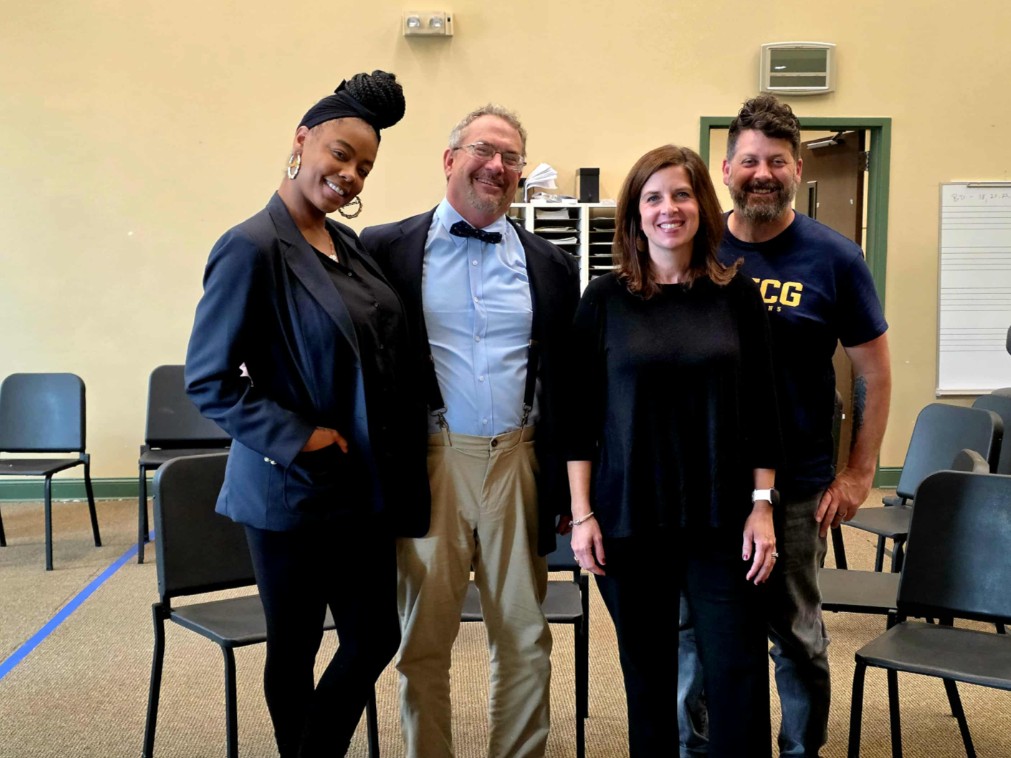
Kimmie Gee, a world-renowned choreographer who has toured with Beyoncé, brings a professional pedigree to the choreography. At Rabun Gap, she pushed students to dance in heels for the first time, balancing jazz, lyrical, pop, and aerial silks into the routines.
Her philosophy? “It changes with each voice and each character. There’s a lot of truth in the story and in the power that they all possess. I’m not trying to turn them into anybody they’re not. I’m meeting them where they’re at and pulling out their fabulousness.”
In short, it is both mentorship and method—not fitting students into roles, but coaxing out their own.
The crew behind the curtain
For all the sequins on stage, the triumphs behind the curtain are just as dazzling. Students beam when talking about the set they helped build, the lights they rigged, the microphones they balanced.
Desmond Lee summed up his experience beautifully: “The most powerful part of being able to be part of the crew is seeing so many talented people working together for a common goal. The applause at opening night after the first number is always just… it’s such a good feeling to be like, yeah, we did that.”

The rituals are theirs as well; shakeouts to release nerves, prayers before curtain, and high-fives after the final bow. Callie Parker admits that the post-show explosion of screaming and celebration is her favorite moment, a joy Mont Wood also shares.
For Desmond Lee, the pride comes in seeing the massive set he helped build come to life. “During the show, it’s really nice when you get the hang of all your motions, and to go through the show confidently without making any mistakes,” he said.
Behind the scenes, mastery comes with steep learning curves. Danya Kulyk, now the master of the switchboard, began with no prior experience. He picked up the basics from his instructor, then taught himself the rest, reveling in the challenge of the new lighting system. Kwabena Nartey, meanwhile, installed and attached several of the lights that bathe the stage in shifting color.
Finding their voice
The arts theme for this year at Rabun Gap is “Finding Your Voice.” Last season’s theme, “Growing Up,” culminated in Matilda and an original circus production. This year, the connection between theme and show could not be clearer.
Miller framed it simply: “It’s really about celebrating the women in this department and giving them their voice to lead a show.”
The cast reinforced the point with the kind of enthusiasm that makes theater contagious. Backstage, they spoke not just about high notes but about friendship, empowerment, and becoming icons in their own right.
Curtain call
To sit in the theater at Rabun Gap is to experience history not as dusty textbooks but as a living, pulsing performance. It is also to witness a community of young people discovering what it means to raise their voices — through sequins, through microphones, through courage.
As one actress said, wide-eyed, about the social media legacy of Six, “Seeing this show on social media makes me want to make my role that iconic.”
Six: Teen Edition will be performed live on stage at Rabun Gap from October 23 to 26. Tickets are on sale now at rabungap.org/tickets.