

Cornelia city leaders opened the new year by tightening governance policies while confronting rising housing costs, infrastructure needs, and long-term growth pressures.
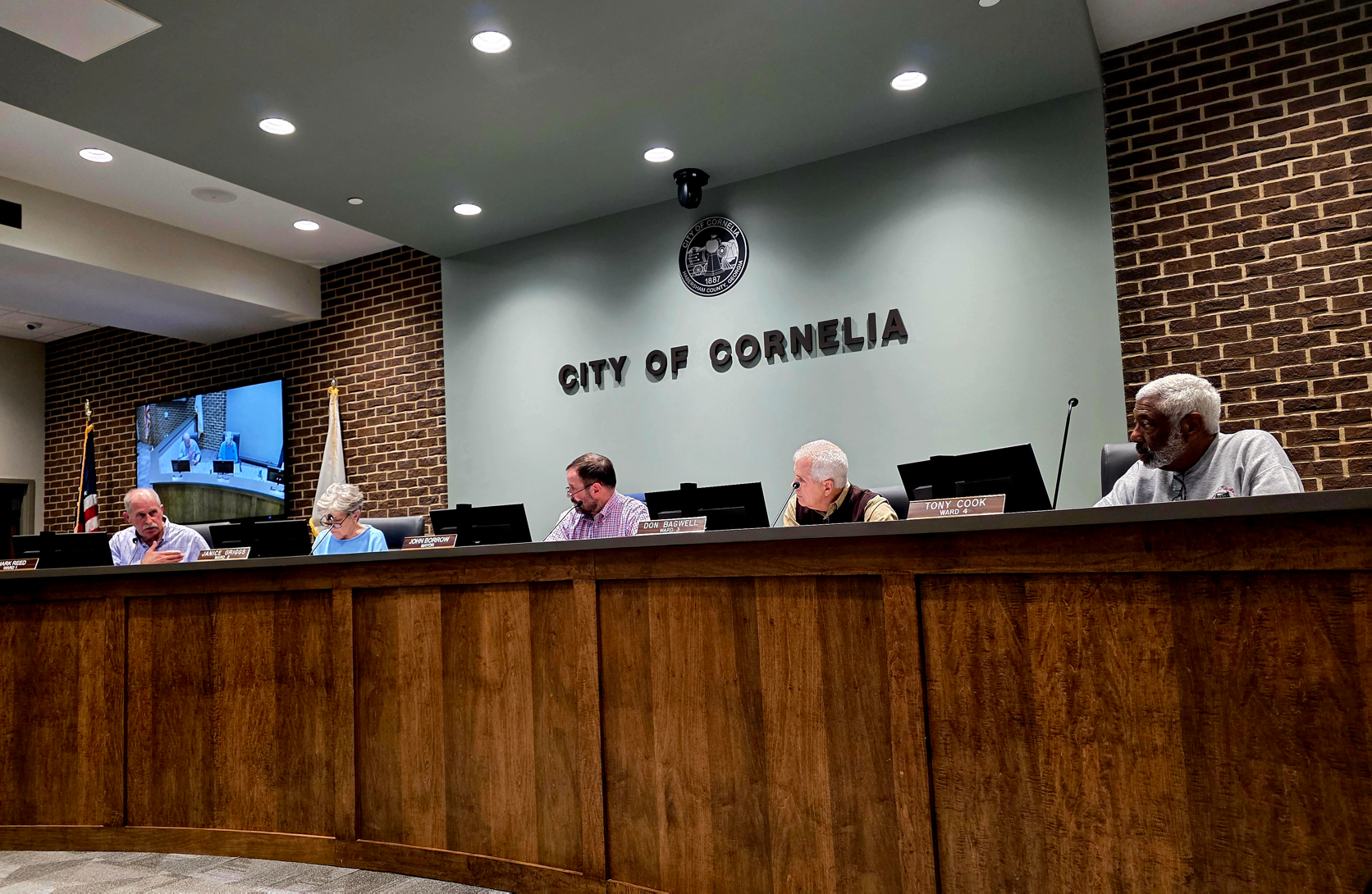
Commissioners held their first meeting of the new year on Tuesday, Jan. 6. During the meeting, Judge Wink Verdery administered the oath of office to Commissioners Janice Griggs and Don Bagwell. Later in the meeting, the commission voted to appoint Griggs as Mayor Pro Tem for 2026, positioning her to assume mayoral duties when needed during the coming year.
City Manager Donald Anderson acknowledged that previous methods of appointing members to city committees contributed to public distrust and announced a new policy requiring city commission approval for future committee appointments. The policy applies to permanent boards as well as temporary committees formed for specific projects, placing appointment authority directly with elected officials.
Housing needs and recommendations
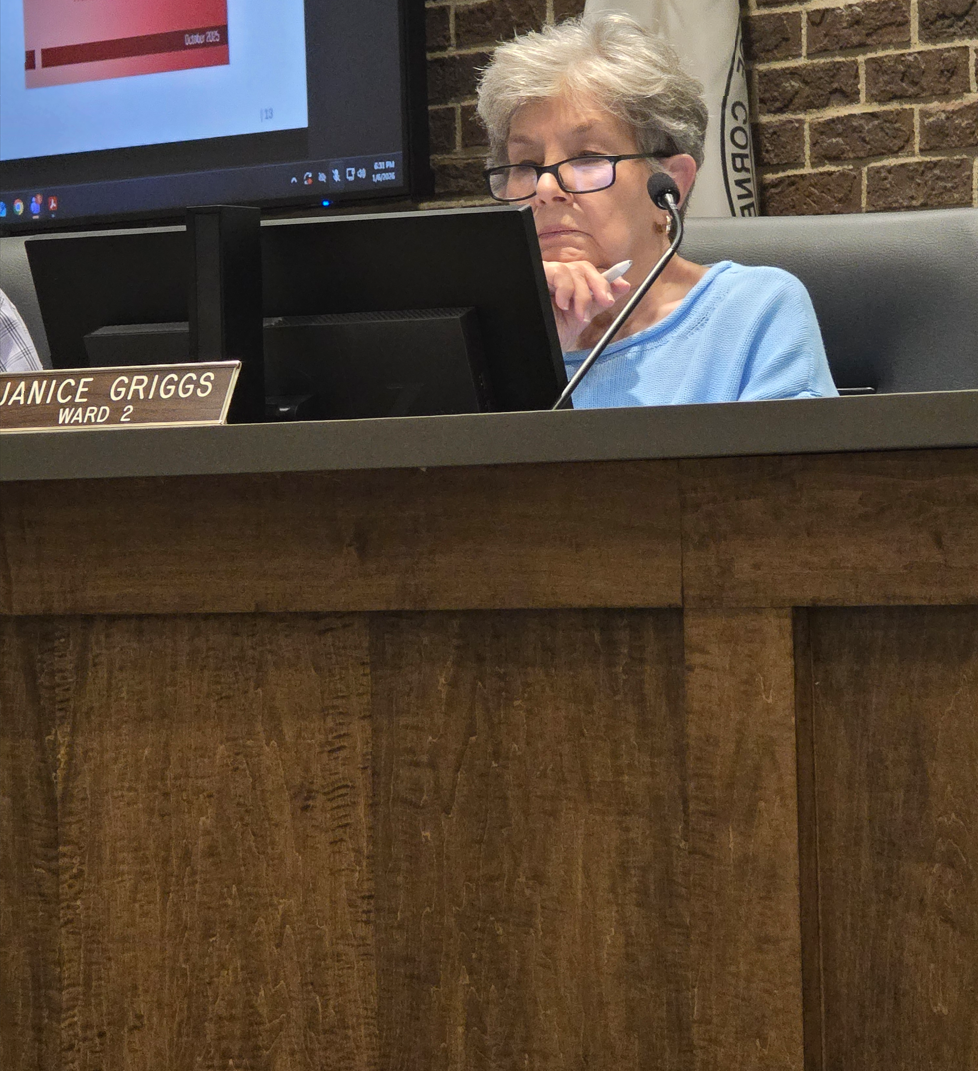
As they look to the new year, commissioners couldn’t help but look back at recent controversy surrounding efforts to annex land for a large housing development. While that annexation request failed, housing remains a significant issue in Cornelia.
The Georgia Conservancy delivered a remote presentation on the city’s Housing Needs Assessment. The Conservancy research revealed the average cost of a home in Cornelia is now around $333,000, up from $167,000 in 2019. Monthly housing costs have nearly doubled, from $1,472 to over $2,700.
The Conservancy offered several key zoning recommendations to help address the city’s need for affordable housing. Those recommendations include:
- Reduce minimum lot sizes in all land use categories
- Reduce minimum acreage requirements in all residential zoning categories
- Reduce maximum impervious surface ratio, particularly for R-1A, R-18, and R-2
- Reduce setback requirements and/or restrictions in all residential zoning categories
- Permit zero lot line setbacks, particularly in the historic district
- Allow missing middle housing types -primarily Al construction – by-right on all residentially zoned lots. removing the need to go through a zoning variance to approve and develop missing middle housing types
- Introduce cottage court and ADU ordinances to help guide and normalize this type of development in
- Keep Cornelia’s historic district parking requirements, which are significantly lower than the rest of the city’s requirements
- Include on-street parking in minimum parking requirements, where appropriate
- Remove HOA requirement for new residential subdivisions
- Streamline small scale subdivisions: Increase leniency on small scale lot mergers and lot subdivisions, such as four parcels merging or one parcel subdividing into four. This is essential for creating more fee-simple opportunities for small scale homeownership.
- Streamline the Development Review Process: clearly articulate requirements, timelines, and fees for the development approval process. This is especially important in and around Comelia, given that developers are navigating eight zoning and development approval processes throughout Habersham County and its seven incorporated municipalities.
Anderson said the presentation would be posted on the city’s website. A public link to the livestream is available on Cornelia’s Facebook page.
$800K property purchase and road closure
Commissioners approved the purchase of property connected to the city’s wastewater treatment plant expansion, authorizing the acquisition of a tract owned by Higgins Construction for use in expanding wastewater capacity. City staff explained that the property sits adjacent to existing facilities and supports future system upgrades tied to population growth and development. The approved purchase price was $800,000.
The commission also approved a resolution to abandon an unopened and unfinished roadway known as Catch Drive. The city attorney, Steve Campbell, stated that the street had never been constructed, contained no utilities, and was not needed for future access. Property owners on both sides of the right-of-way requested the abandonment, and the commission approved the resolution.
(Carly McCurry / Now Habersham)
Boy Scout hut plans move forward
Commissioners approved a new lease agreement with Boy Scout Troop 24 for the scout hut located near the community house at City Park.
Anderson explained that the agreement replaces the original 1953 lease and allows the troop to continue using the property as long as it serves scouting purposes. If the building ceases to be used for that purpose, the city may terminate the lease with 90 days’ written notice.
During the discussion, staff noted that the building is currently in poor condition and has not hosted regular meetings since the COVID-19 pandemic. The troop is raising funds for repairs, with the Kiwanis Club identified as the sponsoring organization for the fundraiser.