
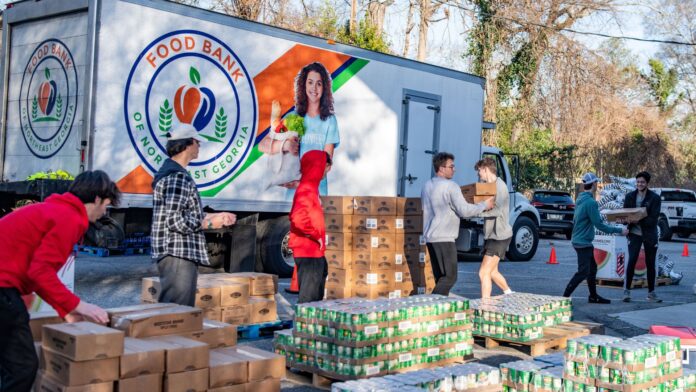
CLEVELAND, Ga. — As the federal government shutdown drags on, food banks and local churches across Northeast Georgia are mobilizing to meet an urgent and growing crisis. With SNAP benefits — the nation’s largest food assistance program — set to pause November 1, thousands of families are bracing for empty cupboards and empty plates.
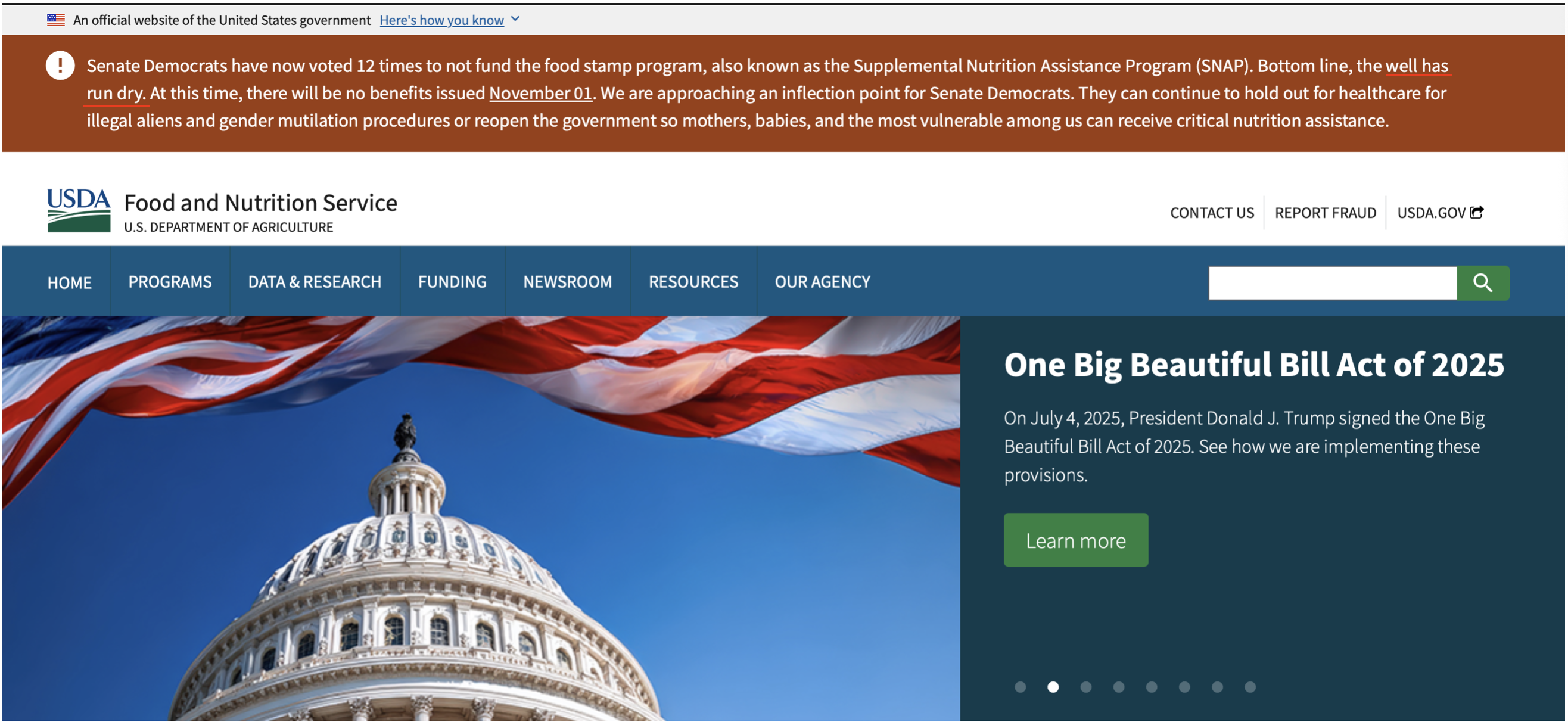
“The well has run dry”
The USDA confirmed Friday that no new SNAP benefits will be issued on November 1, saying, “The well has run dry.” The agency also announced that states covering the cost of aid themselves will not be reimbursed.
Advocates warn that the fallout could be catastrophic for working families, single parents, and seniors who rely on federal aid to buy groceries. “When you take SNAP away, the implications are cataclysmic,” said Feeding America CEO Claire Babineaux-Fontenot.
Local food bank issues emergency call
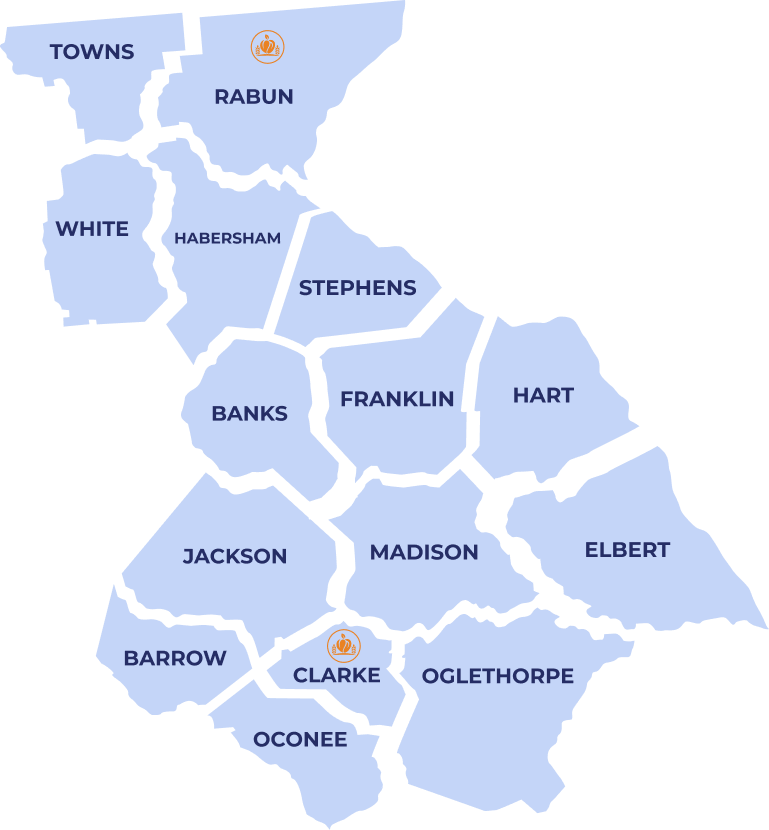
In Athens, the Food Bank of Northeast Georgia has activated its emergency response plan, calling the situation “a new kind of disaster.” Normally guided by a spirit of abundance, the organization now faces scarcity as tens of thousands of residents across its 15-county region prepare to lose access to federal food benefits.
“Food is essential, and what is essential cannot be negotiable,” said Chief Philanthropy Officer Kelly Klein. “This is the moment to respond. It is time to ask, ‘What will happen to my neighbor if I do not help?’”
Even before the shutdown, the Food Bank was already distributing 45% more food than this time last year — a sign of deepening need. If benefits are not issued in November, officials estimate that approximately 70,000 neighbors relying on SNAP could shift from food insecurity to food emergency.
To meet the challenge, the Food Bank has launched an aggressive response:
- Increasing food purchases by 400% immediately to stabilize inventory.
- Expanding all mobile pantry distributions in November and, if needed, into December.
- Doubling food distribution across its network of more than 230 partner agencies.
The Food Bank is urging community members to step up with donations to keep shelves stocked. Each $100 donation to the Food Bank provides roughly 250 meals. Residents can give or volunteer at foodbanknega.org.
Finding food assistance
Residents in Banks, Barrow, Clarke, Elbert, Franklin, Habersham, Hart, Jackson, Madison, Oconee, Oglethorpe, Rabun, Stephens, Towns, and White counties can find assistance through the Food Bank of Northeast Georgia’s Find Food locator tool or by calling 2-1-1 for real-time listings of food pantries, soup kitchens, and mobile events.
The Northeast Georgia Food Pantry runs mobile “pop-up” pantries across the region. Organizers say schedules shift frequently, so residents should follow their social media or check negeorgiafoodpantry.com for updates.
White County agencies and churches are offering multiple free distribution events for local families.
The White County Food Pantry on GA-254 in Cleveland remains open weekday mornings, and White County Family Connection on Facebook lists a number of free distribution events planned through November.
Other organizations are also preparing to meet the surge.

The Georgia Mountain Food Bank (GMFB)— which covers Hall, Dawson, Lumpkin, Union, and Forsyth counties — says its partners are seeing rising lines at local pantries.
In Hall County, the Gainesville-Hall Community Food Pantry (615 Oak St., Suite E) serves on Tuesdays and Thursdays from 12 p.m. – 1:30 p.m., while the Good Samaritan Food Bank (1220 McEver Rd.) offers bilingual service Mondays from 5 p.m. – 7 p.m. and Wednesdays and Fridays from 9 a.m. – 11 a.m.
GMFB urges residents to use its “Find an Agency Near You” tool at gamountainfoodbank.org to locate food assistance in nearby counties.
“We can’t let our neighbors go hungry”
Local leaders say that while federal benefits may stop, community compassion will not.
“We know this pause in benefits will hit many local families hard,” White County Family Connection posted to social media. “Together, we can make sure every family in White County has food on the table.”
As Thanksgiving approaches, the contrast between abundance and hunger is sharper than ever. Food bank leaders say the only way through this crisis is together — by donating, volunteering, or sharing information about where help is available.
“This is what we were built for,” the Food Bank of Northeast Georgia said. “But we cannot do it alone.”