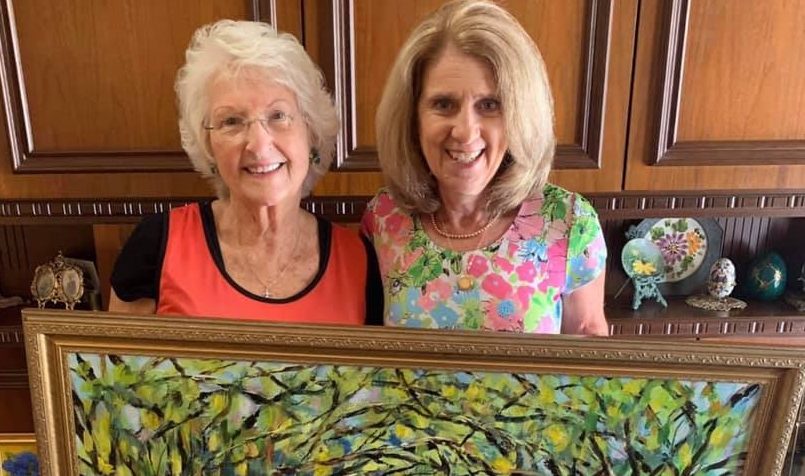

A writer, an accountant, and a musician walk into a bar. They don’t leave with a punchline—they leave with business cards and a new Facebook friend. Around a reclaimed wood table, their conversation unfolds over the murmur of guitars and the clink of chilled glasses. The wine—poured by Lynda Ann and Matt Price of Highroads Tasting Room—takes the edge off unfamiliarity. Strangers become collaborators. By the time they stand to leave, they’ve exchanged more than contact information; they’ve built the beginnings of a partnership.
Why Highroads matters
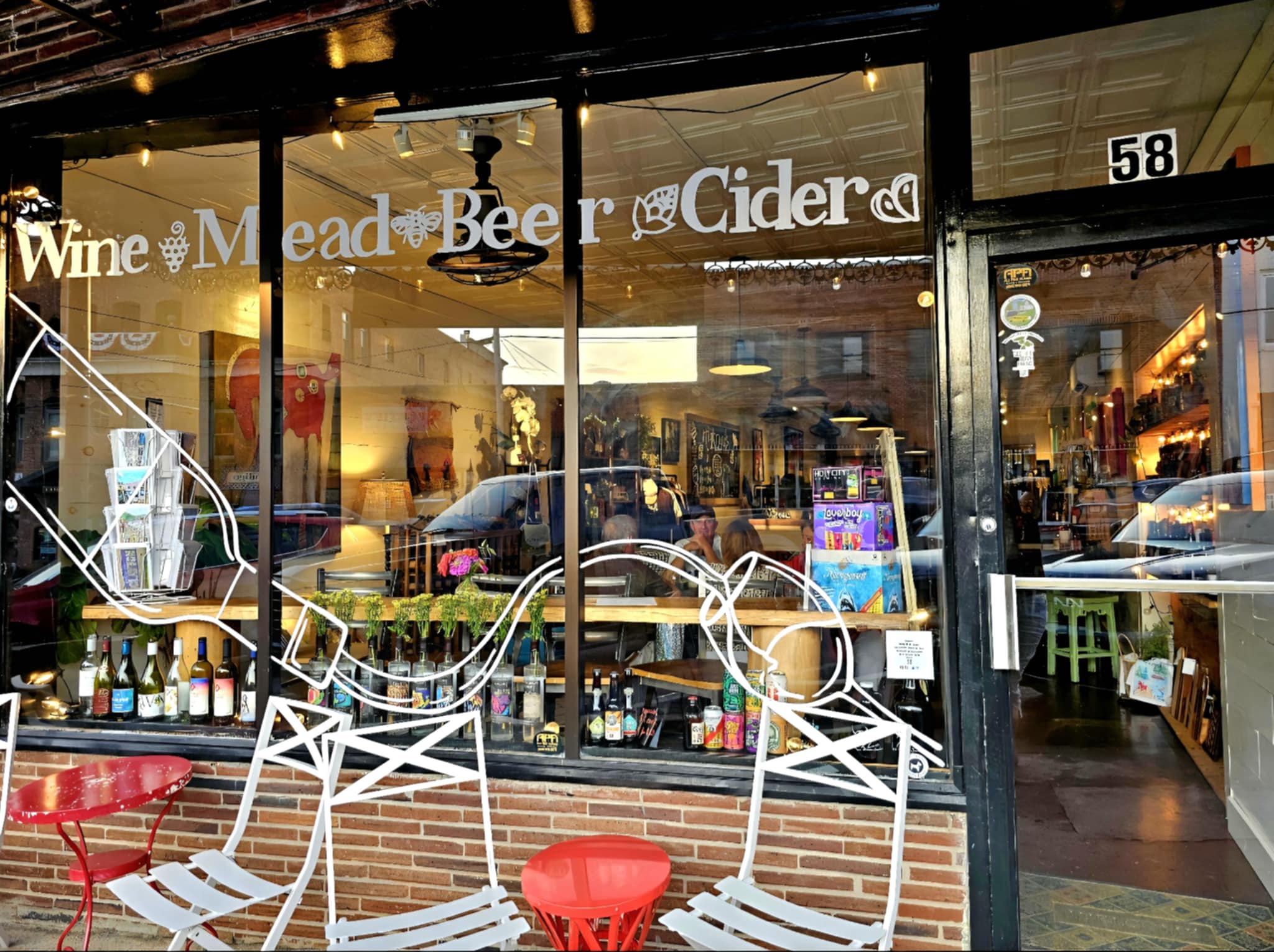
Highroads Tasting Room takes its name from the Southern Highroads Scenic Trail—a 364-mile route winding through four states and dozens of mountain communities. The trail, like the tasting room, symbolizes connectedness and discovery.
The story of Highroads is as personal as it is practical. Lynda Ann met her husband at the Wild Goose Festival in North Carolina in 2019, where they volunteered together. Their partnership grew from shared service into a shared vision—Highroads, built on mutual respect, hospitality, and a passion for community.
That spirit permeates the space. Regional artists show work on rotating walls. Trivia nights fill the room. Local musicians play on weekends. Guests paint mugs, craft holiday ornaments, or just sip quietly with friends. Visitors often remark on the affection between the two—no ‘ball and chain’ here, just kindness and ease.
Lynda Ann’s ties run deep. A former Rabun County high school teacher, she often welcomes past students who stop by for a cup of encouragement. Moreover, as vice president of the Clayton Merchants and Business Association, she helped lead the Ramshackle campaign to reroute traffic from the highway into the downtown. Thus, Highroads isn’t just a business. It’s a long-term investment in the kind of community her former students might one day want to call home post-graduation.
Highroads has become a gathering place on Main Street in Clayton. But the tasting room, a staple of this North Georgia town’s cultural life, now faces an existential threat—one rooted not in foot traffic or finances, but in the city’s ordinance code.

A looming crisis
Clayton’s highly specific 2019 ordinance—Section 4-45—limits tasting rooms to wines made in Georgia when served by the glass.
At first glance, this might seem like a helpful support to local vineyards and a net positive. Yet, in practice, it curtails small businesses like Highroads and presumes a tasting room exists solely to serve another industry. Imagine a bookstore allowed only to stock Georgia authors to benefit local writers, or a nursery restricted to native plants. Highroads thrives on curated discovery—offering wines, meads, beers, and mocktails from across the country and beyond. The law cuts the experience in half before a glass is poured.

For Highroads, it means they can’t provide the tailored wine orders that customers expect from a tasting room. They can’t build flights that highlight the contrasts between a Willamette Pinot Noir and a North Georgia blend. This isn’t just a logistical hurdle—it strikes at the identity of the place, where tasting is meant to expand horizons, not narrow them.
Counterpoints
Supporters of the ordinance argue it protects Northeast Georgia’s budding wine industry. For rural vineyards, local outlets may offer a stable market. The ordinance keeps spending close to home and helps small growers gain a foothold. Opponents of reform worry that relaxing the law would allow multinational distributors to crowd out local producers. In this light, the ordinance becomes not a constraint but a buffer against consolidation.
Some may also argue that legal clarity matters. Signing a contract means agreeing to its terms, and rules—however flawed—still carry legal weight. If Highroads misunderstood the ordinance, even in good faith, it does not necessarily negate its applicability. For 14 months, the business
operated under the belief—reasonable or not—that the state’s broader ordinance permitted them to serve wine by the glass from wherever their bottles were legally purchased. The finer points of conflict between local and state law remained unclear until brought into sharper focus.
But should intent override the letter of the law? To some, the answer is no. In this view, compliance isn’t optional—it’s foundational. The fact that Highroads may not have realized they were in violation may not absolve the breach. In this reading, enforcing the ordinance is not punitive, to those tasked with controlling the city’s operations, a necessary act of governance.
How many citizens see the conflict at Highroads
Most residents aren’t parsing legal fine print. They see a broader civic question: Should this ordinance exist at all? And if it should, who benefits?

This regulation doesn’t just limit wine lists—it determines who gets to build a business in Clayton. Will downtown belong to deep-pocketed investors from Atlanta, who can afford the constraints? Or to local entrepreneurs who rely on flexibility and thoughtful offerings to thrive?
There’s a deeper issue: Why are some businesses expected to prop up others? Should a tasting room function as a public subsidy for vineyards? In a free market, businesses rise or fall on their own. Yet here, the ordinance appears to force Highroads—not producers—to bear the cost of a protectionist policy.
In a region where citizens on both sides of the political spectrum value small government and the ideal of the yeoman farmer, many are asking why one business gets state support while another must serve it.
Rally planned as City Council prepares to act
The Clayton City Council will hold a work session at 4 p.m. and a meeting at 5 p.m. on July 8, during which council members will consider whether to align the local ordinance with state law. If adopted, Clayton’s ordinance regarding farm wineries would mirror state code.
Interested in supporting Highroads? Sign the petition HERE, or email the city council using their contact information below.
Want to show support in person? A loyal customer is organizing an event at Highroads titled “The Great Main Street Wine-In” on June 24 at 6 p.m. Supporters may also attend the city council meetings, which are open to the public.
Clayton City Council contact information:
Amanda Harrold: Aharrold@cityofclaytonga.gov
Althea Bleckley: Ableckley@cityofclaytonga.gov
Tony Allen: Tallen@cityofclaytonga.gov
Sarah Gillespie: Sgillespie@cityofclaytonga.gov
Stacy Fountain: Sfountain@cityofclaytonga.gov
The mountains are calling, and so is the community. This is the moment to act. Highroads has poured itself into Clayton—is it time for Clayton to return the favor? What are your thoughts? Let us know in our comments section.