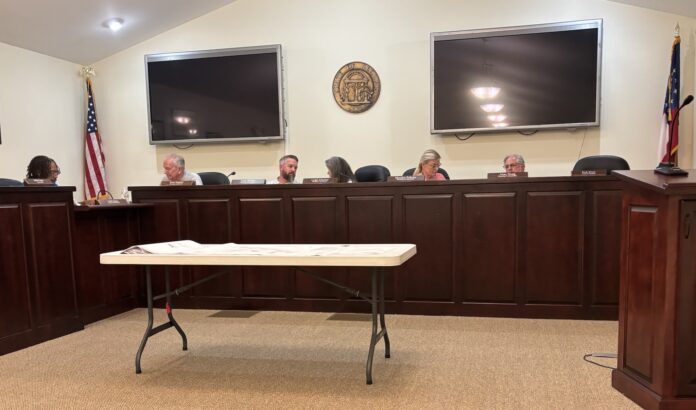
Clarkesville took a big step toward a new residential development Tuesday, as the city Planning Commission unanimously approved a preliminary proposal to build a 58-unit housing development along Rocky Branch Road by Route 17.
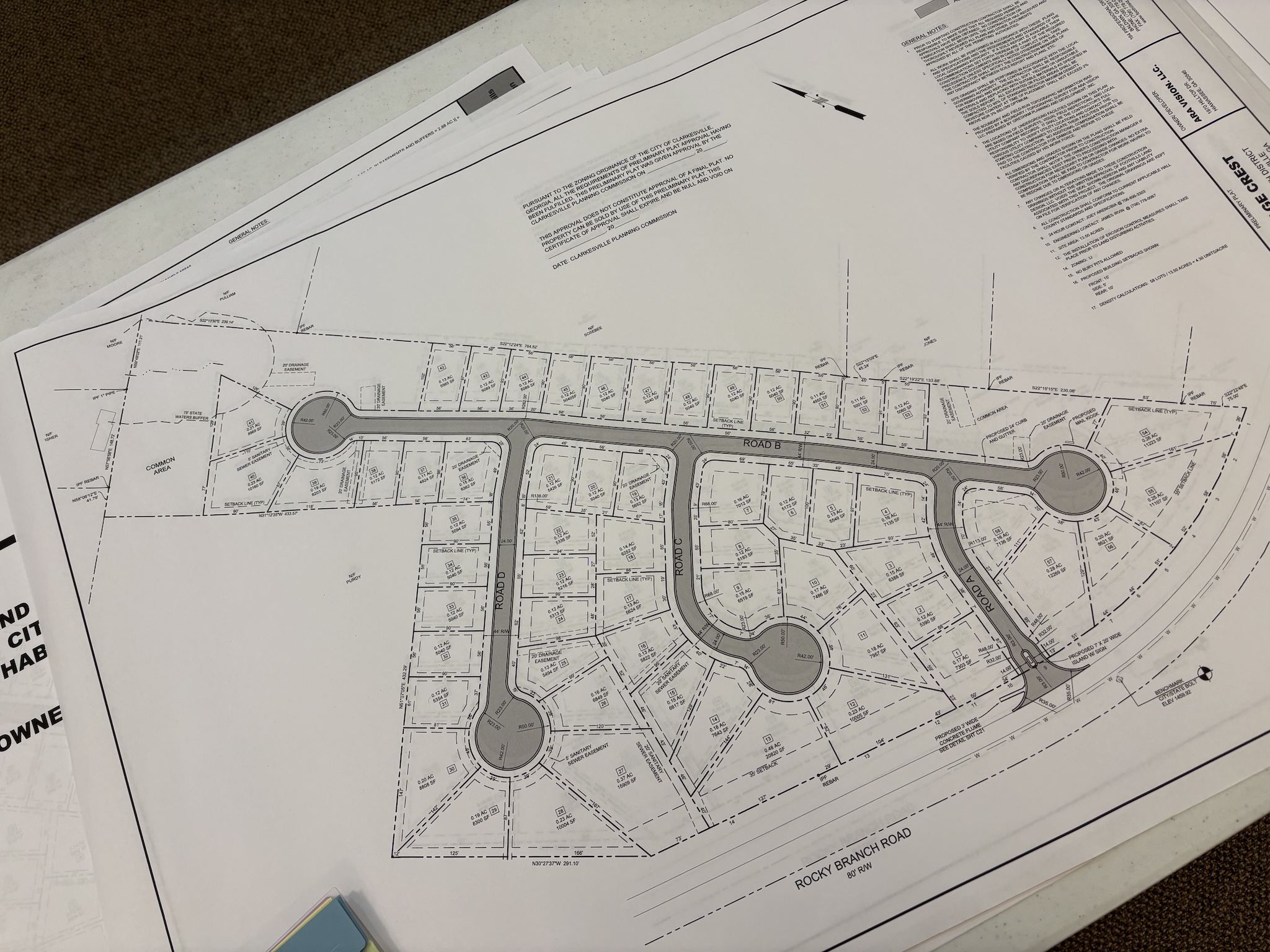
The Commission approved the preliminary plat for the Village Crest subdivision, submitted by ARA Vision, LLC, and its principal, Joe Arencibia. The property covers approximately 13.5 acres currently zoned R-2 (Multiple Family Residential).
The Planning Commission heard comments from the developer and his project manager, Bill Gresham; Clarkesville city manager Keith Dickerson, and a few city and area residents, who publicly weighed in on the pluses and minuses of the plan during the comments portion of the meeting.
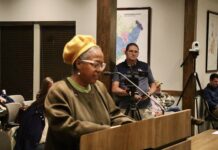
Tammy Brown, who identified herself as a teacher, said she was deeply concerned about the potential impact hundreds of new residents might have on the school system, public safety, and the physical infrastructure.
“Has anyone spoken (about the development) with the school board? Has anyone spoken with public safety? Has anyone spoken with the landfill?” she asked.
“You have to protect our homes,” Brown told the commission. She was one of about nine people in the audience at City Hall.
Despite those concerns, the general mood of the meeting was positive as the Commission questioned Arencibia about his plans.
Next steps
When it came to concerns about congestion, traffic, and infrastructure, Arencibia summarized his plans succinctly: “We’ll do the right thing.” Project manager Bill Gresham told the Commission that concerns about water drainage had all been studied by cameras run through the pipes, and the concerns had been allayed. The current system can handle the additional load from Village Crest, the officials asserted.
Planning and Zoning Administrator Caleb Gaines said the state’s role begins with submitting an “NOI”—Notice of Intent—to the Georgia Environmental Protection Division (EPD). After final approval, grading of the land can begin. The developer said he hoped to begin that process within four to six months.
Once initial development is completed and the final plat is submitted and approved, the city may begin issuing building permits for home construction.
The subdivision plans include paved roads, curb and gutter infrastructure, a mail kiosk, and various utility easements. The proposed residential lots range in size from about 0.11 to 0.28 acres, reflecting a density of approximately 4.3 units per acre.
No ‘cookie cutter’ homes
The developer said the housing will have ample sidewalks, space for dog walking, and that he plans to maintain the trees around the property and between and among the new homes. Arencibia said there would be variation among the homes as well, adding in an interview after the meeting, “We don’t build cookie cutters.”
In response to the concerns expressed by some, commissioners noted that if “the developer follows the rules, we have to approve the plan.” They said the public’s seeming desire to limit additional population growth altogether was a better subject for the city council than for the Planning Commission, which is merely an arbiter of whether developers are adhering to existing regulations, but is not permitted to make decisions on the merits of growth in general or to impose new rules.
After the meeting, Planning Commissioner Monika Schulte said that the new development, with homes costing $300,000 to $400,000, would bring in mostly well-off and middle-aged or older residents who can afford to contribute to the kind of commercial and entertainment environment she said Clarkesville wants and needs.
“If this proposal and annexation would not be approved, the land could be used for different housing where the new people moving in might not use disposable income on upscale entertainment which the city has to offer,” Schulte said.