We’re headed into a new year which means a whole new year for more sky watching!
While January is pretty cold, the low humidity levels in the air make this a great time to catch the night skies. We’ve got some great events to catch this month.
January 3: Full Moon and Perihelion
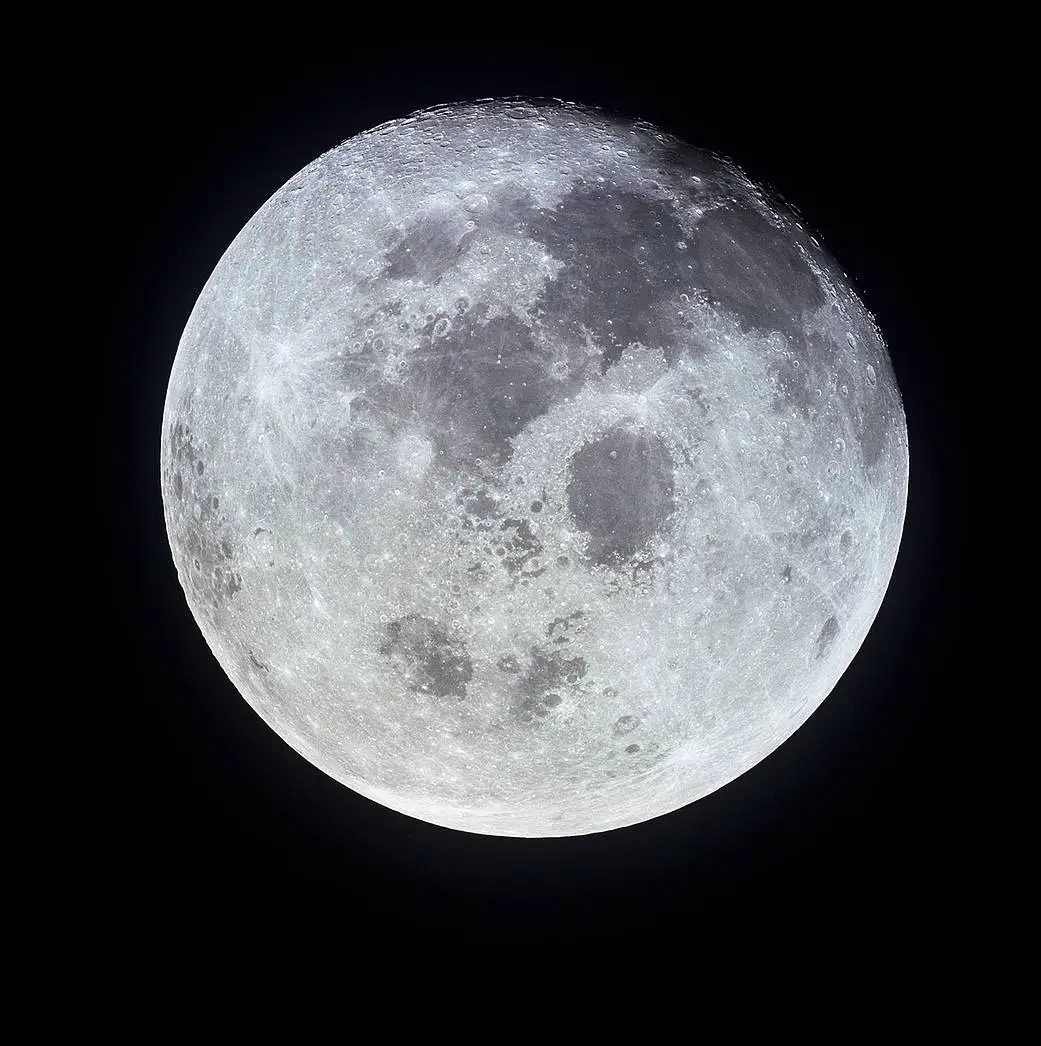
We’re starting the year off with a full moon right off the bat. The January full moon is also known as the Wolf Moon, Cold Moon, or Ice Moon among other things. This year’s Wolf Moon will be full at 5:03 a.m. on Saturday morning. This early morning full moon means one thing: two chances to see it. It will appear full on both Friday and Saturday nights. On Saturday night, the moon will also appear very close to Jupiter, so be sure to take in the view of these heavenly bodies paired right next to one another.
In addition to the full moon, Earth will reach its closest approach to the sun on Saturday night as well. This is known as perihelion and at this moment the sun will be about 91.4 million miles away. The Earth’s orbit only varies by around 3% each year, so you won’t notice anything different. This small increment isn’t enough to cause seasons, those are caused by the Earth’s tilt. It is just a coincidence that perihelion occurs close to the Winter Solstice this year.
January 9: Jupiter at Perigee/Opposition
If you catch Jupiter next to the moon on the 3rd, you’ll be seeing it very near its closest approach to Earth for the year. The actually closest approach will occur just 6 days later on the 9th. At this time, the Earth will lie directly between Jupiter and the Sun, putting the Great Red Spot at its closest approach to us. That distance: a staggering 393 million miles. When Jupiter reaches perigee is by far the best time to see the giant planet through a small telescope. You’ll easily be able to make out its four largest moons: Io, Europa, Ganymede and Calisto, and with a large enough telescope you might even catch the Great Red Spot.

January 19: γ-Ursae Minorid meteor shower
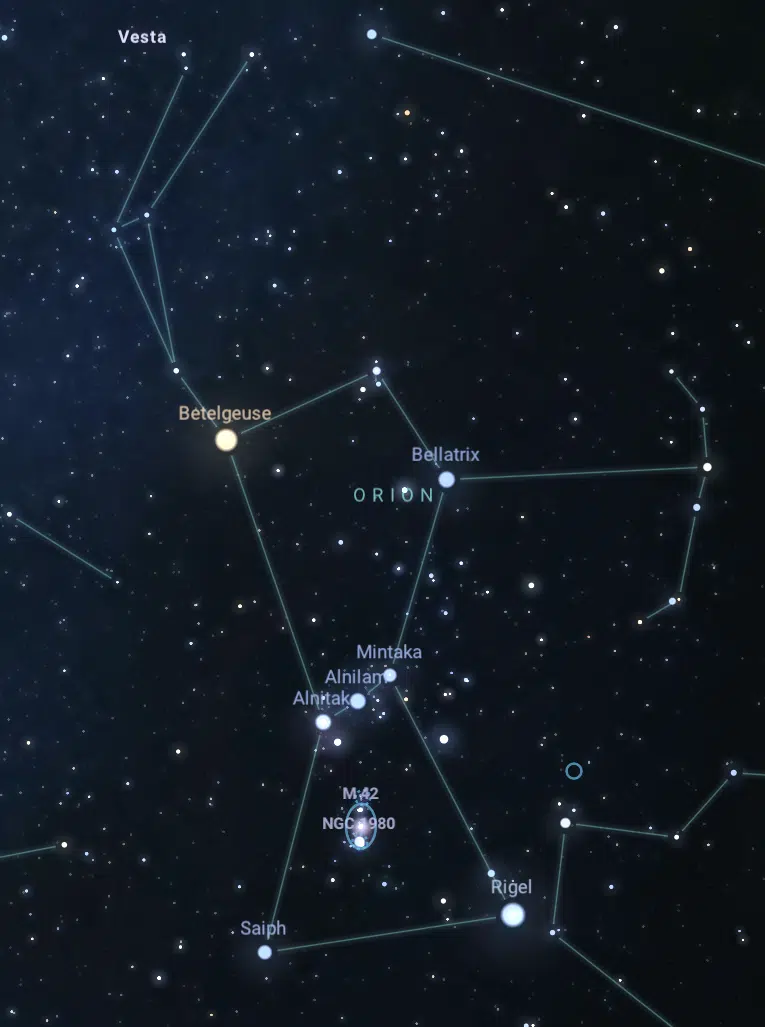
A very minor meteor shower will occur mid-month. the γ (gamma)-Ursae Minorid shower peaks on the 19th with only around 3-5 meteors per hour. With that said, it does occur during a new moon and would make a great companion event to stepping out with a telescope to see the constellation Orion. Orion the Hunter rises just after the sun sets this month and is high enough in the sky for easy viewing by 8-9 p.m. A small telescope aimed at his sword will reveal the M42 nebula, easily the best looking nebula through a telescope in our night sky. In fact, the nebula is bright enough to be seen through a good pair of binoculars, the view just gets better with a little more magnification.
January 23: Conjunction of Moon, Saturn and Neptune
The young moon will meet up with both Saturn and Neptune on the night of the 23rd. While Neptune is nearly impossible to pick out with the naked eye, Saturn will be easily seen. With a good pair of binoculars you may also be able to pick out blue Neptune nearby. The moon will be only 26% full, a beautiful crescent in the evening sky.
January 30: Moon and Jupiter reunite
The moon will end the month the same way it started it: right next to Jupiter. You can catch the pair in the night sky. We will just barely miss out on a “blue moon” with the next full moon falling on the morning of February 1st.
Get out and enjoy the night sky to start 2026!