Editor’s note: In July 2025, Now Habersham weathercaster Tyler Penland headed west to hike and camp in Yellowstone National Park. His latest “Go west, young man” series features the stunning images he captured and the stories he brought back.
After leaving Norris Basin, it was time to head to our first campsite of the trip. I had booked us in Imperial Meadows, site OD4 on the backcountry list, and a roughly 2-mile, mostly flat hike lay ahead of us. Unfortunately, it was nearly dark. We decided to eat supper at the truck, so we fired up the grill in the parking lot of the Grand Prismatic Spring. While eating along the Firehole River, a bald eagle swooped through, no doubt looking for its own supper.
Given our lack of time, I didn’t take any photos on our way to our site. Most of the hike was in the dark, regardless, which I don’t recommend. This is grizzly bear country, after all. We managed to reach our site without getting eaten by any bears, and after a quick tent set-up, it was time for bed. Well, almost. It wasn’t planned, but I happened to be in Yellowstone National Park during a new moon and under clear skies.
Dark skies are categorized into nine distinct levels on the simplified Bortle scale. Zone 1 is the darkest sky on Earth, while Zone 9 is an inner city with near-daylight levels of light pollution. There are no Bortle 1 zones east of the Mississippi, and the darkest skies I had ever seen were a Bortle 2 on my trip to the Great Sand Dunes in 2023.
Yellowstone National Park? Well, it’s a Bortle 1.
There aren’t many of these dark sky zones left in the country, with only the most remote regions seeing the darkest skies on Earth. I had resolved to myself that, despite late sunsets and early sunrises, I was going to see the night sky on this trip at least once. As luck would have it, I was awake unintentionally after dark. Imperial Meadows is exactly what it sounds like, a series of large meadows with very little tree coverage. This was great for dark sky viewing, as we had a very short walk of only 25-30 yards to a wide-open sky view. Even without allowing much time for our eyes to adjust, we were immediately awestruck by how many stars you could see and how much of the Milky Way was readily visible.
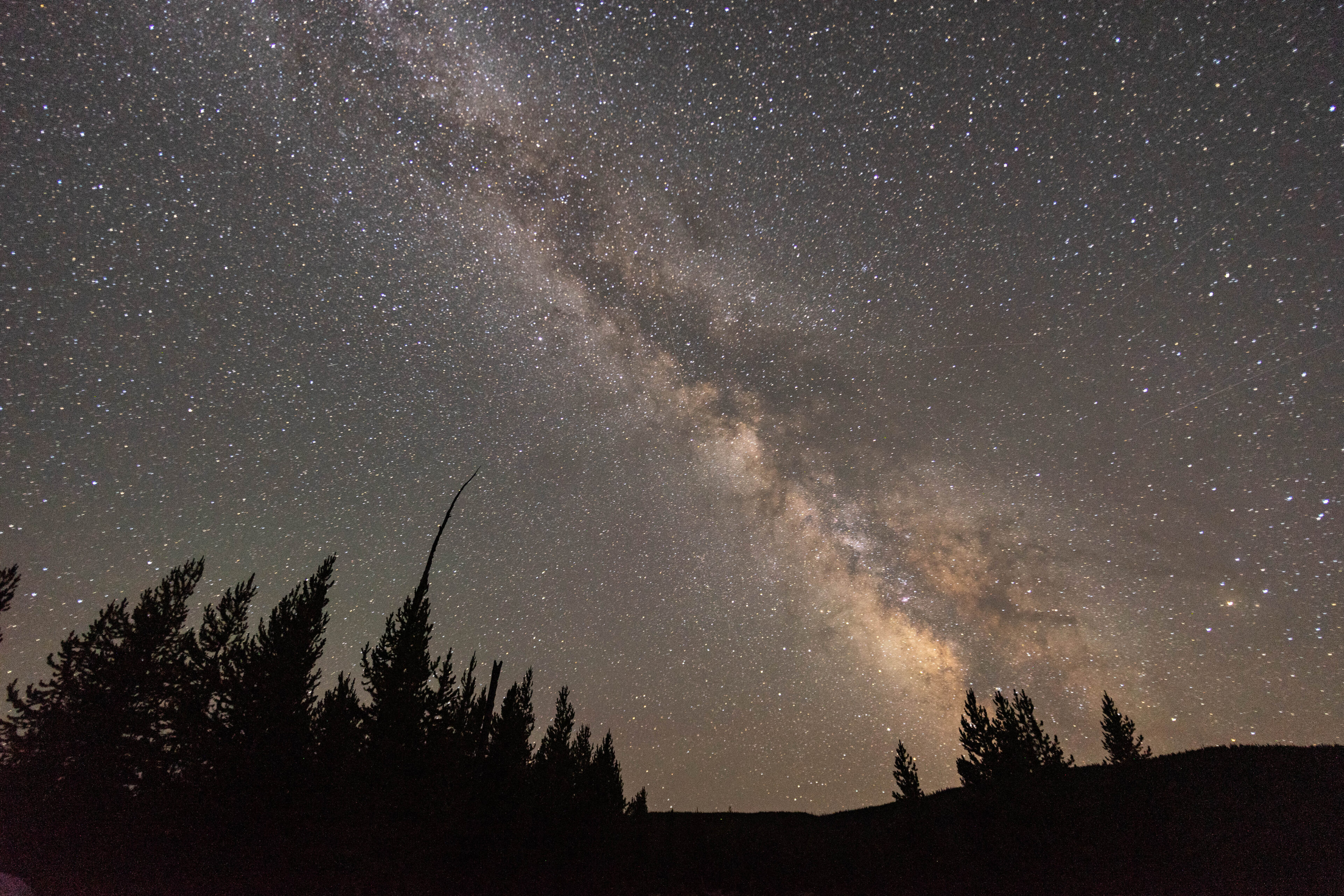
As our eyes adjusted, the number of stars continued to increase. In a very short period of time, we realized that despite the lack of a moon, you could actually see around you. After about 10 minutes of adjustment, we no longer needed our red lights to move around much. It was truly amazing to see with just starlight.
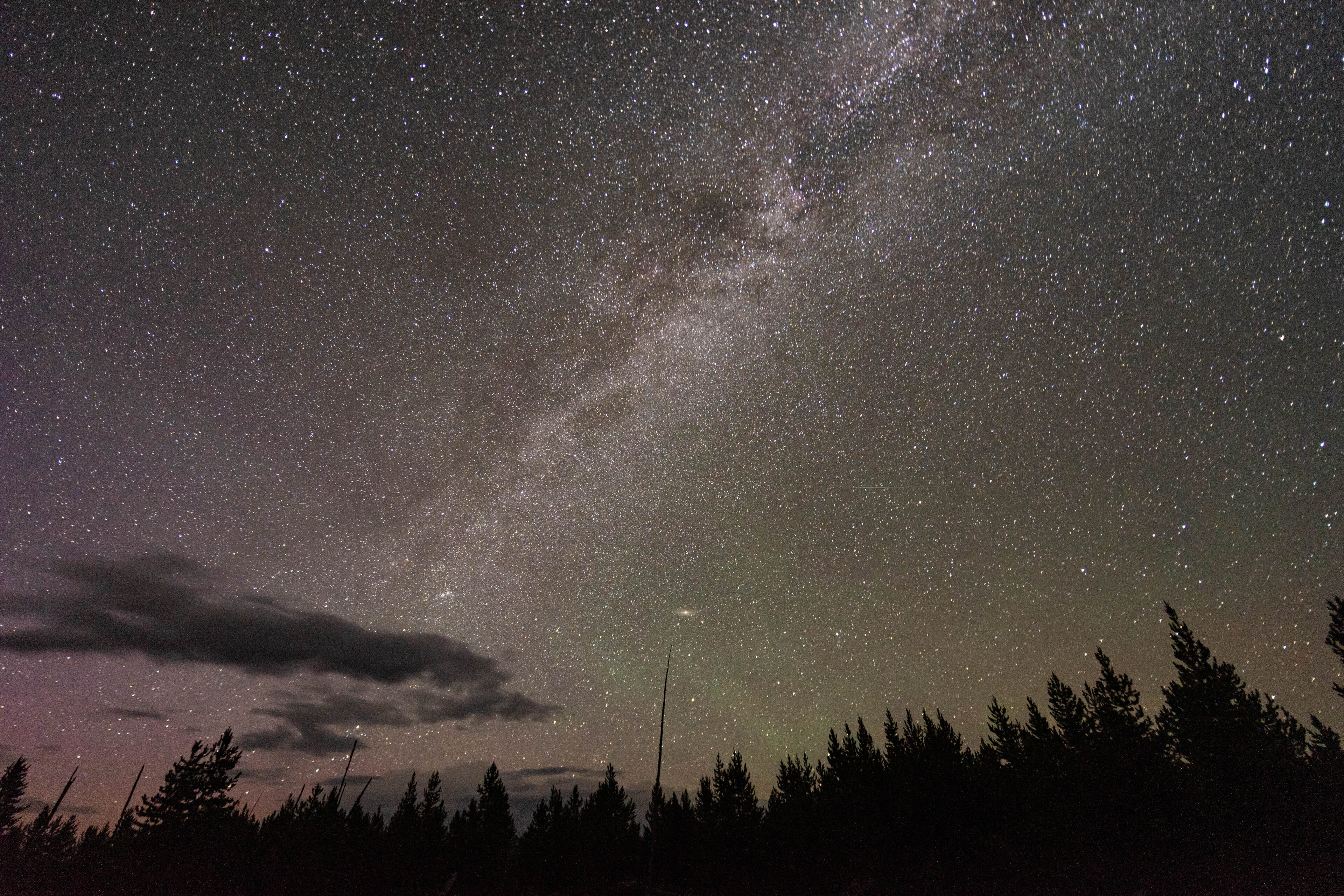
One phenomenon I had never witnessed due to light pollution was airglow. It isn’t visible to the naked eye, but it can be detected in photographs taken under dark enough skies. You can see some of the light green areas just above the trees in the image above, but pointing the camera away from the core of the Milky Way really highlighted these green and red ripples.
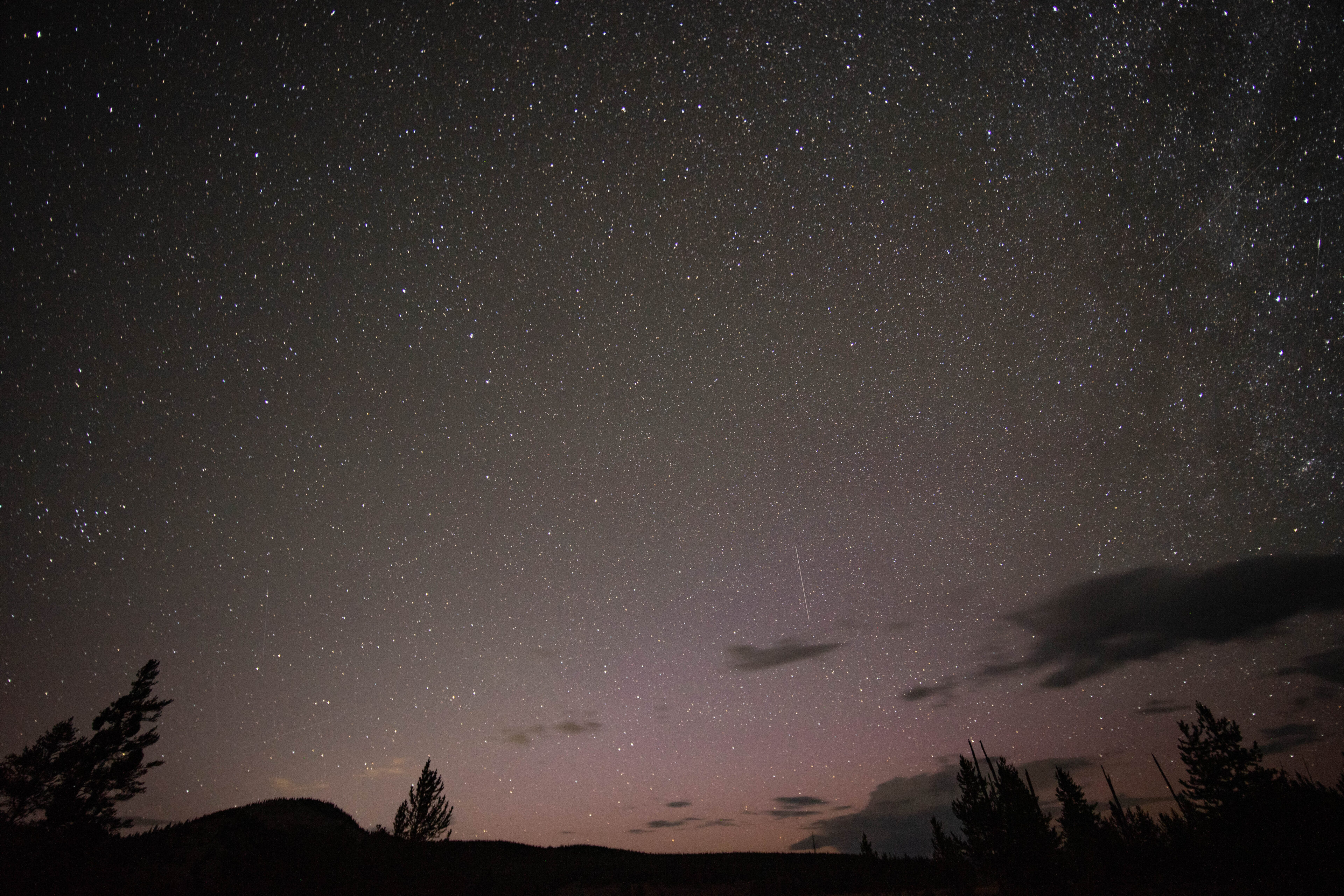
Airglow is generally caused by oxygen and nitrogen molecules emitting light after being hit by UV radiation. On this night, the green was especially prevalent in my 30-second exposures. You may notice some bright red/purple on the left and think: That looks oddly familiar. I was also lucky enough to have captured a photographic aurora looking to the north. There was a weak G1 storm underway, which in most circumstances would’ve been completely impossible to pick up, but when you are in the darkest skies on Earth, even the faintest glow becomes noticeable. These were actually visible to the naked eye as a very faint, purple glow.
As enamored with the view as we were, it had been a long day, and we had another long one ahead. As I went to bed that night, I couldn’t help but think of a quote from my favorite comic strip, Calvin and Hobbes.
“If people sat outside and looked at the stars each night, I’ll bet they’d live a lot differently.” ~ Bill Waterson
Other articles in this series: